

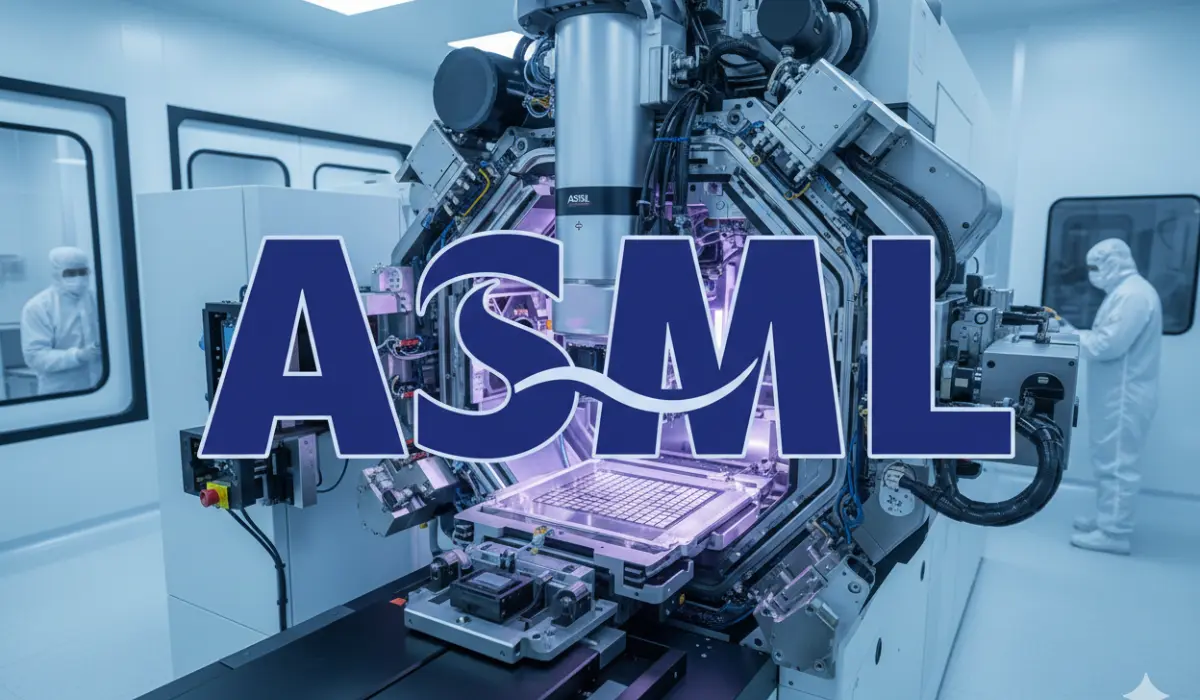
Shares of ASML Holding N.V. have surged to an unprecedented peak, driven by explosive demand for artificial intelligence (AI)-enabled semiconductor manufacturing equipment. The Dutch company, which is the world’s sole supplier of Extreme Ultraviolet (EUV) lithography systems, has seen its stock soar to record highs, with the rally fueled by a total of €13.2 billion in fourth-quarter 2025 orders, nearly double analyst expectations. This massive order volume, particularly for advanced EUV tools, underscores the global semiconductor industry’s urgent need to scale production for AI chips.
Despite the rally, analysts caution that geopolitical risks and the complexity of next-generation High-NA EUV systems could impact future delivery timelines. However, the consensus remains overwhelmingly positive, positioning ASML as a central beneficiary of the ongoing AI chip boom.
What Caused ASML’s Record Highs?
Key catalysts behind the surge include:
- AI Infrastructure Boom: The surge in demand for advanced AI chips, particularly from major customers like TSMC and Samsung, has fueled massive capital expenditures (capex) in semiconductor manufacturing. TSMC’s announcement of a 32% increase in 2026 capex to $52-$56 billion directly boosted ASML’s outlook, as it relies on ASML’s EUV lithography systems for advanced chip production.
- Record Orders: In Q4 2025, ASML reported €13.2 billion in net bookings, more than double analyst expectations of €6.32 billion, marking its strongest booking quarter ever. This pushed the company’s backlog to a record €38.8 billion, covering demand well into 2027 and providing high visibility for future revenue.
- Market Positioning: ASML is the world’s only supplier of EUV lithography machines, essential for manufacturing cutting-edge AI chips. This monopoly, combined with its role as a key enabler of the global AI buildout, has transformed it from a semiconductor equipment vendor into a direct infrastructure beneficiary of the AI race.
- Positive Guidance & Buybacks: The company raised its 2026 revenue guidance to a range of €34-€39 billion, with the midpoint above analyst expectations. It also announced a €12 billion share buyback program, reinforcing confidence in its capital return strategy.
The ASML EUV Monopoly
ASML holds a dominant, near-monopoly position in AI chip manufacturing equipment, particularly in EUV lithography, the critical technology required to produce advanced chips for AI. The company controls 100% of the EUV lithography market, with no viable competitors capable of matching its technology.
This dominance stems from over 30 years of R&D investment, a complex global supply chain, and insurmountable engineering barriers. The company is seen as a foundational chokepoint in the AI supply chain, essential for every advanced chip made today, making its market position far more secure than any competitor.
In contrast, competitors like Nikon, Canon, and China’s SMEE operate only in the older deep ultraviolet (DUV) lithography segment, which is insufficient for cutting-edge AI chips below 7nm. While companies like Applied Materials, Lam Research, and KLA are key players in complementary semiconductor manufacturing processes (e.g., deposition, etching, inspection), they do not compete directly with ASML in EUV lithography. Even Intel and Samsung, despite their scale, face technological and regulatory hurdles in implementing EUV systems, further entrenching ASML’s position.
Impact of Geopolitical Friction on Supply Chain
Analysts justify ASML’s current surge as inevitable due to its significant role in AI, data centers, defense, and global chip sovereignty initiatives. However, geopolitical tensions between the U.S./Netherlands and China pose significant risks to ASML’s supply chain through export restrictions and retaliatory measures:
- U.S. and Dutch export controls restrict ASML from selling its most advanced EUV systems to China, and increasingly limit sales of high-end deep ultraviolet (DUV) immersion tools. These restrictions target specific Chinese fabs and advanced semiconductor nodes, limiting ASML’s access to one of its largest markets. China accounted for over 40% of sales in 2024-2025.
- In response, China has imposed export controls on rare earth elements and related technologies, which are critical for manufacturing high-precision components in ASML’s machines. While ASML has stockpiled materials due to long lead times, prolonged restrictions could disrupt production if alternative sources aren’t secured.
- ASML expects China revenue to decline significantly in 2026, but anticipates strong demand from Taiwan, the U.S., and South Korea to offset this drop, maintaining total sales at or above 2025 levels.
- A potential full ban on DUV exports, currently under discussion in European policy circles, could create a sudden “air pocket” in revenue, though current guidance assumes only a gradual tapering.
ASML Holding N.V. is the world’s only manufacturer of EUV lithography machines. The recent “record-breaking” surge in ASML’s stock was driven by the explosive demand for AI-powered chips, which require EUV technology for their fabrication.
While geopolitical friction with China remains a key supply chain risk, the company’s absolute monopoly on EUV technology makes it a key partner for every major chipmaker on Earth.


