

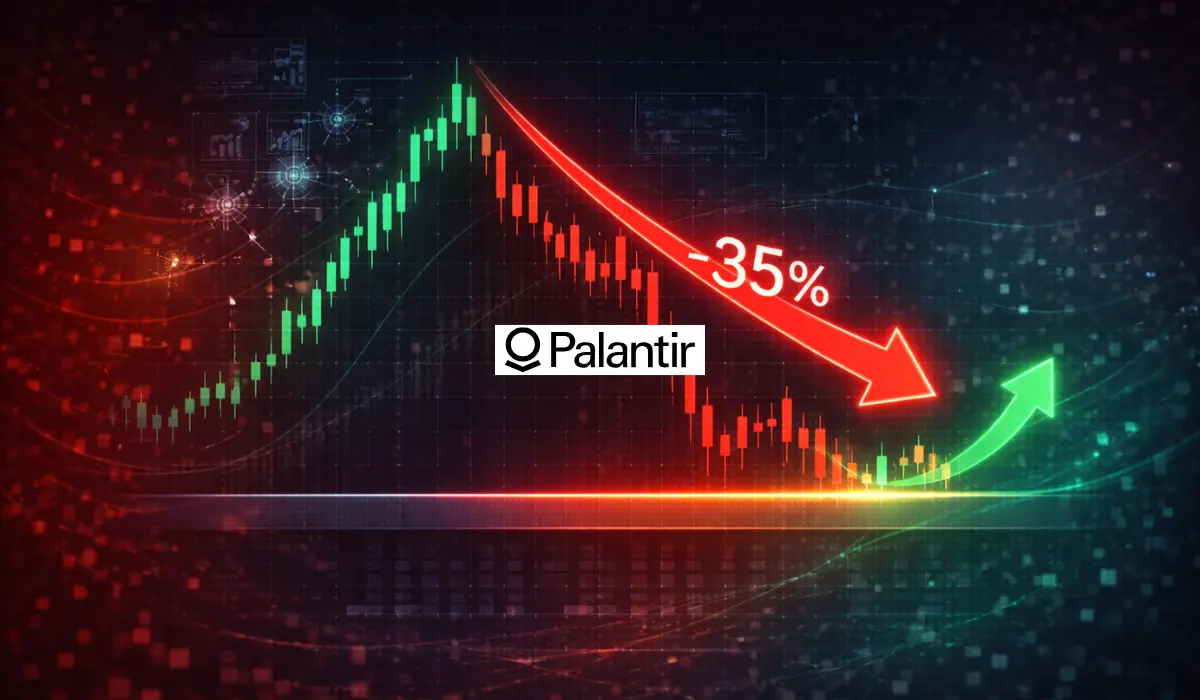
Palantir Technologies, generally viewed as a premium stock, is now down by 35% after posting incredible growth over the past three years. Palantir is priced at $130 with a market capitalization of $323 billion and a high trailing price-to-earnings ratio of 213x, dropping from 400x in late 2025. Palantir was considered the most expensive stock in the market, and it is still viewed as expensive even after the sell-off.
Decoding the Palantir Paradox
Experiencing a highly volatile environment, Palantir’s stock price fluctuated between a day’s low of $127.39 and a high of $132.04. The day low is close to the ultimate floor, which the analysts call it as danger, as moving beyond $126.23 triggers panic selling. The dip can be generally regarded as a resetting of an overvalued stock rather than considering it as a buying opportunity.
Despite maintaining a robust operational performance, Palantir stock encountered a sharp correction in late 2025, signalling that something else is broken. The drop is driven by extreme valuation concerns and multiple macroeconomic factors. Investor concern about the stock price compared to the actual earnings of Palantir generated valuation fatigue. Second opinion delivered from the analysts suggests that resetting the stock price of Palantir is actually a good thing for long-term investors of the company. Lowering the stock price is making the company better than it was before, specifically by creating entry points for new buyers.
Reinforcing its role in a federal agency, Palantir technology secured a $1 billion software agreement purchase with the Department of Homeland Security (DHS), allowing full-fledged access to data analytics and AI tools. By the time of the big billion-dollar deal announcement, the stock price of Palantir was already high-priced. When the news hit, the investors considered it an exit cue and caused the stock price to fall. The 35% dip could be a warning sign for a short term traders, and it is lucky for the long term investors to buy expensive stock at a discounted price.
Besides extreme valuation concern, Palantir encountered European regulatory pushback centered on data sovereignty, which caused the stock price to drop by around 3.85% in every hour. The dip in the stock price is strongly backed by the growing tension between the US advantage and legal pushback in Europe. Although the company makes domestic wins securing billion-dollar deals, investors view Palantir as vulnerable to risks due to US market restrictions.
Governance Outweighs Share Price
A dip in the stock price is more tied to investor apprehension about strategic decisions and corporate governance of Palantir. Palantir’s reimbursement of $17.2milion to its CEO, Alex Karp, for using his executive aircraft in 2025 ignited debate over executive perks and corporate governance of the company. Investors coined this as a governance issue and considered it a red flag leading to a wave of selling. Likewise, crushing the bullish momentum, Michael Burry made a relentless bear attack on Palantir. Burry predicted that Palantir’s fair value will decline by 65%, eroding investor confidence in the stock market. Citing jet reimbursement, Burry repeatedly raised red flags about the accounts receivable and earnings quality of Palantir.
The 35% Correction. Is it a Lucky Deal or a Warning Sign?
The 35% dip in the stock price is generally viewed as a mixed sign of valuation pressure and opportunity for the investors to increase their holdings. Even after the price drop, Palantir trades at 200x forward earnings, dominating the entire AI sector. Analysts cite that 35% dip is a warning sign as Palantir will take years to justify its market cap despite generating higher revenue. Michael Burry’s view about the valuation and poor governance of Palantir makes the extreme dip in the stock price a warning sign to investors.
Notwithstanding falling stock prices, Palantir continues to dominate the AI sector with strong revenue performances and strategic alliances. Exhibiting 70% year on year surge, Palantir delivered $1.41billion revenue in Q4 of 2025 and is expecting 60% growth in 2026. As Palantir is accelerating its revenue growth, customer base, cash flows, and profitability, a dip in the stock price can be regarded as an ample opportunity to buy rather than getting distracted by the headlines.


