

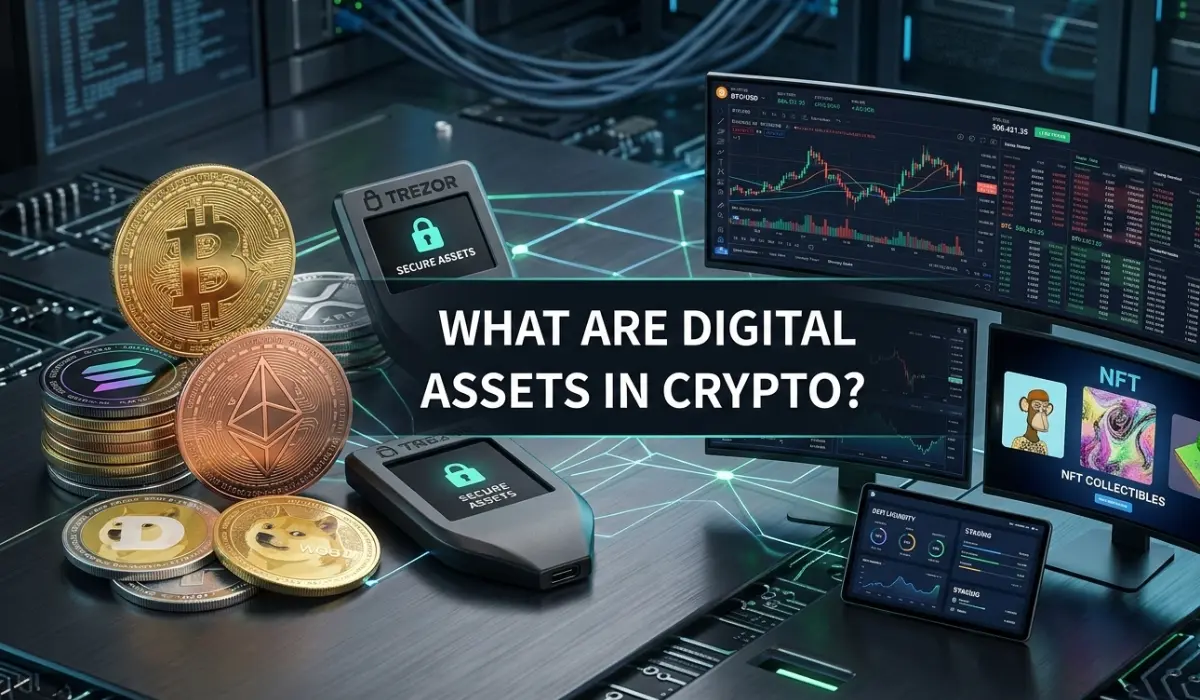
Digital assets
Digital assets are the digital material created and stored digitally, which can be sold, owned, bought, traded, and transferred. The evolution of digital assets could be traced back to the year 1998, when Nicholas Szabo, an American computer scientist, first put forth the idea of ‘Bit Gold,’ a decentralized payment mechanism. The working of digital assets is based on mechanisms like blockchain systems and distributed ledgers. Digital assets exist in the form of tokens and represent the ownership of real-world assets.
Evolution of Digital Assets
The launch of Bitcoin, the first cryptocurrency, in 2008, was the foundational milestone of digital assets. Bitcoin is a digital currency that transforms the way governments and business organisations share information and transact. Cryptocurrencies like Bitcoin are the potential assets sought by investors for higher returns. Several other blockchain-based assets were introduced in the market, followed by the success of Bitcoin, focusing on the major shortfalls and drawbacks of Bitcoin. The launch of altcoins in 2011 bridged the shortfalls of Bitcoin with more privacy and higher transaction speed. In the continuing evolution of digital assets, the launch of Bitcoin and altcoins received public criticism, pointing out the volatility it could bring to the financial statements of the company and to the investors due to unpredictable changes in value. To address the ongoing scenario, stable coins was launched in the year 2014 alongside assuring the benefits and new capabilities of crypto. Compared to traditional cryptocurrencies, the volatility of stable coins are relatively low.
During the period of 2016-2018, the cryptocurrency and digital market shifted from an experimental stage to mainstream with a massive launch of digital tokens. However, following the year 2018, the market witnessed an extensive downward trend as the value of Bitcoin dipped by 83%, and later in 2019, the market regained its momentum, reaching the Bitcoin value of nearly to $69,000.9.
Types of Digital Assets
Cryptocurrencies
Cryptocurrency is a digital form of money, which is decentralised and can be used for making virtual-based payments. Unlike traditional fiat systems, cryptocurrency runs its functions by using blockchain technology to secure and verify transactions. This form of digital currency facilitates quick and secured peer to peer transactions. As per the market capitalization, Bitcoin is the largest cryptocurrency, while Ethereum is regarded as the most popular altcoin.
NFT (non-fungible tokens)
Non-Fungible tokens deliver originality for digital collectibles and cannot be replicated, unlike other cryptocurrencies like Bitcoin. These are cryptographic assets stored on a blockchain that records transactions. NFT’s gained immense popularity in various domains, including online games and digital art. The distinct features like permanent storage, transferability, and uniqueness spurred the growth of NFT-backed virtual product trading, attracting 8.73million users in 2022.
Stablecoins
Stablecoin is a digital currency designed to maintain stable value against another asset. Compared to other cryptocurrencies, stablecoins are less volatile and represent 7% of the total cryptocurrency ecosystem, which is worth $3trillion. Stablecoin can be managed and controlled, making it a less reliable medium of exchange in the digital assets ecosystem.
Central Bank Digital Currency (CBDC)
CBDC is an electronic version of a country’s fiat currency regulated by the central bank, which is fully interchangeable with physical currency. To ease access and transactions central bank issues digital coins widely. The growth of Central Bank Digital Currency (CBDC) was spurred by the outbreak of Covid-19 pandemic, when people started preferring cashless transactions, and was further driven by the massive adoption and value gain of cryptocurrencies. About 137 countries started exploring CBDC, out of which 72 countries are in the phase of exploration, pilot testing, and launch.
Digital Bonds
Digital bonds are debt instruments issued and managed using blockchain. Unlike traditional bonds, digital bonds come with a range of benefits in terms of efficiency, cost, convenience, and accessibility. Digital bonds eliminate the settlement time, counterparty risks, minimise intermediaries, and reduce costs.
Tokens
Tokes are assets that have been tokenised on an existing blockchain technology. These are the digital assets allowing access to the decision-making process and project ecosystem, and can be used for making transactions.
Future of digital assets
Digital assets are promising and expected to flourish in the market for a prolonged time. The adoption rate of digital assets by both the institution and retail industry increased widely, adding momentum to the market. Experiencing massive growth in a short span of time, digital assets are likely to continue dominating the market, overcoming the regulatory hurdles like fund inclusion and tax reporting. The momentous growth is undeniable for digital assets for several reasons, including growing institutional adoption, reduced regulatory ambiguity, and reduced management costs.


