

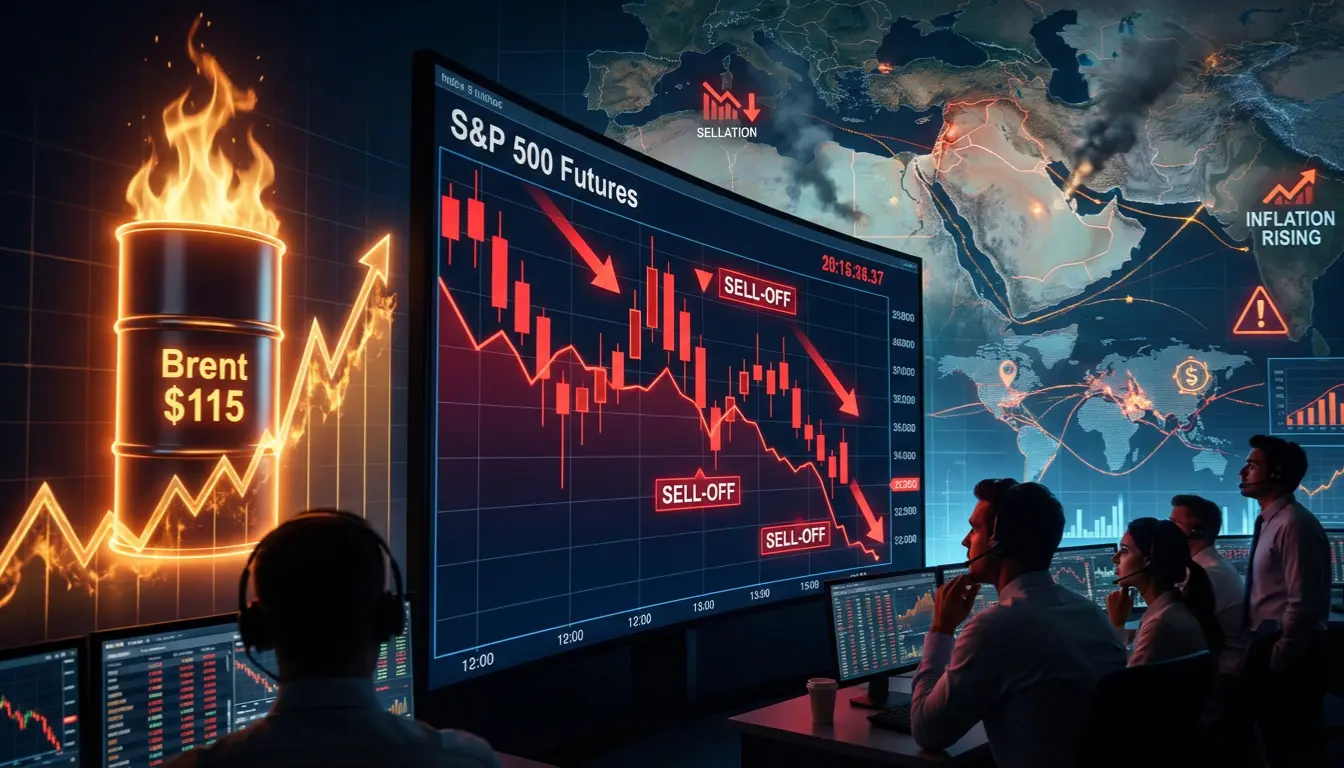
On Wednesday, U.S. stock index futures ticked lower after Wall Street slid during the regular session, as investors priced in a hawkish tilt by the Federal Reserve and escalating tensions in the Middle East that kept oil prices higher.
The S&P 500 Futures inched 0.2% lower to steady around 6,670 points, while Nasdaq 100 Futures fell 0.2% to 24,597 points. Dow Jones Futures also edged lower to close at 46,455 points.
All three major indexes posted sharp declines earlier in the day as traders responded to the Fed’s updated projections and geopolitical risks. The Dow Jones Industrial Average fell 1.63% to its lowest level since November, while the S&P 500 and Nasdaq Composite dropped 1.4% and 1.5%, respectively.
“U.S. Futures Dip as Fed Holds Rates Amid Higher Inflation”
The Federal Reserve decided to keep interest rates unchanged at 3.50% to 3.75%, aligning with market expectations. However, it struck a cautious tone as policymakers raised inflation projections and maintained expectations for only limited rate easing this year.
The Federal Open Market Committee’s (FOMC) decision reflected concerns that the recent surge in oil prices could trickle down into consumer prices at a time when the U.S. inflation had not fully returned to target levels. Fed chair Jerome Powell said inflation is still expected to ease gradually, but the pace of deflation could be slower than previously thought.
He said that energy markets had become an added source of uncertainty for inflation, warning that sustained increases in fuel prices could slow progress toward price stability. This remark led traders to further scale back expectations for near-term rate cuts, even with the central bank signaling one reduction for the year and another in 2027, consistent with its December 2025 outlook.
“U.S. PPI Hits 7-Month High, Up 3.4% YoY”
Meanwhile, data released on Wednesday show that the U.S. producer prices rose more than expected in February. This has reinforced persistent inflationary pressures beyond energy. The Producer Price Index (PPI) increased 0.7% month-over-month, up from 0.5% in January and well above the expectations of 0.3% – marking the largest gain in seven months. Headline PPI rose 3.4% year-on-year, while Core PPI jumped from 3.5% to 3.9% last month.
Investors are now looking forward to weekly jobless claims for further insight into domestic labor market conditions.
“Iran Retaliation Hits Oil Infrastructure, Prices Surge Above $110”
Investors’ sentiment was also shaped by a major escalation in the Middle East war after Iran attacked several energy facilities across the region after Israeli forces struck the South Pars gas field, one of the largest natural gas fields in the world. Iran’s retaliatory strikes reportedly damaged infrastructure tied to Qatar’s Ras Laffan energy complex, prompting new fears over regional supply disruptions.
Oil prices extended their rally during Asian trading on Thursday, climbing above $110 a barrel as geopolitical risks intensified. The ongoing conflict between the U.S., Israel, and Iran has raised concerns over crude flows through the Strait of Hormuz – a shipping route responsible for handling 20% of daily global oil supply.
Traders are increasingly pricing in the risk of prolonged supply disruptions and higher oil prices.


