

Key Takeaways
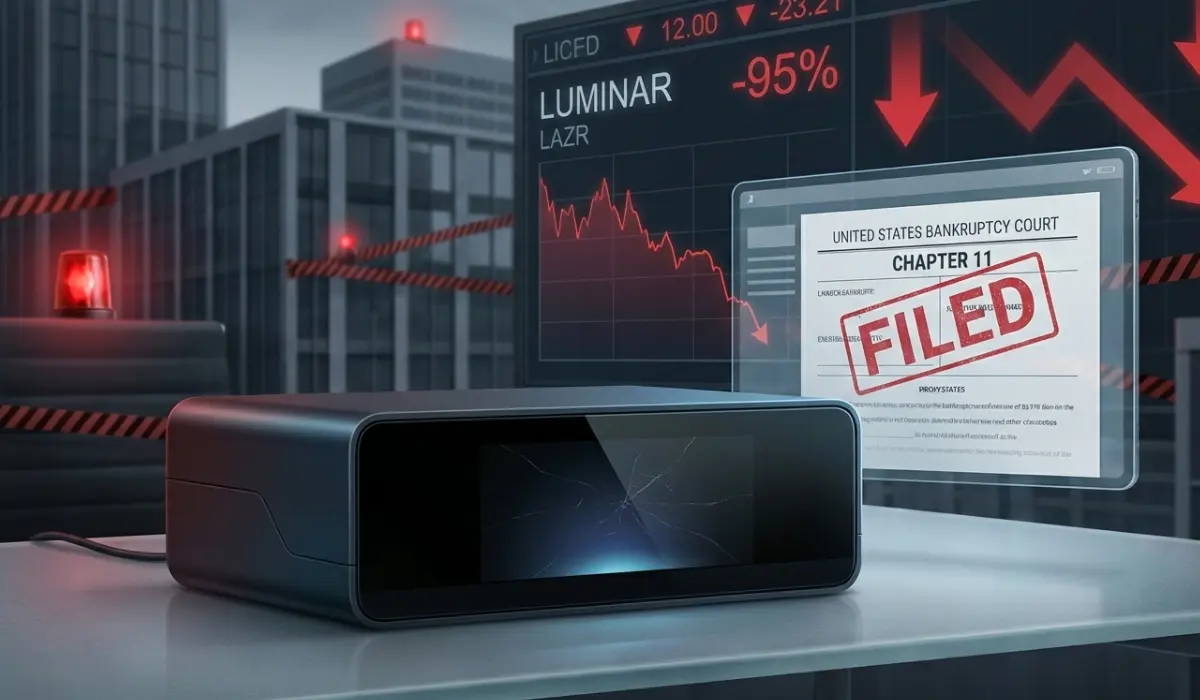
- The Lidar maker Luminar filed for bankruptcy under Chapter 11 in the U.S Southern District of Texas on December 15.
- Before filing for bankruptcy, the company agreed with Quantum Computing Inc (QCi) to sell the equity of its subsidiary, Luminar Semiconductor Inc.
- Once valued at over 3 billion, the company faced backlashes due to mounting cashburns, delayed adoptions, and contract setbacks.
- Austin Russell, the founder and former CEO, is reportedly planning to bid for Luminar during the bankruptcy proceeding.
The Lidar maker Luminar, which rose to fame riding on the early investor enthusiasm around self-driving cars, filed for bankruptcy under Chapter 11 in the U.S Southern District of Texas yesterday, December 15. The bankruptcy plea was backed by approximately 91.3% of its first lien noteholders.
Before filing for bankruptcy, the company agreed with Quantum Computing Inc (QCi) (Nasdaq: QUBT) to sell the equity of its subsidiary, Luminar Semiconductor Inc., for $110 million. The operations of Luminar Semiconductor Inc. (LSI) are anticipated to continue uninterrupted as the subsidiary is not a debtor in the Chapter 11 filing.
While announcing the acquisition of LSI, Yuping Huang, CEO and Chairman of the Board of QCi, commented that the move represented a meaningful step forward in their strategy to develop and scale practical, integrated quantum solutions. He further stated that the post-closing revenue opportunity would be two-fold: to serve and expand LSI’s current non-quantum customer base and to utilize LSI’s technology and products to drive the commercialization of quantum appliances in their targeted markets.
Meanwhile, Luminar is planning to sell off its lidar business during the bankruptcy proceedings. The key lenders have agreed to set aside $25 million in cash for facilitating transactions and support operations during the bankruptcy proceedings.
Commenting on the arrangement, Paul Ricci, CEO of Luminar, stated, “These transactions provide Luminar with the best opportunity to maximize value for all of its stakeholders.”
He further noted that over the past six months, they had taken meaningful steps to drive operational discipline, streamline their cost structure, and sharpen their strategic direction. But their legacy debt obligations and the pace of industry adoption had challenged their ability to operate the business sustainably, and after a comprehensive review of their alternatives, the board had determined that a court-supervised sale process was the best path forward.
“As we navigate this process, our top priority is to continue delivering the same quality, reliability, and service our customers have come to expect from us,” he added. Once valued at over 3 billion, the company faced backlashes due to mounting cashburns, delayed adoptions, and contract setbacks.
The Luminar Saga: A Tumultuous Tale of Rise and Fall
Luminar Technologies was founded back in 2012 by Austin Russell when he was just 17 years old. The company focused on building long-range LiDAR for autonomous vehicles. The breakthrough moment happened when the leading automobile manufacturer, Volvo Cars, struck a deal with the company. The industrial validation led Luminar to shift its focus to automotive-grade production from prototype manufacturing. The company later announced high-profile partnerships such as Mercedes-Benz / Daimler Truck, SAIC Motor, Toyota Research Institute (TRI), NVIDIA, and Mobileye (Intel).
The company went public in December 2020 with a valuation of more than 3 billion through a SPAC merger. Austin Russell, who became a Billionaire following the stellar IPO, resigned in May this year after a “code of business conduct and ethics inquiry.” He later founded the Russell AI Labs. The Luminar, on the other hand, later got embroiled in a legal dispute with Volvo, following the latter’s termination of the contract in November. Austin Russell is reportedly planning to bid for Luminar during the bankruptcy proceeding.


