

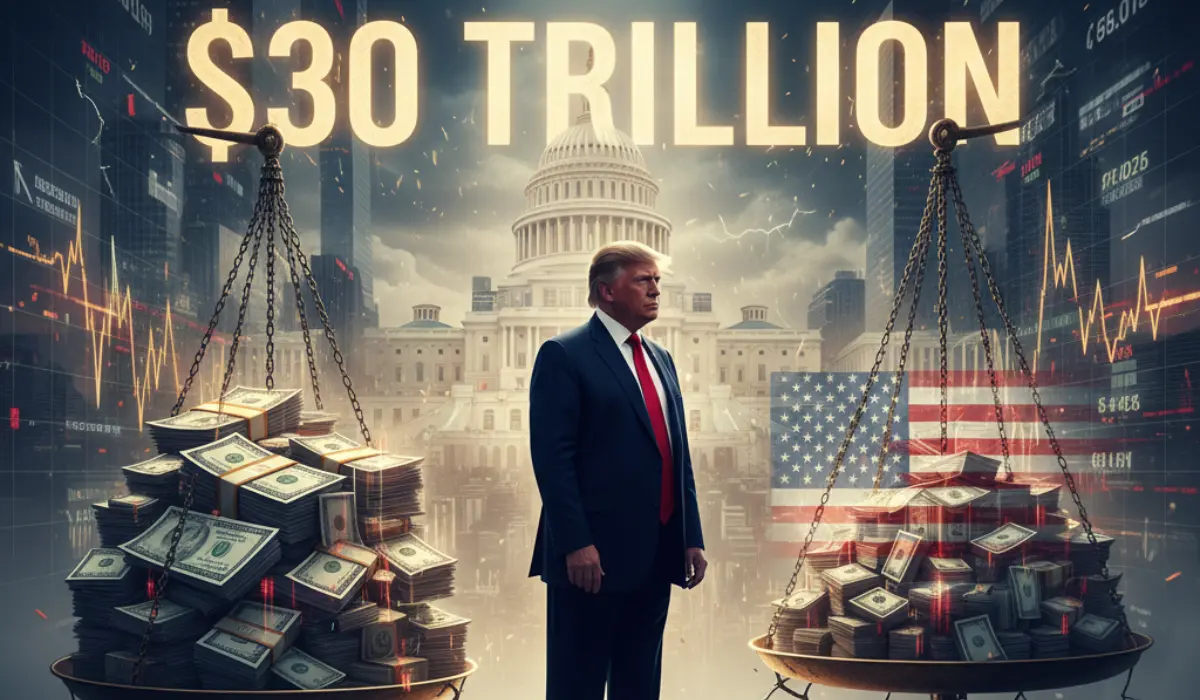
It has to be said that the tariff war that was a characteristic of the Trump administration has backfired severely. The markets went into extreme tensions once Trump announced reciprocal tariffs with its major partners like the EU(European Union), China, and India. Bonds, which were naturally a safe haven, saw a massive collapse with borrowing rates skyrocketing.
Realizing the extremity of the situation, the Trump administration decided to dial down its aggressive stance on reciprocal tariffs. However, this peace that is now present between President Trump and the 30 trillion US dollar bond market is paper-thin, as the administration can make a U-turn at any point, especially given the fact that the leader of this administration is none other than President Donald Trump.
An Uneasy Truce: Bond Vigilantes vs. The Trump Administration
While it seems that a certain amicable solution has been drawn up between the administration and the market, it is simply an illusion. Leaning on short-term debts and by delaying controversial tariff applications, the issue is simply kept at bay. The deeper issues, like that of the economic deficit that is nearly 6% of the GDP, are yet to be addressed.
When bond vigilantes, investors who sell off bonds to steer the administration’s reckless fiscal decisions, enter the market, it is imperative that the economy is positioned in a dangerous spot. Usually, these influential investors can bring administrations to create a solution where the economy’s stability is not compromised. However, peace here in today’s context is tenuous, meaning that the bond vigilantes are yet to convince the Trump administration of the impending fiscal collapse and its aftermath.
Another fact that points out that this “peace” may be short-lived is clearly observable from the actions of Scott Bessent, the United States Treasury Secretary. By making use of tactics like bond buybacks and by issuing short-term Treasury bills rather than long-term bonds, Bessent is trying to lasso the bond vigilantes. Bessent has been able to successfully navigate this turmoil by publicly addressing the importance of bonds. He additionally pointed out how he is planning on containing the 10-year Treasury yield, which is interpreted as a signal that the administration respects the market’s power and is trying to avoid provoking the bond vigilantes.
Read More: Morgan Stanley Downgrades MGM China Stock Rating While MGM International Posts Gains
From “Liberation” to Volatility: The April 2nd Market Shock
The tensions mounted on April Liberation Day, the day when President Trump announced that the US imports would be tariffed, as the present global trading conditions were unjust to the American economy. What was aimed to be a fulfillment of the protectionist trade model that Trump had declared in his election promises turned out to be a catastrophic blow to the bond market. The volatility skyrocketed, bonds crashed, and bond yields skyrocketed. This level of volatility was recently experienced by the market back when COVID-19 had disrupted the global economy.
Realizing this unease, the Trump administration quickly recalibrated its approach to the protectionist stance for the US economy. With the nation already in a huge debt that exceeds 120% of annual economic output, this was not the right time to go to war with the bond market investors. The interest payments on this debt alone reached a whopping 949 billion US dollars, almost rivalling the national defence budget.
Triple Threat: How AI, Elections, and the Fed Endanger Market Stability
Scott Bessent, the Treasury Secretary, has been able to maintain this fragile yet existing peace through tactical time-buying. Since his strategy is overly reliant on the Federal Reserve’s policies, this peace can collapse if the rate cuts cease. In a more severe scenario, if the Federal Reserve decides to raise interest rates to battle the persistent price increase from modified tariffs, the peace could be shattered altogether.
Another factor that puts this peace at risk is the possibility of AI-led stock market enthusiasm. If this AI bubble were to burst, the market would move on to a general risk-off sentiment, essentially destroying the existing peace between the administration and the bond market investors.
Market volatility could also be reignited if the 2026 midterm elections turn out against the existing administration. This is because of the fact that a Democratic victory means policy uncertainty. If Washington’s top dogs get tied up in a legislative gridlock, this will make policy pushing harder or will even seize entire operations. This is a highly detrimental scenario for the fragile peace that is at present keeping together the administration and the bond market.


