

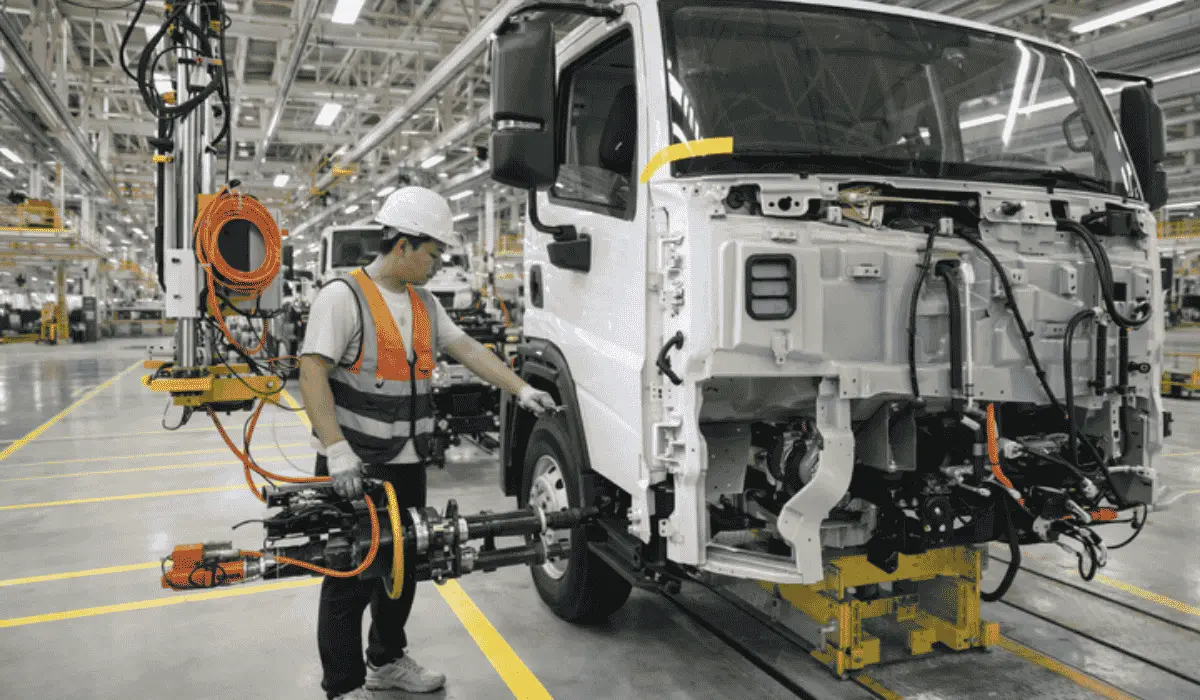
In December 2025, China’s factory activity grew for the first time in eight months, with the official Purchasing Managers’ Index (PMI) rising to 50.1. The abrupt uptick is attributed to factors like stronger domestic demand and companies stocking up ahead of the Lunar New Year holiday. According to the National Bureau of Statistics’ survey, in November, the PMI was 49.2, reflecting a 1.83% surge over the period of the month. The uptick signals the modest improvement in manufacturing activity amid economic uncertainty. Apart from the National Bureau of Statistics’ survey, a separate private-sector survey has also confirmed the recent marginal growth.
Julian Evans-Pritchard, head of China economics at Capital Economics, commented that assuming the improvement in the PMIs was borne out in the hard data, they thought it would likely be a short-lived upturn in activity on the back of month-to-month swings in fiscal spending rather than the start of a more sustained pick-up.
Industry experts opine that the recent improvement could be temporary because China faces multiple issues like weak demand, price wars, and trade tensions. Based on the latest reports, a sustained reading above 52 is necessary to claim and confirm a robust recovery.
According to industry experts like Julian Evans-Pritchard, despite the improved PMIs, deeper problems such as property sector weakness and industrial overcapacity remain. The latest reports suggest that a significant drop in China’s real estate business has reduced the demand for construction materials, goods, and appliances. In Chinese factories, they produce more goods than the market needs, adding immense pressure on prices and profits. “The big picture is that the structural headwinds from the property downturn and industrial overcapacity are set to persist in 2026. Julian added.
China’s Economy Shows Mixed Signals: Manufacturing Gains, Industrial Firms Struggle
However, the factory activity returned to an improved state by the end of 2025, and the broader stock market trend signals a fragile economic backdrop. The latest market details show that recently, investment has lost further ground, consumer spending has declined significantly, and industrial output has fallen below expectations, etc.
Jonathan Cheng, China Bureau Chief at The Wall Street Journal, posted on X that China’s factory activity signaled a return to growth in December, according to both official and private surveys, and that this improvement was likely to help Beijing achieve its growth target for the year.
China’s factory activity signaled a return to growth in December, according to both official and private surveys, an improvement likely to help Beijing achieve its growth target for the year.https://t.co/HKZ2ObvPm7
— Jonathan Cheng (@JChengWSJ) December 31, 2025
Reuters reported on Wednesday that the production sub-index had jumped to 51.7 from 50.0 in November, while new orders had climbed to 50.8 from 49.2, marking their strongest performance since March. It was noted that supplier delivery times had also improved, pushing the production and activity expectations component to 55.5, its highest reading since March 2024.
According to a separate data released in the past week, Chinese industrial firms recorded a substantial 13.1% drop year on year in November, marking the biggest drop in over a year. The experts concluded at the Central Economic Work Conference that the country’s economic development still faced many longstanding problems as well as new challenges, that the impact of changes in the external environment was deepening, and that the imbalance between strong supply and weak domestic demand remained pronounced.


