

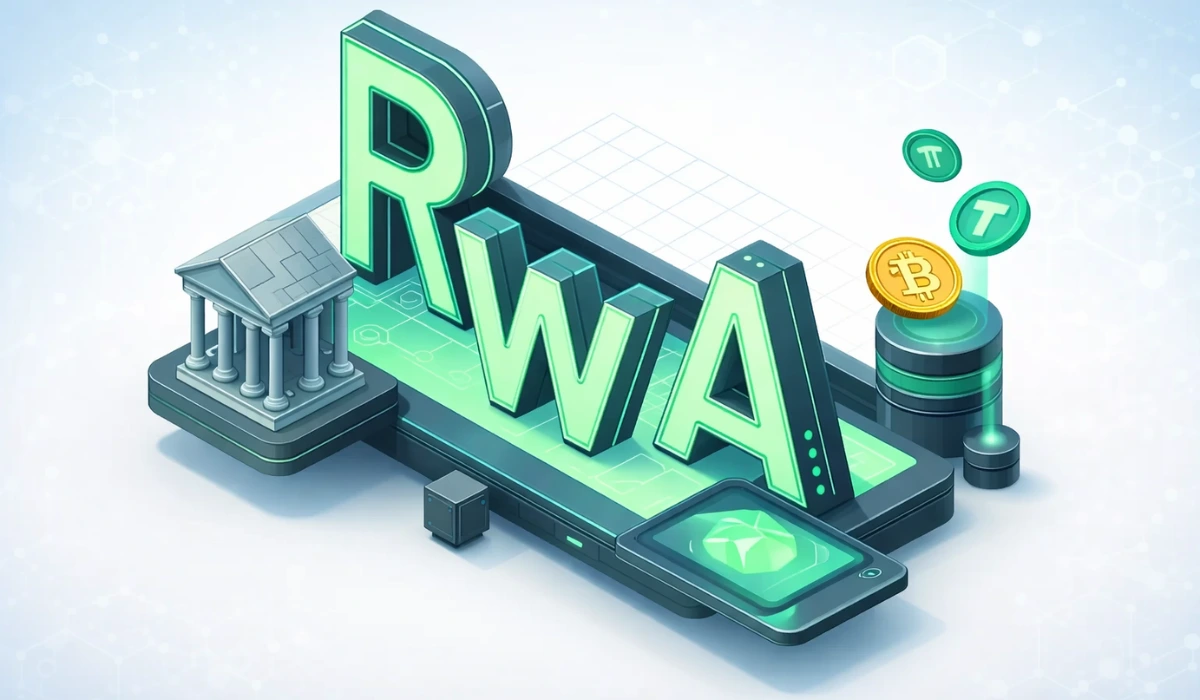
Real-world assets in the crypto space are tangible or intangible assets that exist in the real world and are simultaneously represented in the crypto space as digital tokens. When real-world assets are tokenized, they reach the wider blockchain space and records ownership rights. Bonds, commodities, currencies, and equities are all examples of real-world assets.
Tokenization of real-world assets refers to the representation of real assets as digital tokens on the blockchain. This process is important because it makes real-world assets available and accessible to a broad range of users, giving them fractional ownership. High-value assets thus become affordable to all as they will be sold as smaller, affordable units. Tokenization of real-world assets offers liquidity to the tokens and ensures the transparency of the assets.
Types of Real-World Assets
There are different types of real-world assets, such as currencies, real estate, commodities, art collectibles, vehicles, and financial instruments. Stablecoins are a type of real-world asset where the asset is the original currency, such as the US Dollar. Retail assets that can be tokenized include houses, apartments, office buildings, retail spaces, and land. Commodities such as gold, silver, platinum, oil, natural gas, agricultural goods, etc. can be tokenized. Financial instruments include bonds and stocks. Art collections such as paintings and sculptures can be tokenized. Most vehicles, such as cars, planes, and boats, can be tokenized to represent ownership.
How are Real-World Assets Tokenized?
You should understand the process of tokenizing real-world assets before considering any investment decisions regarding these assets. The process of tokenization is explained in detail in this section.
- The first step is to determine the real asset that you would like to tokenize. Select an asset that has value, such as a real estate property, bonds, equities, etc.
- Determine the specifications of the token, such as whether it should be fungible or non-fungible, the token standard, such as ERC-20 or ERC-721, the blockchain on which it should be recorded, and all other fundamental aspects necessary to build a token.
- Select the blockchain on which you would like to record your asset.
- Make provisions for verifying the authenticity of the asset behind the token. Establish a verifiable off-chain connection between the token and the asset behind it.
- Now you can directly deploy the smart contracts of the token on the selected blockchain network and make them publicly available.
Benefits of Real-World Asset Tokenization
The tokenization of real-world assets provides many benefits to the users and the developers of such tokens.
- Efficiency: Real-world assets are a reliable source that you can trust to be efficient. They provide a space for easy post-trade reconciliation, efficient settlement of transactions, and on-time delivery of assets in tune with the payment schedule.
- Reduced Cost: Real-world assets are cost-efficient as they are executed by the self-executing autonomous software. There are no human-made errors or any reliance on intermediaries. This makes the transactions cost-effective and reliable.
- Transparency: Real-world assets on public blockchains are transparent and can be audited in real time as the data are available for public verification. Users can cross-check the authenticity of the collateral and its risk exposure before committing to the transaction.
- Compliance: Real-world assets follow strict codes of compliance. Compliance is mostly ensured through a unique identity verification system and strict KYC rules.
- Liquidity: As real-world assets are tokenized and built on competitive blockchains, real estate, private credit investments, pre-IPO shares, and carbon credits, the liquidity of these assets is consistently maintained.
- Innovation: Real-world assets are a result of innovation in the methods of improving the functionality of tokens across various ecosystems. New financial products and services can be made through the tokenization of real-world assets.
What is the Future of Real-world Assets?
Real-world assets are susceptible to various issues regarding compliance and a lack of standardization of assets. They are also liable for issues related to valuation and pricing. Despite these risk factors, the future of real-world assets appears bright, given efforts to clarify regulations, utilize advanced technology, and make a wider range of assets available. Investors can be offered tokenized versions of new assets such as intellectual property rights.
As blockchain technology continues to evolve, we can also expect an increase in the transparency and security of real-world assets within the cryptocurrency industry.


