

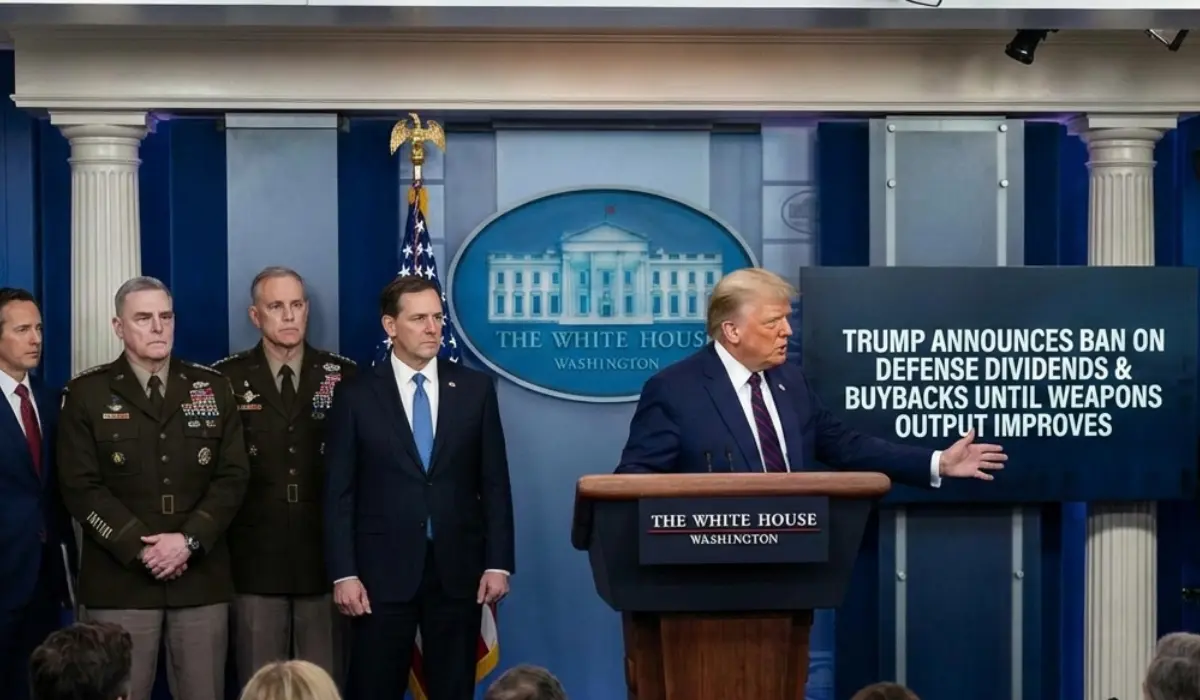
President Donald Trump has rolled out a policy that tightens financial freedom for major defence companies. Under the plan, contractors will be barred from paying dividends or carrying out share buybacks until they boost weapons manufacturing and address persistent maintenance problems.
The announcement was made on Truth Social and followed by a formal executive order from the White House. Markets reacted quickly, with defence stocks sliding after the news.
Large players, including Lockheed Martin and Northrop Grumman, are directly affected, as both companies have been under scrutiny for production delays and budget overruns, particularly on high-profile projects such as the F-35 fighter jet and the Sentinel nuclear missile program.
Trump criticized large defense contractors for focusing too heavily on rewarding shareholders while falling short on national security demands. He said company profits should be directed toward improving factories and ensuring weapons are delivered on time.
Executive Pay Caps and Production Targets
The plan would require executives to build updated production facilities to increase output and reduce delays. It also introduces limits on executive pay as part of broader reforms.
Under the proposal, annual compensation for top leaders would be capped at $5 million. The move increases pressure on defense firms already under closer government review, as the administration calls for quicker production, tighter cost controls, and strong accountability across the sectors.
Pentagon Review and Enforcement Measures
The White House has moved to tighten oversight of defense contractors through a new executive order. The directive gives the Pentagon 30 days to single out companies that are not meeting agreed performance goals.
Defense Secretary Pete Hegseth will lead the review and notify firms found to be falling behind. Those companies must submit clear plans explaining how they will correct delays, rising costs, or weak production results. Each proposal will be assessed by officials and contractors who fail to meet the expectations and show meaningful improvement will encounter enforcement measures.
The White House has also widened the scope of its defence industry crackdown by bringing financial regulators into the process. The executive order asks the US Securities and Exchange Commission to examine rules that would support the new restrictions.
Upcoming defense contracts are set to include tougher clauses. Firms that miss performance benchmarks may be blocked from carrying out share buybacks under contract terms.
Also, the order mentions that the bonus structures will be available to those meeting timely delivery and efficient production. These measures are made to bring attention to meeting the military demands and contract commitments rather than financial strategies.
Defense Stocks Slide After Policy Reveal
Shares of major defense companies came under pressure after the policy details became public. Investors moved quickly to reassess expectations as tighter oversight raised concerns about earnings and capital returns.
Lockheed Martin saw one of the sharpest moves, with its stocks falling 4.8% on the afternoon trading. Northrop Grumman dropped 5.5%, reflecting worries over limits on payouts and added performance demands.
Investor Focus Shifts from Payouts to Performance
Raytheon (RTX) drew attention as Wall Street investors adjusted the administration’s tougher position on defense company payouts. The stock came under pressure as traders considered the impact of tighter limits on dividends and share buybacks.
Investors said the money that previously went to dividends and buybacks is now expected to go to factories and supply networks. The shift is also changing how defense stocks are judged. Instead of relying on steady payouts, investors are paying closer attention to contract performance, delivery timelines, and the firm’s ability to meet government demands.


