

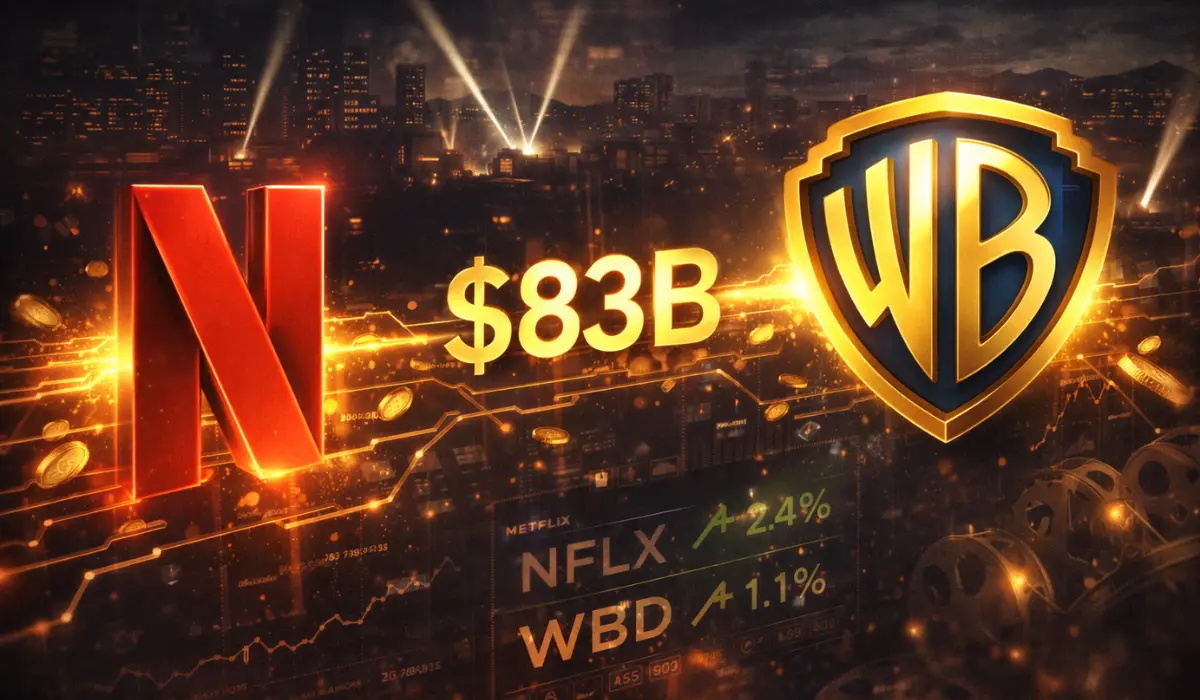
Bloomberg reported that Netflix is considering an all-cash model for its proposal to acquire Warner Bros., worth $83 billion. This is regarded as a move that could significantly reshape the media and streaming services globally.
Amid the speculations, the shares of both Netflix and Warner Bros. soared high before the market closed on Tuesday. Warner Bros. Discovery’s shares jumped to $28.74, a rise of 1.76% in premarket trading, and Netflix’s shares climbed 1.01%, reaching $91.05.
Speculation Over a Full-Cash Purchase
According to sources familiar with the matter, the streaming giant, Netflix, is exploring whether to fund the entire bid with cash rather than a mix of cash and stock.
An all-cash offer would likely be viewed favorably by Warner Bros. shareholders, as it removes uncertainty tied to share-price volatility and underscores Netflix’s confidence in its balance sheet and long-term growth prospects.
The Demand for Warner Bros.
This theory started circulating right after Paramount Skydance, another bidder for Warner Bros., sued them for rejecting the takeover. This legal action from Paramount indicates their plans to launch a proxy fight.
However, the Paramount has not modified its $30-per-share offer for Warner Bros., despite the offer being rejected twice by the latter. Paramount’s share value dropped to $12.14, a dip of 0.16%.
The fight for Warner Bros., home to some of the most celebrated franchises of Hollywood, such as Harry Potter and Game of Thrones, has been going on for months. This has put Netflix’s stock under pressure, mainly due to the possibility of the high termination fee Netflix would have to pay if Paramount succeeds in undoing the existing deal between the companies.
The streaming company has roughly lost around one-third of its stock value over the course of six months, with the value going down by 32%, from an all-time high of $133.91 (on June 30).
What Does This Deal Mean for Netflix?
The potential acquisition would rank among the largest deals ever in the media and entertainment sector. Warner Bros., home to major franchises, premium shows, and a vast film and television library, would substantially expand Netflix’s content portfolio at a time when competition in streaming remains intense, and subscriber growth has moderated across the industry.
Netflix has strengthened its financial position over the past year, benefiting from higher subscription prices, a growing ad-supported tier, and tighter control over content spending.
These factors have improved free cash flow, giving the company greater flexibility to consider large-scale strategic moves. Analysts note that opting for an all-cash deal could signal management’s belief that Netflix shares are undervalued, making equity issuance less attractive.
However, an all-cash transaction of this size would still raise questions about financing, leverage, and regulatory scrutiny. The deal would likely attract close attention from antitrust authorities in the U.S. and abroad, given the combined company’s scale in content production, distribution, and streaming.
Market Impact of the Amalgamation
Market participants remain cautious, noting that discussions are ongoing and no final decision has been made on the structure of the offer. Netflix and Warner Bros. have not publicly commented on the reported talks.
If pursued, the acquisition would mark a bold escalation in consolidation within the media sector, as legacy studios and streaming platforms race to secure content, scale, and profitability in an increasingly crowded market.
Netflix’s bid for WBD’s studios and streaming assets ignited a market expectation for an acquisition. This speculation has increased investor confidence and resulted in the stocks hitting records with the highest value in 52 weeks.
Warner Bros. Discovery also went up by 156% since the new year, and has currently reached $27.26 per share, setting a new high in a year.


