

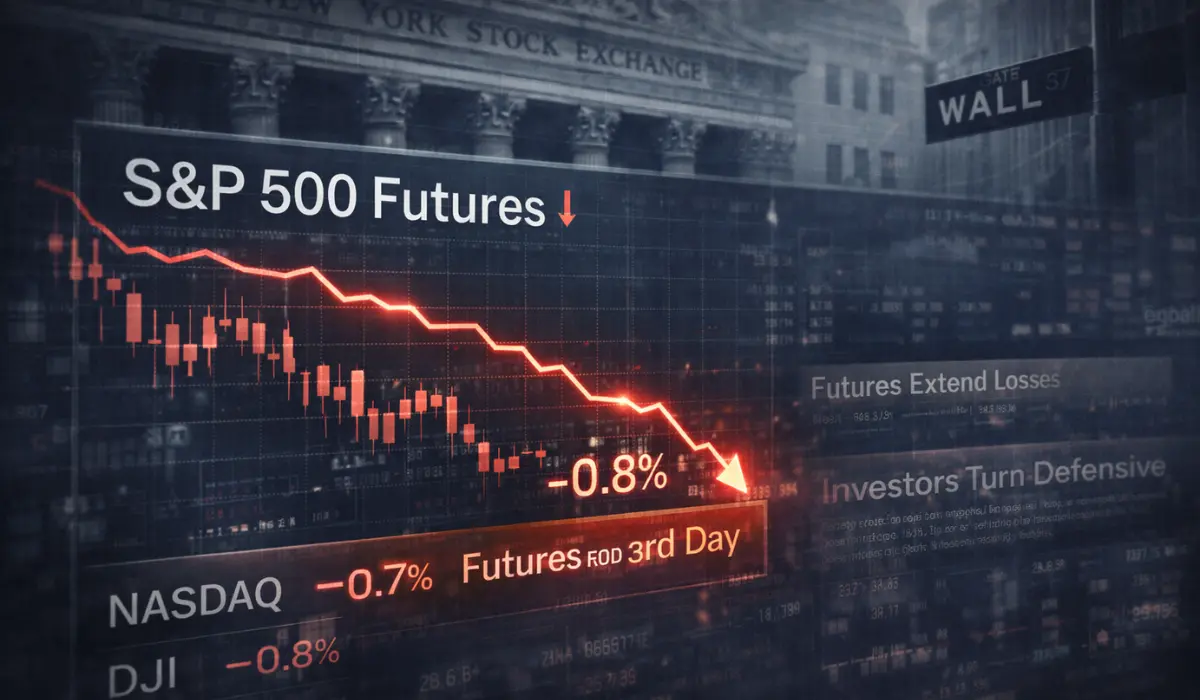
U.S. stock futures fell on Wednesday night, January 14, as the S&P 500 experienced its second straight day of losses. Futures on the Nasdaq 100 went down by 0.04%, the Dow Jones Industrial Average showed a loss of 0.06%, and the S&P 500 Index had a downward trend of 0.08%.
This was after President Donald Trump signed a document imposing 25% tariff on NVIDIA’s H200 semiconductor imports to China. And by the trade closing on Wednesday, all three major indexes had a two-day streak of losses.
U.S Stock Market to Slip Further?
According to the Wall Street experts, the S&P 500 is set to extend its recent losing streak, backed by the persistent concerns over interest rates, earnings outlooks, and the uncertainty at the macroeconomic level.
Futures tied to the Dow Jones Industrial Average, S&P 500, and Nasdaq 100 were all modestly in the red during early trading, reflecting subdued investor sentiment following consecutive declines in the broader market. The S&P 500 has struggled to regain momentum after retreating from recent highs, weighed down by weakness in key technology and growth stocks.
What’s Causing the Loss?
Investors are currently focused on the Federal Reserve’s policy approach, as the increased interest rates continue to pressure equity valuations. Recent economic data indicating inflation and a stronger labor market have heightened the expectations that rates may stay higher for longer, reducing the tolerance for risk assets.
Corporate earnings have also contributed to the market’s weaker performance. While some companies have made solid gains, cautious guidance from several major firms has raised questions about profit growth in the coming quarters, particularly as borrowing costs remain elevated and consumer spending shows signs of moderation.
Can the US Stock Market Make a Comeback?
Meanwhile, Treasury yields have stayed near multi-month highs, further challenging equities by offering more attractive returns in the markets with fixed income. The strength in the U.S. dollar has added another layer of pressure, especially for multinational companies with significant overseas exposure.
Market participants are now looking ahead to upcoming economic releases and additional earnings reports for clearer direction. Until then, analysts say volatility may persist as investors balance optimism around economic resilience against concerns over tight financial conditions.
Looking Ahead of the US Stock Market
As futures point lower, the S&P 500 appears on track to post another down session, extending its losing streak and emphasizing caution that is currently dominating U.S. equity markets.
On Thursday, investors will mostly turn their attention to the earnings from companies like Goldman Sachs, BlackRock, and Morgan Stanley. The weekly data of jobless claims is also scheduled to be released, adding to the inconsistent market performance.


