

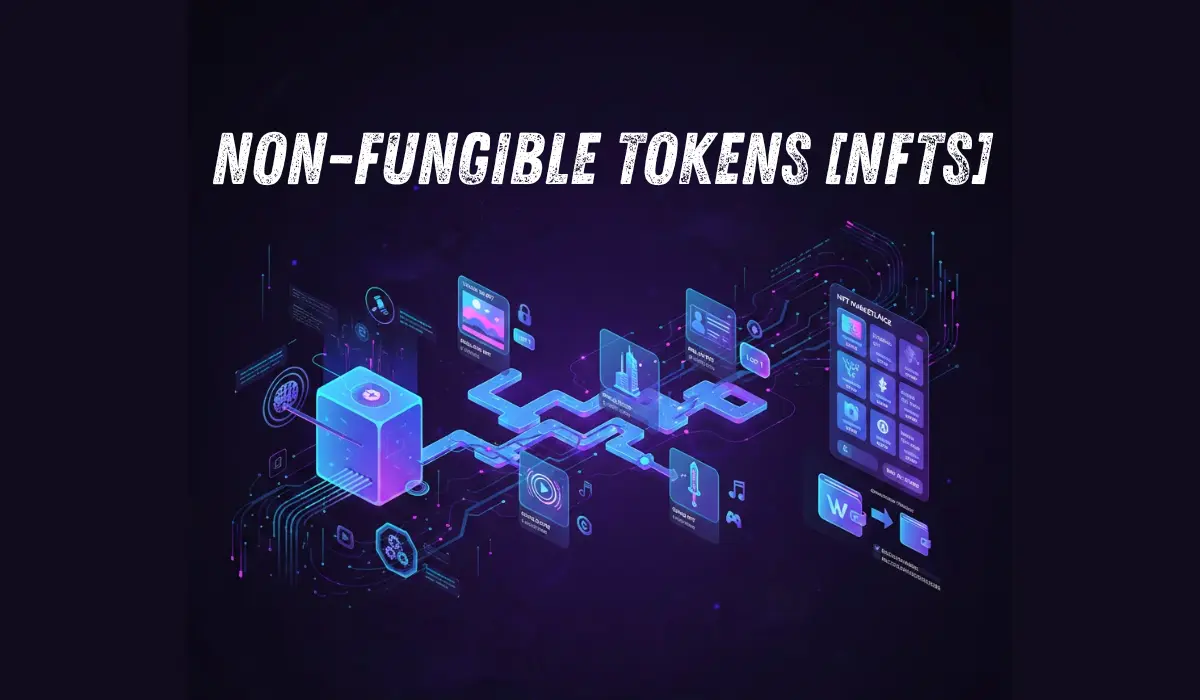
Non-fungible tokens (NFTs) refer to unique cryptographic tokens that exist on a blockchain and cannot be replicated. They represent digital collectibles or real-world items, such as real estate and artwork. They also represent individual identities, properties, and much more. However, most crypto exchanges do not offer NFTs, but they can be purchased through platforms such as Magic Eden and OpenSea. Depending on the value the market and owners have placed on them, NFTs can be exchanged or traded for cryptocurrencies, money, or other NFTs. Note that cryptocurrencies and NFTs are quite similar, as they are both secured on blockchain networks. The main difference between them is that cryptocurrencies are fungible. This article will further explain how NFTs work, their common uses, and much more. So, keep reading.
How do NFTs work on the Blockchain?
NFTs are created through a process called minting. In this process, the asset’s information will be encrypted and recorded on a blockchain. Usually, the minting process causes a new block to be created, the block to be closed, and NFT information to be validated by a validator. After the tokens are minted, they are assigned a unique identifier that is directly linked to one blockchain address. Note that each token has an owner, and the ownership information, which is the address where the minted tokens reside, is publicly available. Even if plenty of NFTs are minted at the exact same time, each token still has a unique identifier and can be distinguished from the others. While many blockchains can create NFTs, they are often called something different. For instance, they are known as the Ordinals on the Bitcoin blockchain.
Common uses of Non-Fungible Tokens
One of the common uses of NFTs is market efficiency. Understand that tokenizing a physical asset can help streamline sales processes and eliminate all intermediaries. This means NFTs represent digital or physical assets on a blockchain, thereby removing the need for agents and allowing sellers to connect directly with their target audiences. Another benefit of NFTs is that they can help streamline investing and tokenize real estate by being parcelled into multiple sections, each having different characteristics. Even though real estate trading is a complex process, it can be simplified by incorporating relevant metadata into a unique NFT with only the corresponding portion of the property.
NFTs are known to represent ownership in a business, and the smart contracts can automate ownership transfer once an NFT is sold. The NFTs are very useful in identity security because personal information stored on an immutable blockchain cannot be accessed, stolen, or used by anyone who does not have the keys. Additionally, NFTs can democratize investing by fractionalizing physical assets, which can extend to many assets.
The future of Non-Fungible Tokens
NFTs have the potential to create innovative ways to connect with consumers and enhance meaningful customer relationships. From the recent volatility in the NFT space, it is clear that there are significant risks associated with a market driven by hype and unsustainable value. Note that the organizations planning to release NFTs should focus on integrating them into existing operations and ensure a comprehensive strategy is in place before launching. Regarding the future of NFTs, they are shifting from pure speculation to dynamic functionality, real-world utility, and integration across industries. It is promoting growth in areas such as digital identities, tokenizing physical assets, gaming, and loyalty games.
Conclusion
Non-fungible tokens happen to be an evolution of the cryptocurrency concept. They stand out as they enable the digital representation of assets, providing benefits such as a tamper-resistant blockchain with smart contracts and automation. NFTs are now evolving from digital collectibles into fundamental components for a decentralized digital economy. It thus offers verifiable ownership and new interaction models across almost every sector.
FAQS
One of the famous NFT examples is Beeple’s “Everydays: The First 5,000 Days,” a digital art collage that was sold for $69 million.
Yes. Indeed, NFTs can be profitable, but they are highly speculative and carry high risk.
NFTs are less popular these days because of the initial speculative bubble burst. The market had experienced a dramatic crash, and the original focus on digital art and collectibles was overshadowed by a lack of genuine utility and scams.
Yes, you can sell NFTs for cash by listing them on a marketplace and then cashing out that crypto into traditional money through an exchange.


