


With the evolution of blockchain technology comes the increased ease of transacting cryptocurrency. With more active users and a significantly larger number of inexperienced participants, the chances of attacks on crypto wallets are also on the rise.
By addressing security, usability, compatibility, and more, we present you with the best crypto wallets for 2026.
1. Exodus
If you are looking for a wallet that performs multiple functions, then Exodus might be the right choice. Exodus has several built-in features that allow you to explore the domain of crypto while leveraging the wallet’s high-grade security features.
One of the biggest reasons why Exodus is first on this list is probably because of the sheer number of crypto networks supported by the wallet. Exodus, at the moment, allows for more than 50 popular assets. It does not require a user to create separate sub-accounts for different networks, making the process easy.
2. Zengo
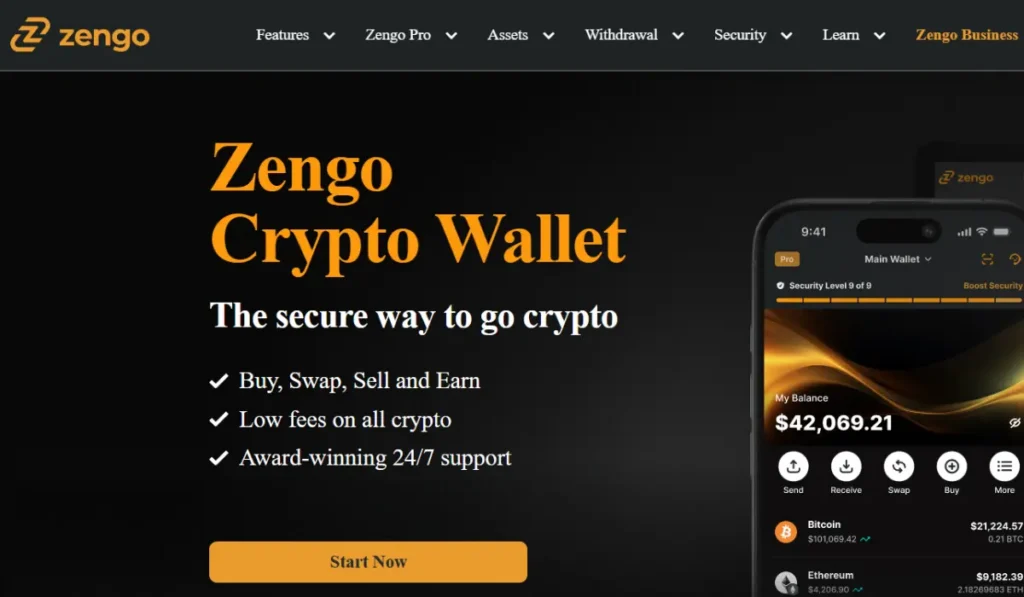
A self-custody wallet without the complications of seed phrases. While the interface is relatively user-friendly, the support for different crypto networks is limited. Even though the setup process is straightforward, the in-app fees for swapping between different crypto assets are a bad mark on Zengo.
As far as storage is concerned, Zengo, with its ease of use, becomes the best choice for beginners who have little to no experience with seed phrases and private keys. Another feature that makes Zengo the perfect choice for beginners is that there is a round-the-clock support team that helps with issues.
3. Sparrow
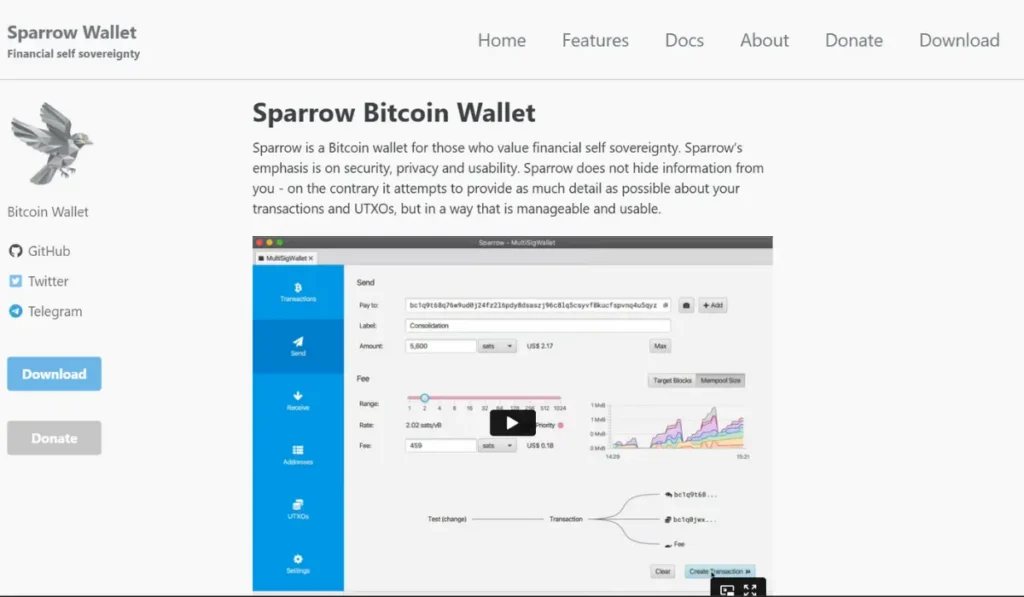
If Bitcoin is your go-to choice of cryptocurrency, then checking out Sparrow for your non-custodial wallet would be a good idea. Sparrow is a lightweight self-custody wallet that has the Lightning Network integrated within it so that users can bypass the long waiting periods between transfers for crypto.
While this wallet supports all of the common hardware wallets, there is no support for internal asset swaps or fiat onramps. This wallet can be used to connect to multiple servers and comes with a transaction editor that also functions as a block explorer.
4. Trust Wallet
Even though Trust Wallet is owned by Binance, this wallet is operational as a separate and autonomous entity. This wallet has a mobile-first design and comes with built-in features to browse for NFTs on the BNB and Ethereum networks.
The wallet allows token swaps and supports over 100 different blockchain networks. This makes Trust Wallet one of the most popular and used wallets globally. However, there are limited options for customizing the gas fee within the wallet for transactions. The lack of a dedicated support team is yet another pitfall of the Trust Wallet.
5. MetaMask
If the requirement of the wallet is to access the Web 3.0 DeFi landscape, then the best choice would be MetaMask. This wallet is highly secure and has a 99.99% transaction success rate. While MetaMask is already compatible with thousands of dApps, additional plugins can be added to support more dApps.
One of the biggest positive features of MetaMask is the time-bound updates and software patches. However, the lack of support for native Bitcoin and complex configurational setup are two major letdowns for every crypto enthusiast.
6. Trezor Safe 3
As an entry-level hardware wallet, Trezor Safe 3 is a great choice. Entry access to this hardware wallet is secured by a two-stage process involving the passphrase and a PIN. While Trezor offers hardware-level security at an entry-level price, it remains open source in its security and design.
While Trezor comes with many features expected of a hardware wallet, its personalized guide is quite expensive, which might become a necessity for beginner users. Trezor Safe 3 also has no support for Cardano, Solana, and some other popular crypto assets.
7. Ledger Nano Flex
This hardware wallet is one that belongs to the high-end category. It comes with several features, including an E-ink display that improves readability and a high-security CC EAL6+ chip. Both these features allow for transaction review and signing from a single screen. Being one of the top-end models, the Ledger Nano Flex supports over 5500 coins and tokens.
However, the complex functionalities add more security threats due to increased connectivity. The device also requires Ledger Live if users want to leverage the full potential of the wallet.
Parting Thoughts
While each wallet has its own merits and risks, the need for having a decentralized, self-custody wallet has increased ever since the interest in cryptocurrency and blockchain technology has gone up. The necessity of owning a wallet gains significant importance as cyber criminals have improvised their tactics with time.
By allowing users the flexibility of crypto trades while maintaining full ownership of their assets, the software self-custody wallets work beyond the earlier concept of mere crypto asset storage. As for the rock-solid security, there is no compromise with using a hardware wallet, even though it has limited trading features.


