

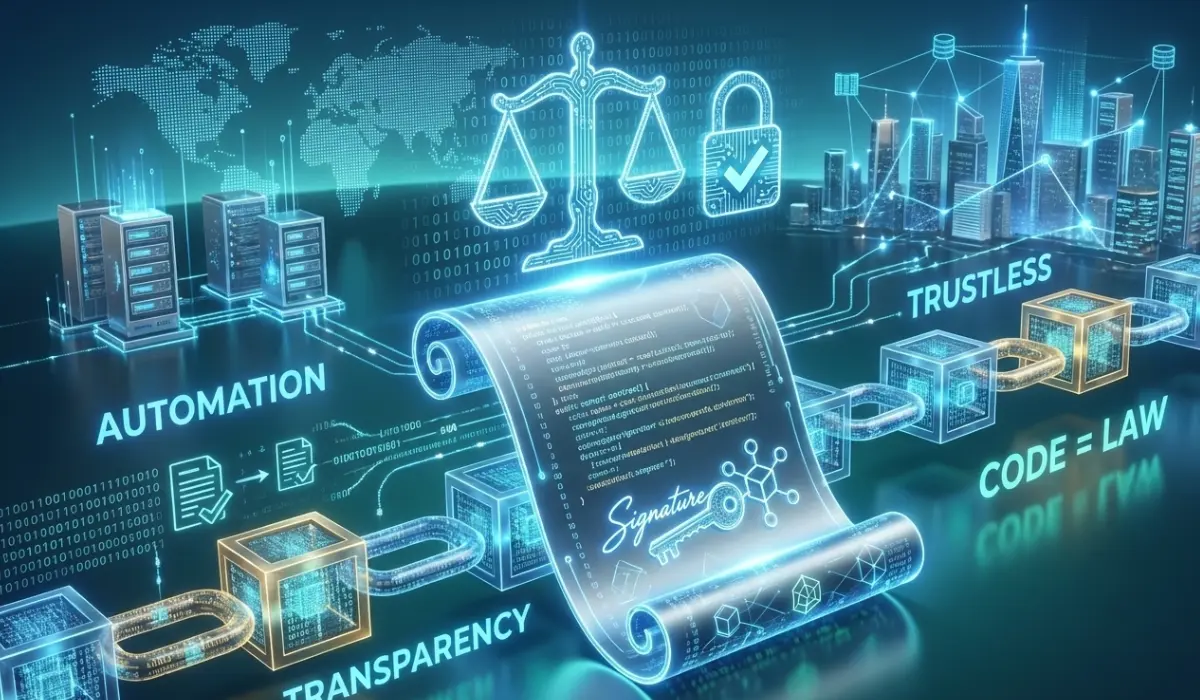
Smart contracts are self-executing agreements embedded in blockchain technology. They allow contracts to be executed seamlessly without human intervention. It helps reduce costs and enhances efficiency across industries, from finance to real estate. Smart contracts play a key role in crypto and are being widely adopted across various sectors. These contracts are transforming agreements by eliminating middlemen, and they are programmed to perform specific actions once predefined conditions trigger them. This way, they ensure reliability and efficiency. This article will further discuss everything you need to know about smart contracts and how they are shaping the future of crypto. So, keep reading to learn more.
The Future of Crypto: How Smart Contracts Are Transforming Blockchain
Smart contracts are said to shape the future of crypto, as they are transforming the way agreements are made, executed, and enforced. These self-executing contracts operate on blockchain technology and are executed automatically when certain conditions are met. It aims to eliminate the need for intermediaries, such as brokers or lawyers, since the terms of the agreement are enforced by code. It ensures security and immutability, as they are written in code and stored on a blockchain. Smart contracts work through a combination of code execution and consensus mechanisms inherent to blockchain technology.
For smart contract development, they are written in specifically designed programming languages. It is the developers who code the terms and conditions of the contracts, including the actions to be executed and the conditions under which they should occur. They also implement various security measures to ensure the robustness of the contract against potential vulnerabilities.
Regarding how smart contracts shape the blockchain, they can be used to automate and streamline supply chain management processes. They are known to provide transparency and traceability by recording every transaction and movement of goods on the blockchain. Note that the smart contracts power various applications, such as lending, borrowing, and trading, all without the need for traditional financial intermediaries. With smart contracts, individuals can engage in decentralized lending and borrowing, thereby bypassing traditional financial intermediaries and gaining access to financial services. Additionally, this automated market maker facilitates decentralized cryptocurrency trading, which enables users to swap tokens directly without centralized exchanges.
As you may know, smart contracts revolutionize real estate transactions by automating processes like rental agreements, property transfers, and escrow. This helps reduce paperwork and minimizes the risk of fraud in real estate transactions. Investors can now easily participate in fractional ownership of real estate properties through smart contracts, thereby streamlining property management and income distribution.
Insurance companies utilize smart contracts to automate claims processing and payments, which ultimately improves efficiency and reduces administrative costs. Often, flight delay insurance policies are enforced through smart contracts, triggering automatic payouts to policyholders when flights are delayed beyond a specific threshold. Since the insurance policies are tokenized using smart contracts, it allows policyholders to buy, sell, and transfer coverage easily on blockchain-enabled insurance marketplaces. This helps increase liquidity and flexibility in the insurance market, thus empowering individuals to tailor their coverage to their specific needs.
Note that the smart contracts help facilitate identity verification, where individuals retain ownership and control of their personal data. This enables secure and seamless authentication processes across different online platforms and services. It also helps reduce the risk of identity theft and fraud. Most individuals rely on smart contracts to manage their digital identities securely, which also grants them control over their personal data. Another advantage is that it enables seamless authentication and verification processes across various applications.
Advantages Of Smart Contracts In Crypto
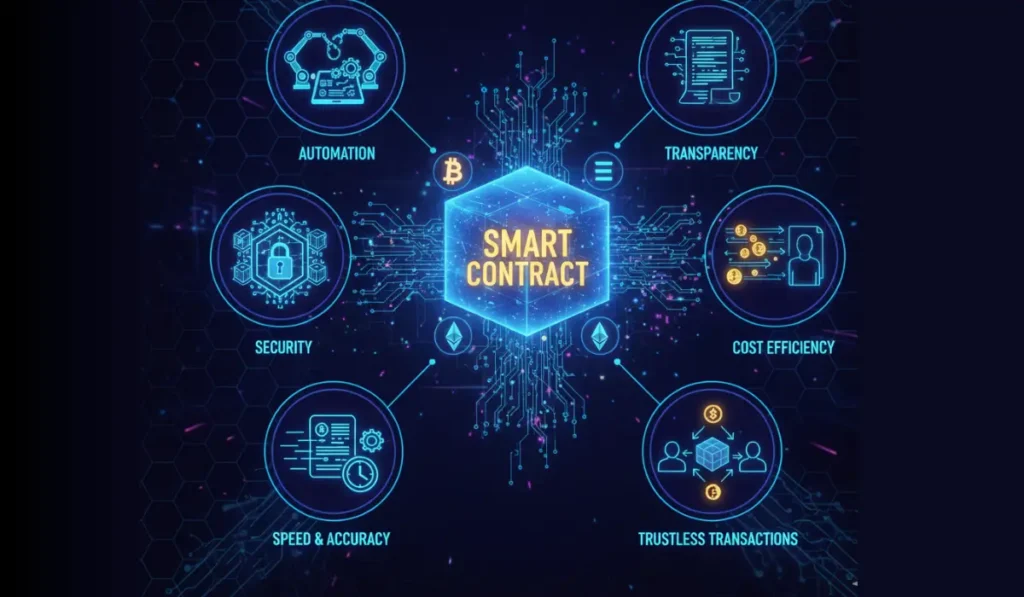
One of the main advantages of smart contacts is that they automate the execution of predefined actions once specific conditions are met. This helps eliminate the need for intermediates, which also reduces human error and streamlines processes. As you know, transactions and actions executed by smart contracts are recorded on a blockchain, which provides transparency and an immutable audit trail. This transparency is what enhances trust among parties and reduces the risk of fraud or manipulation. Since smart contracts are encrypted and stored on a decentralized blockchain network, they are highly secure against tampering and unauthorized access. This security ensures the integrity and confidentiality of sensitive data and transactions. Other benefits include cost efficiency, speed, and global accessibility. Smart contracts reduce transaction costs associated with traditional contracts and manual paperwork. Additionally, they operate on blockchain networks that are accessible globally, thereby enabling parties from different regions to interact and transact seamlessly.
Conclusion
Smart contracts are shaping the future of crypto by automating decentralized finance, streamlining supply chains, and self execution of code. They work to remove intermediaries, boost transparency, and power new Web3 applications. While they offer so many advantages, they have certain limitations, such as legal uncertainty, scalability, and dependency on oracles. Smart contracts may likely face uncertainty and legal challenges, and they might rely on external data sources called oracles to access real-world data. However, these oracles are believed to be a point of failure and centralization. Despite these limitations, smart contracts continue to evolve and provide innovative solutions. It is working to enhance the future of crypto through automation, transparency, and security in business processes and digital transactions.


