

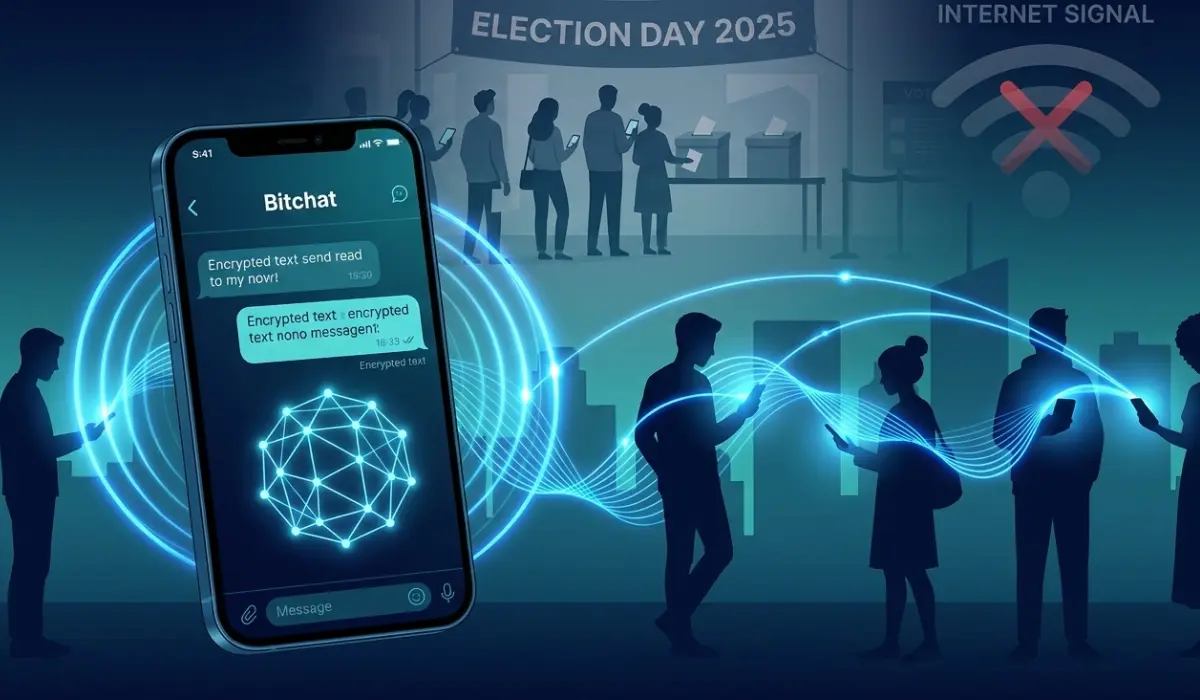
Uganda’s opposition leader Bobi Wine has asked his followers to use the decentralized application Bitchat for communication ahead of the upcoming elections. This is in view of past instances where the authorities banned social media and restricted internet access at the time of the election. Decentralized messaging is expected to make a resilience against state controls and media gatekeeping in Uganda.
Decentralized messaging uses multiple, independent channels (local networks, community groups, encrypted apps, and offline methods) for mobilizing support during events such as election campaigns. The resultant reduced reliance on state-owned media channels will not hamper campaigning even if the state bans them.
In a post on X, the leader of the opposition has asked his followers to download the decentralized messaging app Bitchat to stay connected if the mainstream communication channels are shut down by the government. The Ugandan Presidential election is scheduled to be on January 15, 2026, and Bobi Wine’s message is in view of past blackouts disturbing the opposition’s campaigns.
Past Media Blackouts Have Caused Losses for the Opposition
Bobi Wine accused the government of implementing blanket bans on social media and other communication channels during the 2016 and 2021 general elections, citing security concerns. There are reports about the activity of the opposition being disrupted due to such blackouts, which disrupted their campaigns and gave the ruling party an unfair advantage. Wine said that the government wanted to ensure that no protests were organized against them, and people did not come together to verify the election results or demand accountability. Reuters has reported moves by the Ugandan government to implement a blackout of the media in the weeks preceding the 2026 election.
Bitchat for Internet-Free Messaging and Encrypted Data Transfer
Bitchat is a communication app that does not depend on the internet; rather, it uses Bluetooth mesh networks to transfer data from one device to another. As it is decentralized, Bitchat does not require phone numbers, email addresses, or user accounts to enable communication. Bitchat therefore functions even if traditional channels of communication are disrupted. Bitchat is privacy-focused as it uses encryption technology; as no user accounts are involved, it is difficult to track the source and trajectory of a message and ban it. Bitchat is only good for location-based communication as it uses Bluetooth for data transfer.
In places like Uganda, where the ruling parties ban communication channels in view of censorship, Bitchat can be used to circumvent censorship. According to Bobi Wine, the technology could be used to spread information quickly to people in a locale. In the case of election campaigns, the app can be used to garner support from the parties’ followers and the general public.
Data from Google says that the number of app downloads in Uganda has increased after Wine’s tweet, showing that more people are moving to this decentralized communication system in view of the upcoming ban on media in the country. The app has had successful use in similar situations in other countries like Madagascar, Nepal, and Indonesia. The Ugandan opposition parties are hopeful to use this app to communicate their ideas to the public and get a fair chance to win the elections.


