

Key Takeaways
- The Asian markets edged lower ahead of the U.S job and inflation data releases.
- The November 2025 employment data is scheduled to be released later today.
- The CPI data is scheduled for December 18.
- Concerns around the overvaluation of tech stocks are weighing down on the markets.
- Both CPI and job data combined are likely to give a more insightful view of the direction of monetary policy next year.
- Amid the uncertainty, the road ahead for the markets may remain bumpy with near-term price swings.
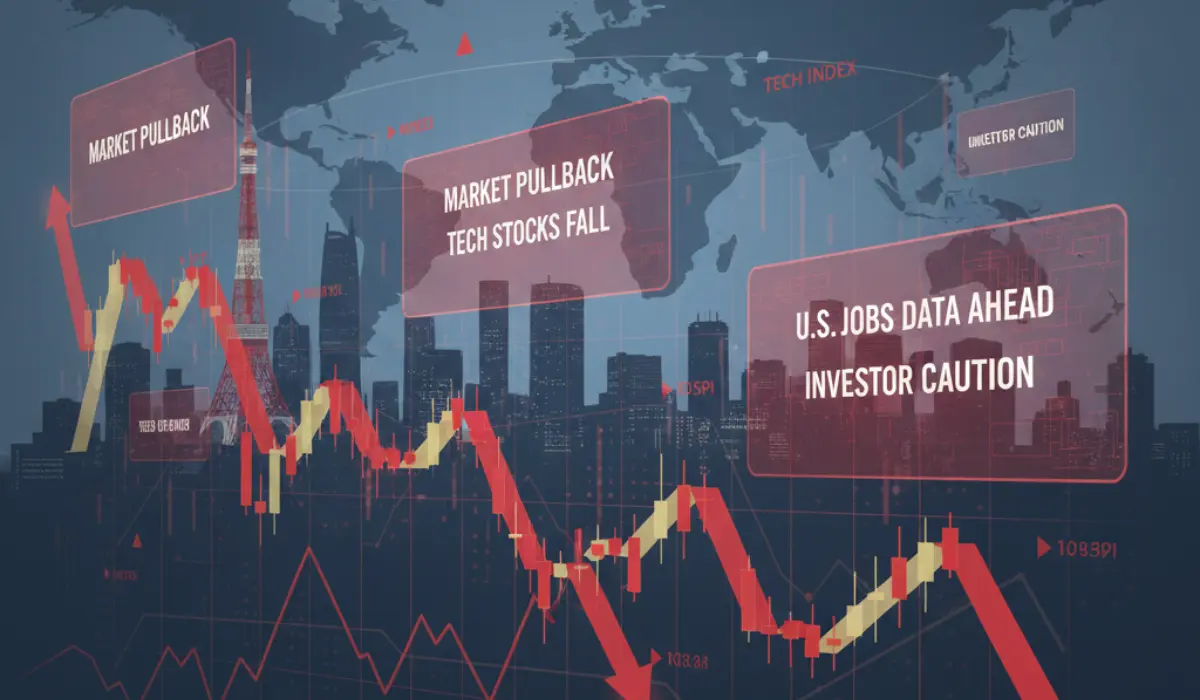
The Asian markets edged lower ahead of the U.S job and inflation data releases. Amid the macro uncertainties, the markets are also weighed down by the fears surrounding the overvaluation of tech stocks and a possible AI bubble burst. Tokyo’s Nikkei 225 fell by 1.56%, to close at 49,383.29. Shanghai – Composite ended 1.09% lower at 3,825.817
While the Hong Kong – Hang Seng Index was down 482.76 points or -1.88% at 25,146.12, as of 2:33:42 PM local time.
Investors are cautiously positioning ahead of the crucial U.S. employment and Consumer Price Index (CPI) data. The November 2025 employment data is scheduled to be released later today. The job data is crucial as the prolonged 43-day U.S government shutdown led to the freezing of crucial economic data releases. The unemployment rate is anticipated to be around 4.4% for November. Stronger-than-expected data is likely to dampen the investor sentiment as it will solidify higher interest rate expectations for the upcoming year. The CPI data is scheduled for Thursday, December 18. Both CPI and job data combined are likely to give a more insightful view of the direction of monetary policy next year.
Commenting on the upcoming data release, Matt Weller, head of market research at City Index, said that after effectively missing the October jobs report due to a lack of survey data, the Federal Reserve would closely scrutinise the November figures when mapping out the path of monetary policy through early 2026. Nevertheless, he further added that traders were currently pricing in only a one-in-four chance of another rate cut in January, meaning the market reaction to the data was likely to be limited unless it showed a sharp deterioration in the labour market.
Amid the clouded macro outlook, the fears around the technology bubble burst are further pushing the investors to adopt a risk-averse stance.
The Technology Bubble Burst Fears Continue to Weigh Down the Markets
Concerns around the overvaluation of tech stocks are gripping the markets. The investors have poured billions into AI-dominated stocks. But the overstretched valuations of the tech majors are coming under increased scrutiny, especially with Oracle and Broadcom’s shares falling sharply. Both companies are hit by the fears surrounding the AI-driven rally. The Oracle’s earnings have disappointed the markets, while Broadcom’s fall is largely attributed to concern over margins, profit-taking, and broader market caution around the lofty valuations of the tech stocks.
Investors are skeptical regarding the returns from the tech sector. The most pressing matter is whether the earnings can keep up with the overstretched valuations, especially amid a macroclimate with comparatively elevated interest rates. Concerns over the AI bubble and macro jitters spilled into the crypto market as well, with bitcoin plunging to $85k level. With heightening uncertainties, the road ahead for the markets may remain bumpy with near-term price swings.


