

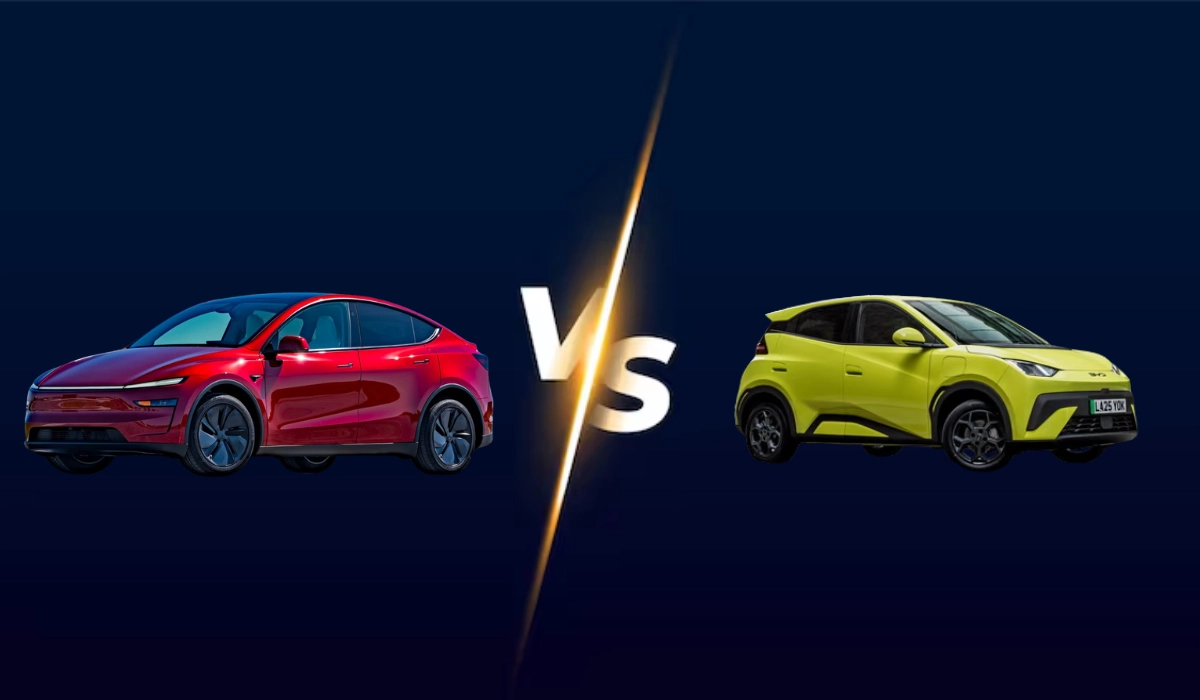
In a fresh turn of events, China’s BYD overtakes Tesla to be the world’s top seller of electric vehicles. The latest reports confirm that BYD’s sales for 2025 have risen by 28% to reach 2.25 million cars. This is the first time any other company has defeated Tesla’s dominance in the EV sector. While Tesla has yet to publish the official results, unofficial data suggest that the Company could have sold around 1.65 million vehicles in 2025.
Reason For The Decrease In Sales For Tesla
2025 was not the best year for Tesla due to several reasons. The company’s new products have failed to garner the interest of customers like before. With the introduction of the new low-cost cars, Tesla’s market share of sales went down by 4% with this announcement. The restrictions that the company faces from the US Government and the increasing competition from the Chinese market have caused huge disruptions.
Elon Musk’s involvement in American politics, especially his involvement in the Donald Trump administration by heading the Department of Government Efficiency (DOGE), and his decision to leave the company, have had mixed reactions in the market. This has also contributed to the drop in Tesla’s sales. Musk’s political activities had resulted in a worldwide resentment towards Tesla, with vandalism of Tesla’s Cybertruck vehicles in several places. Moreover, Tesla’s focus on Robotaxis and humanoids for easy transport has failed to achieve the expected results.
BYD’s Strategies For Conquering The Market
BYD’s growth to a market giant in EVs is due to the strategies that it has implemented in several areas, including vertical integration (especially batteries), diverse and affordable product lines (including hybrids), strategic global expansion, strong R&D, and support from the Chinese government.
From batteries to the semiconductors used in its electric vehicles, BYD has full control of its supply chain, which helps in cost reduction. BYD has a diverse product range that caters to all sorts of users, ranging from budget-friendly hatchbacks (Dolphin) to premium sedans (Han) and SUVs (Atto 3). Their Plug-in Hybrid Electric Vehicles (PHEVs) also have a considerable fan following.
Apart from concentrating on the Chinese market, BYD has made expansions into markets like Southeast Asia, Latin America, and Europe, often building local factories. This has given a huge impetus to the company in the global market. There are reports to prove that BYD has been investing heavily in research and development, intending to produce affordable EVs for worldwide sales. These innovative steps have contributed well to BYD’s growth in the past year. Unlike Tesla, BYD’s target is the mid-range market, which is yet another factor for its rise in sales.
Will Tesla Bounce Back In 2026?
The probability of Tesla bouncing back to gaining the largest share of the global EV market is unpredictable, but not impossible. It depends on several factors, such as a favorable local administration, customer-friendly policies, and timely innovations. On the other hand, it is also relative to the performance of Tesla’s immediate competitors, such as BYD. The scenario may shift if other EV manufacturers come to the picture, given the demand for EVs due to the increasing environmental sensitivity.


