

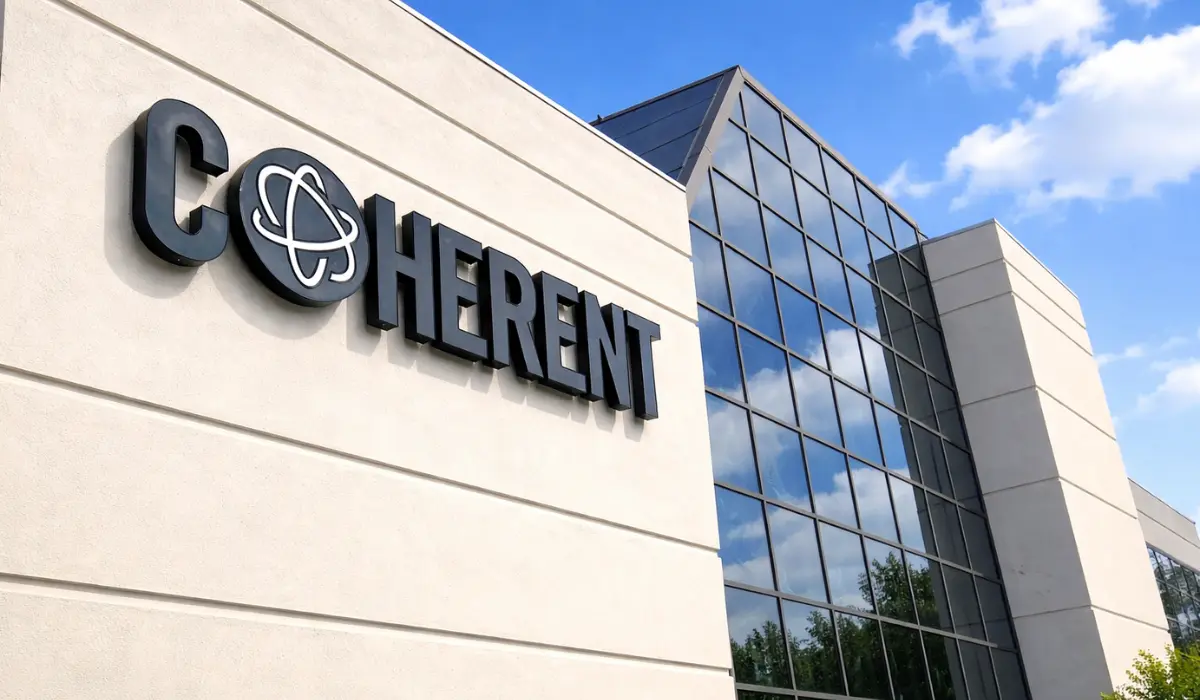
Following a collaborative relationship spanning over two decades, Coherent and NVIDIA have entered into a multiyear strategic partnership to expand global AI infrastructure. On March 2, 2026, the companies announced a landmark agreement featuring a $2 billion direct equity investment from NVIDIA alongside a multi-billion dollar purchase commitment. This agreement grants NVIDIA future access and priority capacity rights for advanced laser and optical networking products.
Breaking Down the $2 Billion Equity Deal
The focal point of this deal was the $2 billion equity investment by NVIDIA into Coherent. NVIDIA and Coherent have collaborated for over 20 years; this marks their first formal equity partnership. At a purchase price of $256.80 per share, NVIDIA acquired 7,788,161 shares. This investment transforms NVIDIA from a long-term customer into one of Coherent’s most significant strategic stakeholders, aligning the two companies’ interests as they scale next-generation AI data centers.
At the Morgan Stanley Conference, Coherent CFO Sherri Luther explained the three elements of important long-term agreements (LTA): a commitment of capacity from Coherent, a volume commitment from the customer, and most importantly, the customer having “skin in the game” – by providing capital to Coherent, which was an equity investment in the case of NVIDIA.
NVIDIA’s Photonics Strategy
NVIDIA, the pioneer of AI infrastructure, is accelerating the development of “AI factories” through this landmark strategic investment in the photonics industry. By securing this deal with Coherent, NVIDIA is accelerating the manufacturing of silicon photonics and optical interconnects to scale the next generation of optics for its high-performance AI data centers.
During the conference, Coherent CEO Jim Anderson confirmed that Coherent manufactures silicon photonics based on their customers’ demands. NVIDIA is ensuring that it remains ahead of the high-end production requirements for its next-generation GPU architectures, effectively insulating its supply chain from future bottlenecks.
What This Means for the Artificial Intelligence Industry
For the broader artificial intelligence industry, this deal signals a “photonic pivot”. The industry has reached a critical bottleneck where traditional copper wires are facing constraints, rendering them unable to match the demands of massive GPU clusters. This partnership is expected to set a new architectural standard for the entire AI ecosystem by moving optics from a peripheral networking detail to a foundational element of the chip package itself.
Regarding the new venture, NVIDIA CEO Jensen Huang stated, “Computing has fundamentally changed. In the age of AI, software runs on intelligence with tokens generated in real time by AI factories for every interaction and every context. With Coherent, NVIDIA is pioneering next-generation silicon photonics to enable AI infrastructure at unprecedented scale, speed, and energy efficiency.”
“This strategic relationship underscores Coherent’s role as a key enabler of next-generation AI data center infrastructure. We are proud to expand our 20-year relationship with NVIDIA by increasing their access to include multiple product families to help them build the AI data centers of the future,” said Jim Anderson, CEO of Coherent.
Wall Street Reacts: Coherent Shares Hit Record High
The equity market has responded to the NVIDIA-Coherent partnership with immediate enthusiasm. Following the announcement on March 2, 2026, shares of Coherent (COHR) surged by 15.4% in a single day, reaching a fresh all-time high of $299.09 and marking a historic milestone for the company’s valuation.
The rally was a result of investors recognizing Coherent’s indispensable role in providing the “photonic nervous system” for AI infrastructure. The reaction was further fueled by NVIDIA’s long-term multi-billion dollar purchase commitments, which effectively de-risked Coherent’s massive capital expenditures in U.S.-based manufacturing.


