

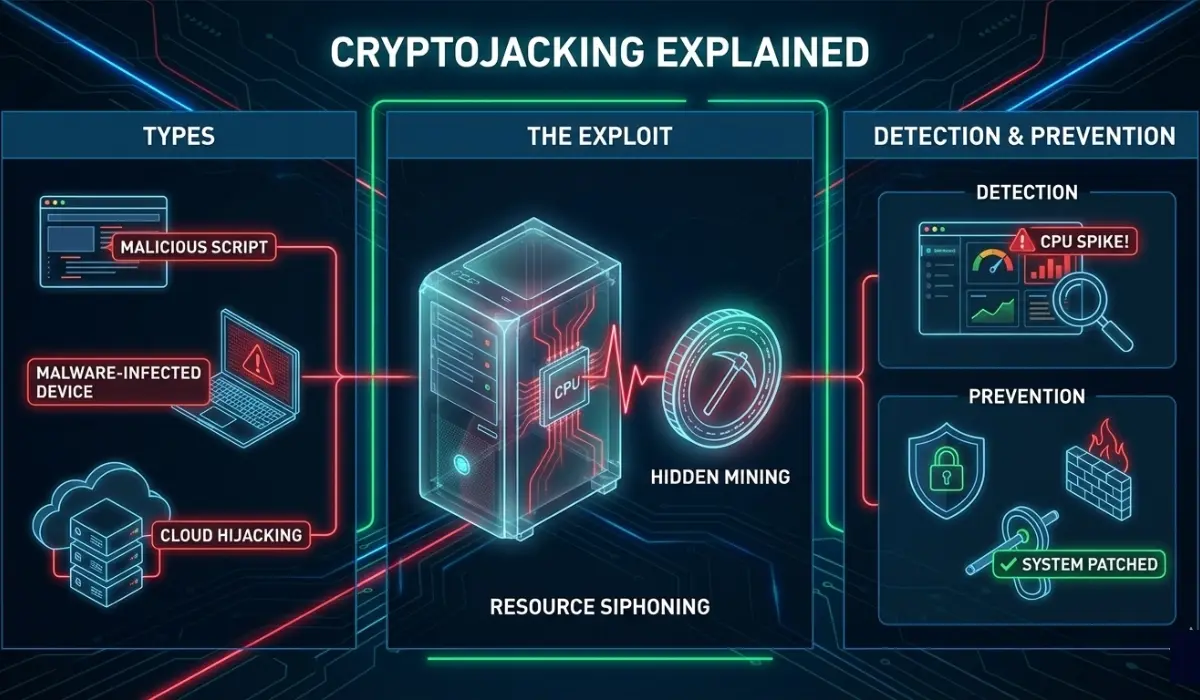
Cryptojacking is a type of cyberattack that uses a computer or device’s processing power to mine cryptocurrencies, often without the owner’s knowledge or consent. The hackers use cryptojacking code, which is a type of malware, to produce and gain valuable cryptocurrency without incurring any associated costs. As for how these scams work, the attackers trick the victims into spending their own resources without attaining any of the rewards. Apparently, cryptojacking has been considered a growing concern within the cybersecurity community. This article will further discuss everything you need to know about cryptojacking attacks, how to spot and prevent them. So, keep reading to learn more.
Cryptojacking Scams Explained: What You Need to Know
As you know, the resources to mine cryptocurrency can be expensive. This is the main reason why hackers try cryptojacking attacks. Well, successful cryptojacking forces their unaware victims to incur the costs of the cryptocurrency mining process, while the attacker collects all the profits. Note that these types of attacks can be carried out over the web, through browser-based cryptojacking scripts, phishing attacks, or through cryptojacking malware delivered as apps. Devices like servers, laptops, desktops, smartphones, and mobile devices infected with cryptojacking code or software often suffer from reduced performance. This also damages the hardware and leads to overheating. Additionally, it results in operational downtime and higher electricity bills.
Understand that cryptojacking differs from other types of cybercrimes. It is because cyber threats such as ransomware attacks or data exfiltration seek to steal or commandeer user data, whereas cryptojacking code effectively steals processing power and electricity. Be mindful that successful attacks can compromise a victim’s data privacy and create other cyberthreats. Regarding its vulnerabilities, the attack vectors include Internet of Things (IoT) devices, web pages, web browsers, browser extensions and plug-ins, emails, and other messenger-type applications. Mining malware often infects most types of popular operating systems, and hackers have targeted major software and service providers like Microsoft and YouTube.
Different Types of Cryptojacking
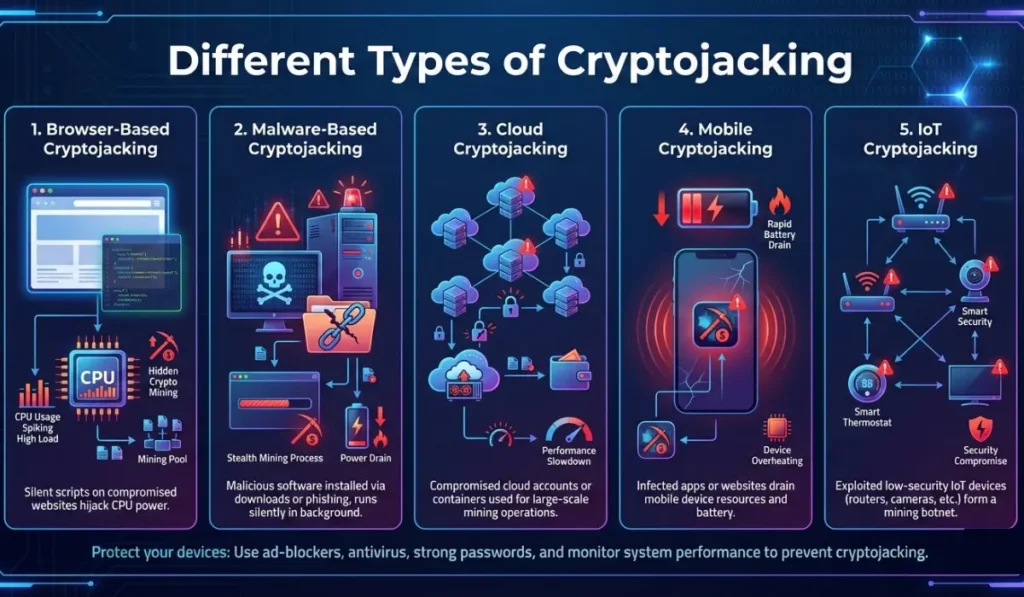
There are mainly three types of cryptojacking:
- Browser-based Cryptojacking
- Host-based Cryptojacking
- Memory-based Cryptojacking
However, a more advanced type of cryptojacking code can behave like a worm virus, infecting connected resources and mutating its own code to evade detection.
Browser-based Cryptojacking
As for browser-based cryptojacking, it runs directly in a web browser and does not require the victim to install any additional software. Simply browsing a website injected with malicious cryptojacking code causes a victim’s computer resources to be diverted to surreptitious cryptocurrency mining.
Host-based cryptojacking
Host-based cryptojacking is a malware that has been downloaded onto a target’s system or device. Since this type of attack requires users to download and store software, it can be easier to detect. However, its major downside is that it can work around the clock, resulting in higher energy consumption and greater resource drain.
Memory-based Cryptojacking
Lastly, memory-based cryptojacking is a hard-to-detect form of attack. It is also rarer than browser or host-based cryptojacking. In this type of cryptojacking, the attacker uses advanced techniques like code injection and memory manipulation to utilize RAM for cryptomining in real time without leaving any evidence.
Detecting and Preventing Cryptojacking Attacks
Since you might know, cryptojacking attacks run in the background, remaining hidden and unknown as long as they can. Be mindful that cryptojacking codes can be hard to detect, but there are a few signs that indicate the system might be infected with malicious cryptomining software. Watch out for an unexplained increase in energy consumption because cryptomining software draws so much energy. So, if you notice sudden and unexplained spikes in energy expenditure, it can indicate unauthorized cryptomining.
Next, look out for the device overheating because cryptomining causes the hardware to run hot. When the system hardware tends to overheat or simply engage in fans and cooling systems more, it could indicate a cryptojacking attack. Experiencing unexplained slowdowns can be cryptojacking, draining computer resources. When these types of attacks are carried out, they lead to overall slower operations. One of the common signs of cryptojacking is systems struggling to complete even the normal computing tasks. Lastly, check for high CPU usage. Understand that during a potential cryptojacking attack, one indicator becomes higher than normal CPU usage.
Regarding how to prevent cryptojacking, it requires a holistic approach. Some of the effective measures include rigorous personnel training, disabling JavaScript, and EDR and CDR solutions. What everyone should do is get proper training and education around phishing attacks, safe browsing, and file-sharing practices. This can be a strong defence against cryptojacking. Keep in mind that JavaScript is a ripe attack vector for cryptojacking. Thus, disabling all JavaScript can be much more effective against those attacks. Lastly, try installing common antivirus tools that can scan software for signs of cybercrime.
Conclusion
Cryptojacking attacks often result in both direct and indirect losses for an organization. It is crucial to look out for some of the common cryptojacking code signs, including reduced performance, overheating, and CPU usage. Know that cryptojacking is considered a form of cybercrime, as it uses a computer or device’s processing power to mine cryptocurrencies, that too without the knowledge or consent of the owner. Beyond the common warning signs, it is important to implement strategies and measures to prevent such attacks from happening.


