

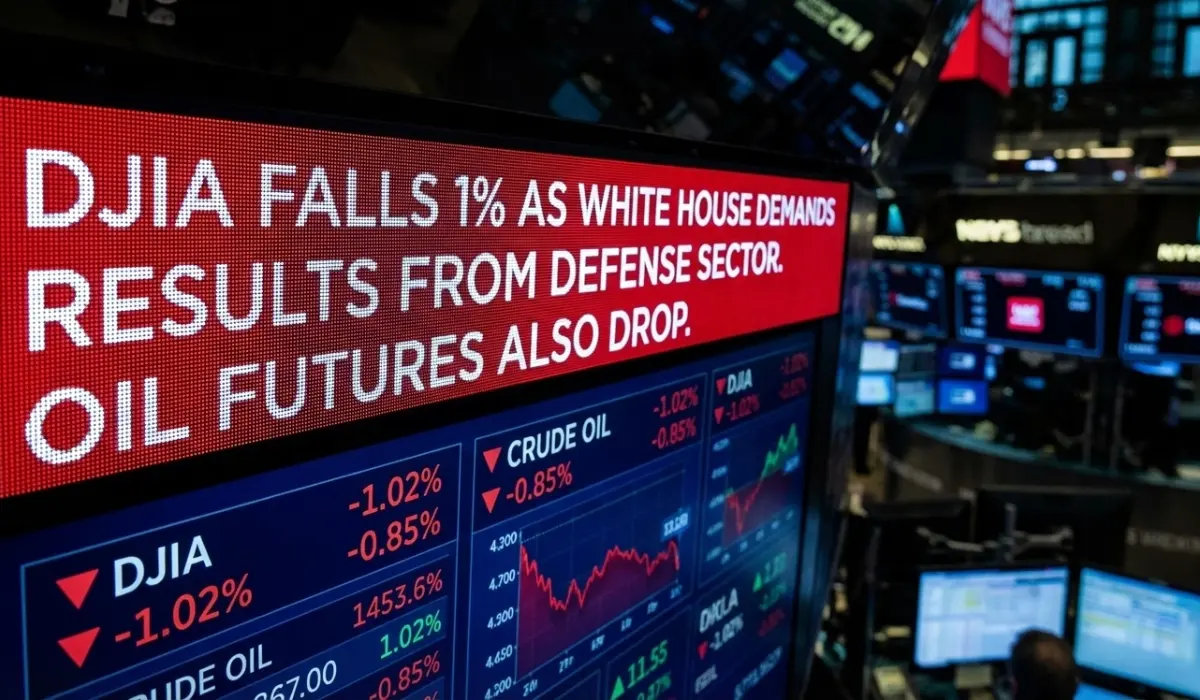
The Dow Jones Industrial Average (DJIA) fell nearly 1% on Wednesday, January 7, 2026. The core reason behind this decline was investor apprehension toward blue-chip stocks amid rising geopolitical tensions and U.S. presidential policy announcements that impacted sectors such as defense and real estate. The latest macroeconomic figures also played a role in the decline, coming just a day after the Dow Jones Industrial Average had set fresh highs on January 6, 2026.
Giving in to incoming Venezuelan oil, West Texas Intermediate futures—the U.S. crude oil benchmark—fell 1.7% to $56.15 a barrel at 4 p.m. ET. President Trump’s announcement regarding massive oil imports from Venezuela shook the oil market. An X post stating that Venezuela would exclusively purchase U.S. products with the proceeds from the oil deal indicated that the current U.S. administration is fully committed to increasing oil imports from Venezuela.
Multiple Factors Contribute to the Fall of the DJIA
Key among the factors contributing to the nearly 1% fall in the Dow Jones were political announcements made by President Donald Trump on the social media platform Truth Social. Trump’s crackdown on the defense sector caused major defense stocks to tumble. The primary issues highlighted by the U.S. president were slow equipment production and maintenance delays.
Trump threatened defense companies with a shareholder payout ban and an executive pay cap. In his statements, Trump made it clear that there would be a prohibition on dividends and stock buybacks for companies failing to meet objectives. Additionally, the U.S. president issued an open warning to top-tier management of defense companies, stating that executive pay would be capped at $5 million unless new production plants were built and operational.
Following the announcement, several defense companies recorded sharp declines in their stock prices. Northrop Grumman fell 5.5%, while Lockheed Martin shares declined 4.4%. General Dynamics and RTX dropped 3.6% and 2.5%, respectively.
Another announcement, which signaled President Trump’s intention to pursue an initiative banning large corporations from buying single-family homes, further rattled the market. While the move was viewed as favorable for individual homebuyers, large institutional players such as JPMorgan Chase, which has significant real estate exposure, recorded losses. This, combined with Trump’s comments on the defense sector, added further pressure on the DJIA.
Oil Futures Suffer from the Venezuelan Escalation
The White House’s decision to lift sanctions on Venezuelan oil following the arrest of Nicolás Maduro had a noticeable impact on oil markets. With the global oil market already saturated due to surplus production, the addition of an estimated 30 to 50 million barrels from Venezuela further increased oversupply.
This growing supply, combined with weaker demand from low-growth economies such as China, has increased the likelihood of inventory build-ups, further weighing on prices. Additionally, reduced energy imports by countries that were once major consumers have created ripple effects across both WTI and Brent crude markets. When coupled with the ongoing transition by major energy-consuming nations toward alternative energy sources, these factors present further obstacles to a sustained recovery in oil prices.


