

On Tuesday, U.S. President Donald Trump hinted that his administration’s efforts to support Intel (Nasdaq: INTC) in the global race for advanced semiconductor technology and artificial intelligence may have led to attracting investments from other tech giants, including Apple and Nvidia.
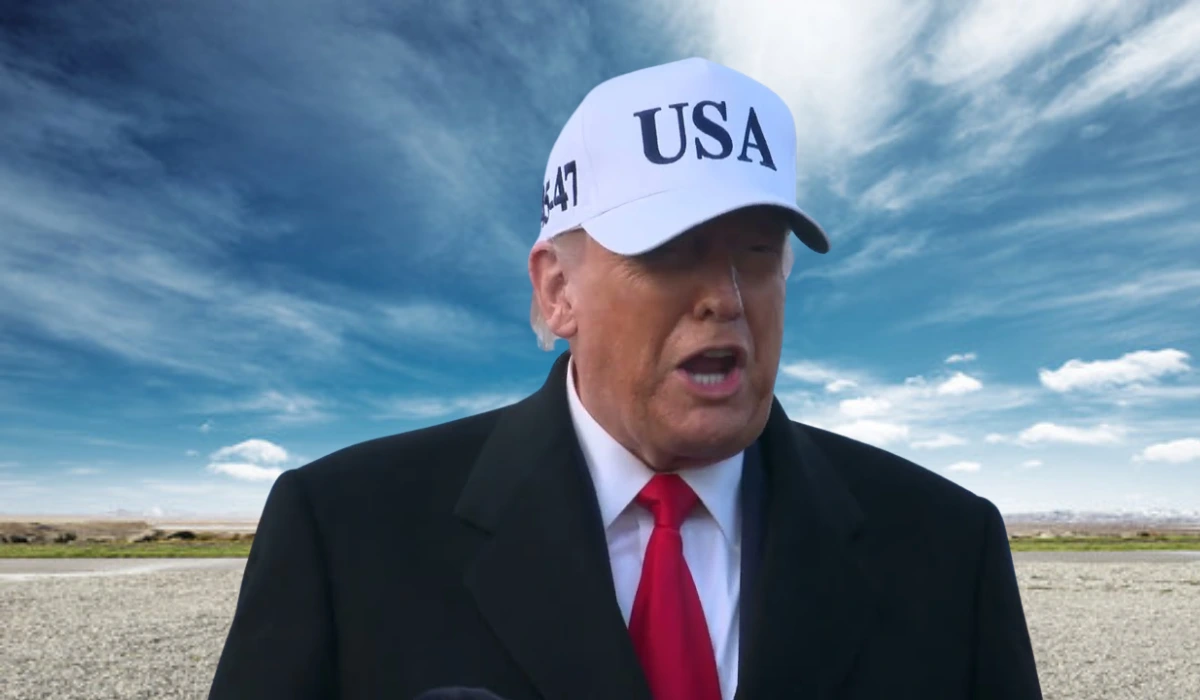
The remark came during a short press conference at the Joint Base Andrews in Maryland, where he was responding to a question about the federal government’s own stake in the American chipmaker.
Pres. Trump Says Apple and Nvidia Followed the U.S. Government to Buy Stakes in Intel
While Nvidia’s (NVDA) historic $5 billion investment in Intel, announced in September 2025, was already publicly confirmed, the claim that Apple has bought into the company remains unverified.
When asked whether the U.S. government would be buying any more INTC shares, the President said he was unsure, but he did hint at further investments in other companies. This aligns with the White House’s plans to establish a United States sovereign wealth fund, an idea that has been mentioned before.
Trump said.
“I don’t know about Intel, but I’ll invest more in other things. We have some other ones that we’re looking at,”
Then the President said that after his team bought a stake in Intel, a lot of other companies followed, including Apple and Nvidia. He acknowledged that the White House is heavily involved in the deals. In August 2025, the U.S. government converted $8.9 billion in existing CHIPS and Science Act grants into a 9.9% equity stake in the company. The grant was originally awarded under the Biden administration.
Trump Says Intel Stake Aimed at Curbing Supply Chain Vulnerabilities and Reviving America’s Semiconductor Dominance
The federal government is helping Intel primarily for national security and economic competitiveness purposes. Intel’s strategic importance lies in its role as the only U.S.-based company that designs and manufactures leading-edge logic chips domestically.
Surging global AI demand and supply chain vulnerabilities – particularly due to ongoing tensions with China – have led to Trump demanding reduced reliance on foreign chipmakers such as the Taiwan Semiconductor Manufacturing Company (TSMC) and South Korea’s Samsung.
The move made by the U.S. Department of Commerce, under Secretary Howard Lutnick, is structured to ensure Intel maintains control over its foundry business, provide immediate financial support to stabilize the company’s struggling chip manufacturing operations, and incentivize long-term investment in the $28 billion fab plant in Ohio.
The White House emphasized that this is not a passive investment, as there will be no federal representative on the company’s board, nor will it have any governance rights, but it will vote with the Intel board on shareholder matters. The main goal is to revive America’s semiconductor manufacturing leadership, create high-paying jobs, and secure critical supply chains for national defense and emerging technologies.
Trump said.
“As you know, Intel came to see me; they needed help. And I said I’ll help you, but I want 10% of your company to go to the United States of America,”
Apple’s Intel Investment Plans Heat Up After M-Series Design Kit Acquisition
Trump’s comments came after a reporter highlighted that Intel’s stock is “really high” after his administration got involved in the company. This statement has industry experts and other analysts suggesting that Apple may have reached an agreement with Intel regarding a potential investment in Q3 2025.
In September, Bloomberg reported that the two companies are exploring ways to work more closely together. However, negotiations are in early stages, and it remains to be seen whether any potential deals can be reached.
Intel CPUs were used by Apple inside for its entire Mac lineup from 2005 until 2020, when Cupertino switched to Arm-based system-on-chips (SoC), which are also used in iPads and the Vision Pro. Currently, no Mac uses any hardware from Intel, even though Apple’s SoCs utilize technologies originally developed or co-developed with Intel, such as DisplayPort, NVMe, PCIe, Thunderbolt, and USB. The Thunderbolt 5 controllers found in the latest-gen MacBook Pro are certified by Intel.
Apple is actively looking to hire experts with knowledge of Intel’s suite of EMIB packaging tech. There are also reports that Cupertino has acquired Intel’s 18A process design kit to manufacture its entry-level M-series chips.
The negotiations between Apple and Intel come at a highly favorable time for the chipmaker, after receiving investments from the U.S. government, Nvidia, and a $2 billion stake announced by Japanese investment giant SoftBank in August.
INTC closed Tuesday’s session at $48.72, up 3,03% for the day. The surge came following strong investor enthusiasm around its AI server and foundry business, and news that its 2026 server GPU capacity is nearly sold out. Trading volume reached 147 million shares, about 60% above INTC’s three-month average. The stock has rallied over 30% year-to-date, fueled by the U.S. government’s $8.9 billion investment.
While Intel represents a revitalized play in the traditional tech sector, many investors looking at the company’s growth are also keeping an eye on the broader digital asset space. As hardware and software continue to merge, the same technological leaps benefiting Intel are also fueling the growth of decentralized platforms including crypto iGaming platforms which represent a significant shift in how we use digital currency for leisure.


