

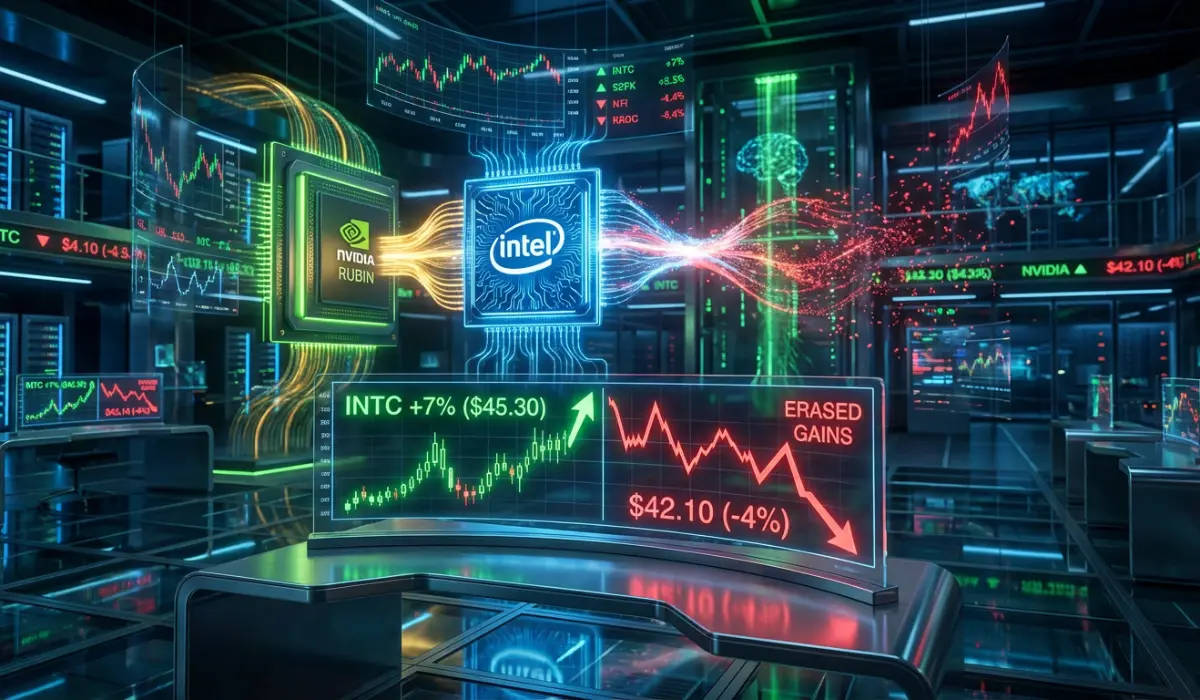
Intel stock spiked 7.4% on Monday before retreating as investors locked in profits and weighed the possibility of an AI bubble. The initial surge in the price was mainly driven by investor optimism about the entire semiconductor industry. When the two tech giants NVIDIA and Intel announced their strategic collaboration, it created a halo effect, bolstering investor confidence, realizing that the AI market is gaining ample momentum and accelerating at a rapid pace.
Unfolding the Reasons Behind 7.4% Spike
Intel’s stock completed a full round trip, peaking during the Nvidia partnership announcement before falling as AI anxiety doubled. The day began with a wave of optimism that significantly pushed Intel shares to the heights. The growth of Intel’s share price is mainly triggered by the Nvidia GTC conference, along with geopolitical relief and investor hedging strategies. NVIDIA Corporation—the leader in computing and AI—and Intel are partners collaborating to accelerate AI infrastructure and PC development. Investing a massive amount of $5 billion in Intel, Nvidia partners with the company to strengthen their presence in the AI market. During Nvidia’s annual GTC conference, held on Monday, the company revealed its partnership with Intel to co-develop AI processors. The announcement reinforced investor optimism regarding Intel’s future earnings and growth, ultimately pushing its share price to a record peak.
Easing oil fears is a significant driver behind the 7.4% share spike. U.S. President Donald Trump approached seven countries to join a coalition for reopening the Strait of Hormuz. Trump’s effort to stabilise the energy market boosted the spike by 7.4% dramatically and then slumped later on Monday as investors started locking in profits and weighed investor confidence in the price rally against the AI bubble. Additionally, the ongoing geopolitical tensions over Taiwan and the supply chain dragged investor attraction towards the domestic safe-haven, Intel. Taiwan is the global hub for advanced chip manufacturing, on which many leading tech giants like Nvidia and Apple rely for chip production. The country is currently facing a wave of military tensions and energy shortages, which could hamper production and disrupt the global chip supply. To hedge against the overseas risk, investors are actively seeking domestic options, which has led to an upward momentum in the share price of Intel.
Surge to Slump— Mounting Selling Pressure and Investor Concern about the AI Bubble
The stock witnessed an impressive intraday rollercoaster on Monday, riding a broader semiconductor rally and easing geopolitical conflicts, only to retreat later. While Intel stock showed the signs of early gains driven by the macroeconomic factors and positive momentum in the technology sector, the share price later slumped near its opening level as investors started locking in profits and mounting concerns about the possibility of an AI bubble.
The price rally faced resistance as short-term traders started locking in profits, causing the stock to decline from the early surge. Additionally, the slump in the share price is largely driven by the sluggish fundamentals of the company, as Intel lost to its rivals, Nvidia and AMD, in multiple segments. Although Intel is ambitious in aggressively boosting manufacturing capabilities and AI-related processors, the company has consistently missed expectations, leaving investors underwhelmed.


