

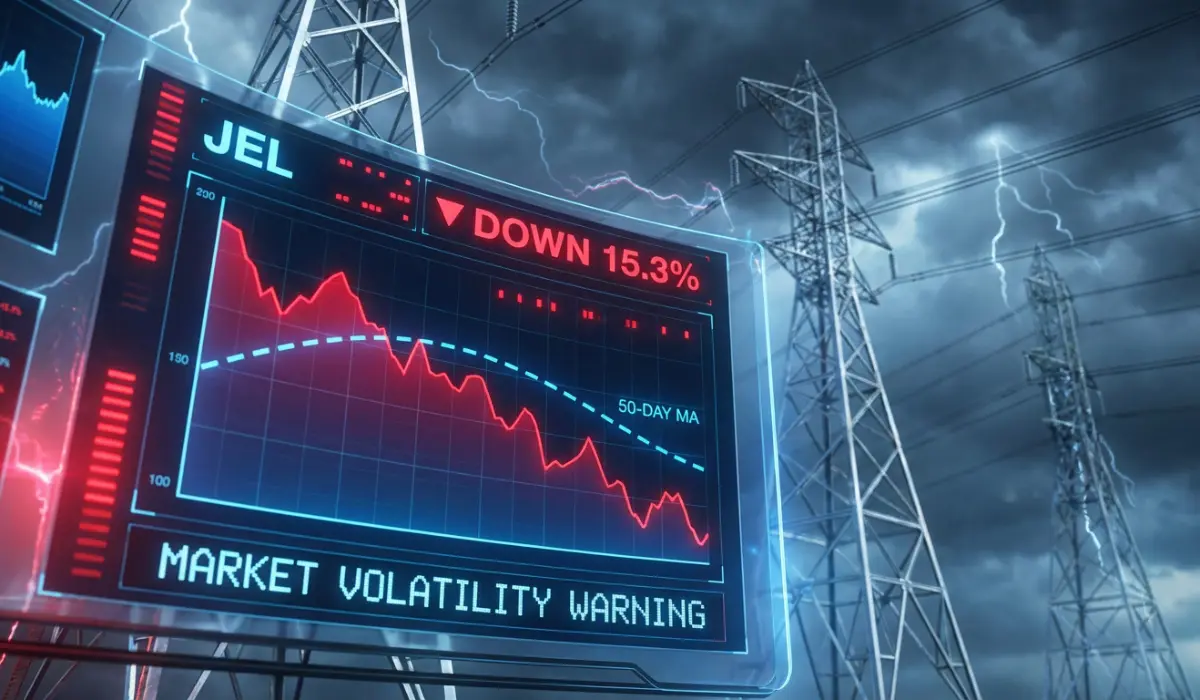
Jersey Electricity plc (JEL) shares crossed below their 50-day moving average in mid-February 2026. The stock traded as low as GBX 465, slightly below its 50-day moving average of GBX 466.11. On that day, approximately 9,296 shares changed hands. The technical movement is often interpreted by traders as a potential bearish signal, indicating weakening short-term momentum.
Market Capitalization and Key Financial Ratios
The firm has a market cap of £147.07 million, a P/E ratio of 13.37 and a beta of 0.18. The company has a debt-to-equity ratio of 13.96, a quick ratio of 2.90 and a current ratio of 2.81. The stock is below its 52-week high of GBX 411.00. The firm has a market capitalization of £134.8 million and a P/E ratio of 12.26, which is consistent with earlier reports of 12.25 and 13.37. The financial metrics, such as a debt-to-equity ratio of 13. 96 and a beta of 0.18 suggest high leverage but low market volatility relative to the broader market. As of the current data, Jersey Electricity’s share price is listed at GBX 440.00, down 3.3% on the day, with very low trading volume.
The price drop for Jersey Electricity last month was triggered by the stock going ex-dividend before. It is common practice for a stock’s price to adjust downward on the ex-dividend date to reflect the value of the dividend that has been paid out to shareholders. The next dividend payment was scheduled for today, consistent with the pattern.
The firm made the final dividend payment for the fiscal year ending September 30, 2025, on March 13, 2026. The £0.126 share was paid to the shareholders, following the ex-dividend; this payment represents a 5% increase from the previous year’s final dividend.
Financial Performance and Strategic Investment
The increase in dividends for the firm was primarily driven by the company’s solid financial performance and strategic positioning, despite a slight year-over-year decrease in pretax profit. Continued investment and disciplined management were highlighted as an underpinning fr the solid performance, allowing the company to deliver its long-term objectives, including the dividend growth. The company maintained a robust financial position to enable support for the dividend growth.
Chair Phil Austin noted the easing of the wholesale electricity market as a positive factor for stability after years of volatility. The dividend increase reflects the confidence in the firm’s future and its ability to manage the energy transition. During the 2025 annual report, Austin said that “our commitment to innovation and investment is about more than strengthening today’s network; it’s ensuring Jersey has the secure, sustainable energy infrastructure it needs for generations to come.”
The stock priced below the GBX 467.61 threshold signalled a potential short-term bearish trend. The Government of Jersey remains the dominant entity, holding 86.4% of total voting rights through unlisted Ordinary shares.


