

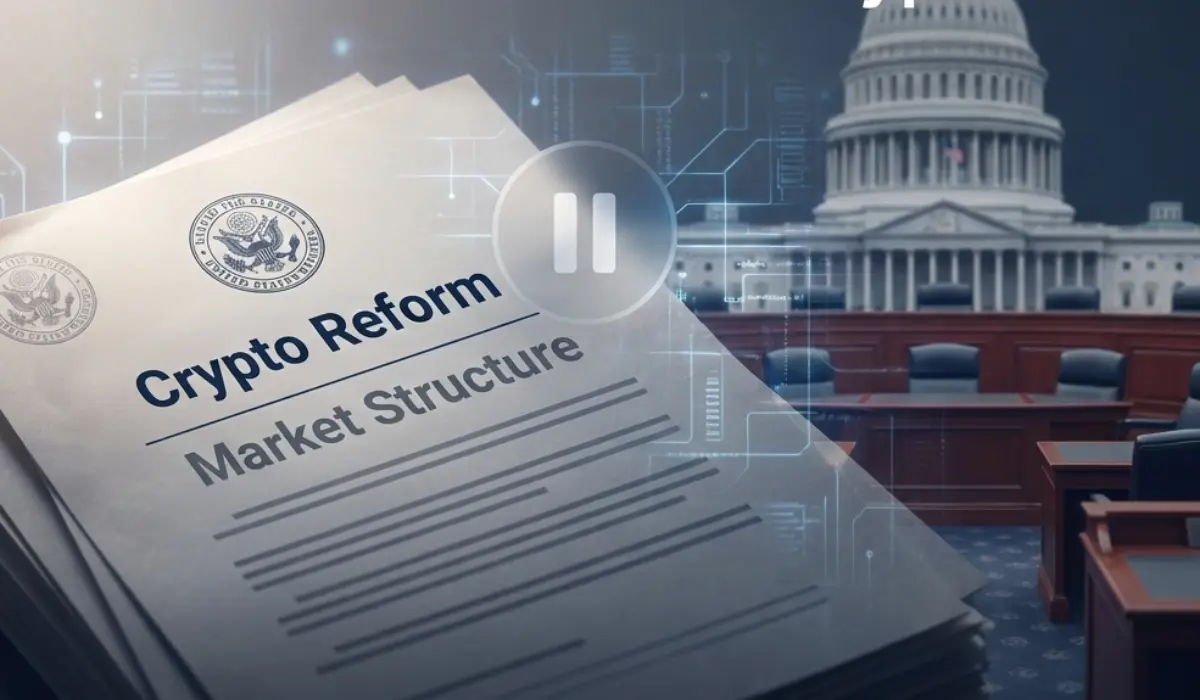
The Senate Agriculture Committee Chair, John Boozman, confirms that his panel will delay the markup of the Digital Asset Market CLARITY Act, stretching it into the final week of January to preserve sufficient bipartisan support. This move signals that the Senate is lacking enough votes to move forward with the bill. The delay has raised doubts about whether the congress would be able to pass the long-awaited crypto reform in 2026, as without enough backing within the party, the leadership risks seeing the legislation stall or collapse at the time of committee votes.
The House passed the version of the CLARITY Act in mid 2025, and then the Senate struggled to align with the language that satisfies the lawmakers, regulators, banks, and crypto firms all at once. However, to gain momentum, the bill requires the approval of the Senate. Being the most comprehensive U.S crypto market structure bill to date, lawmakers hoped that the January markup would initiate the process, but the delay now reflects the growing friction over the key provisions, including stablecoin rewards, DeFi oversight, and where the authority should stand between the Securities and Exchange Commission (SEC) and the Commodity Futures Trading Commission (CFTC).
Goals of the CLARITY Act
The CLARITY Act primarily aims to establish a regulatory framework for U.S. cryptocurrency, as the country is expected to witness the adoption of crypto in broader sectors. Trump recently stated that the market is shifting entirely, with blockchain at its core. The CLARITY Act would specify which digital assets are subject to security law and which are classified as commodities. Moreover, the bill was designed to specify federal requirements for market oversight and asset segregation for crypto exchanges, brokers, and custodians. Ted Pillows, a prominent crypto investor known as a Key Opinion Leader and market analyst, views the passage of the bill optimistically, as he posted on X, “ I think the clarity act will be good for crypto.”
As the support remains fragile, many Democrats worry that the bill may weaken investor protection. On the other hand, some Republicans oppose limits on stablecoin yields and decentralized finance. Some industry groups have also threatened to withdraw backing if late amendments result in restricting their key business models, which is why the Senate members are trying to avoid the failed vote scenario, as it could push the crypto legislation off for the year. This emphasizes the crucial role of markup in the legislative process, as it is where the committee debates about the bill and proposes amendments. If either committee fails to approve the legislation, the bill falls through. However, if the bill fails to gain support or undergo a highly partisan markup, it could weaken the bill’s chances even in the future. Hence, by stretching the Agriculture Committee markup to late January, the Senate leaders are expecting to renegotiate the language of the consensus and rebuild a working coalition further.


