

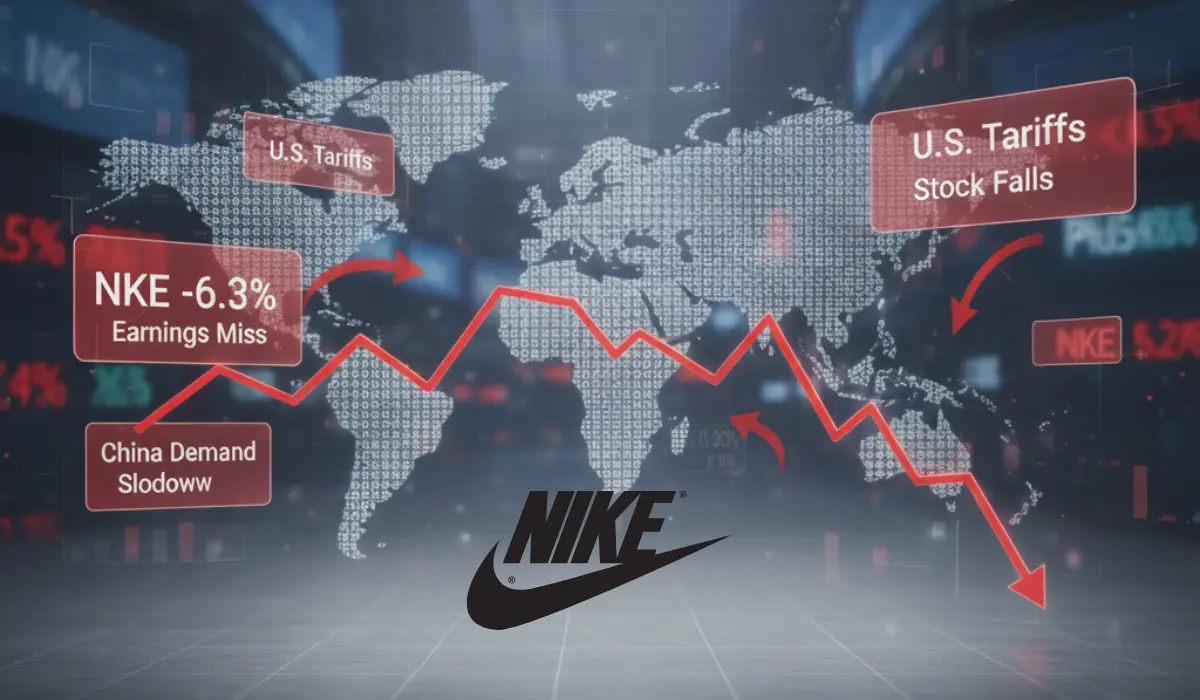
Nike (NKE) shares are tumbling after the company released its earnings report yesterday, December 18. The gross profit fell by 6% mainly due to the impact of U.S tariffs and the lagging Chinese market. Nike shares closed at 65.63, down by 0.09%. The shares of the leading sportswear maker further slipped to 58.98, down by 10.13% at the time of writing this article.
As per the earnings report, the gross margin fell by 300 basis points to 40.6%. The direct revenue is $4.6 billion, down by 8%. Yet, $7.5 billion is the wholesale revenue recorded, which registered a gain of 8%, chiefly driven by growth from North America.
Commenting on the earnings, Elliott Hill, President & CEO, stated, “NIKE is in the middle innings of our comeback. We are making progress in the areas we prioritized first and remain confident in the actions we’re taking to drive the long-term growth and profitability of our brands.”
The U.S. tariffs and Weakening Sales in China drive the Quarterly Earnings Down
U.S. tariffs and the weakening sales in China were the major headwinds faced by the sportswear major. U.S. President Trump has imposed unprecedented tariffs since the beginning of the year. The average U.S tariff rate jumped from 2.5% to an estimated 27%. The sweeping tariff changes, extended till April, contributed to the decline in the gross margin of Nike.
President and CEO Elliott Hill stated during the earnings call event that gross margins had declined by 300 basis points to 40.6% on a reported basis, mainly due to higher product costs stemming from increased tariffs in North America, as well as inventory obsolescence in Greater China that had not been anticipated ninety days earlier.
The leading sportswear company is struggling to make a strong comeback in China. The quarterly footwear sales from the region had declined 20%. Sales had been declining in the past 6 quarters. Yet, around 15% of the total revenue of the company comes from China, making it a crucial marketplace for the company. Nike is facing intense competition from local Chinese brands such as Anta and Li-Ning. These brands riding on the Chinese nationalist trends are now expanding internationally as well, putting pressure on legacy brands.
Nevertheless, Nike sees the Chinese market as one of the most powerful long-term opportunities in sport. Nike CEO Elliott Hill further added that over the years, the company had established a premium position and strong market share in China because Chinese consumers believed in its ability to innovate and inspire them through sport. He said he was confident the company would return to fulfilling that promise.
He also noted that China continued to stand out as one of the most powerful long-term opportunities in sport and that this had not changed, adding that stakeholders should expect to hear, see, and feel much more about how the company would manage the China marketplace differently in the current fiscal year and beyond.


