

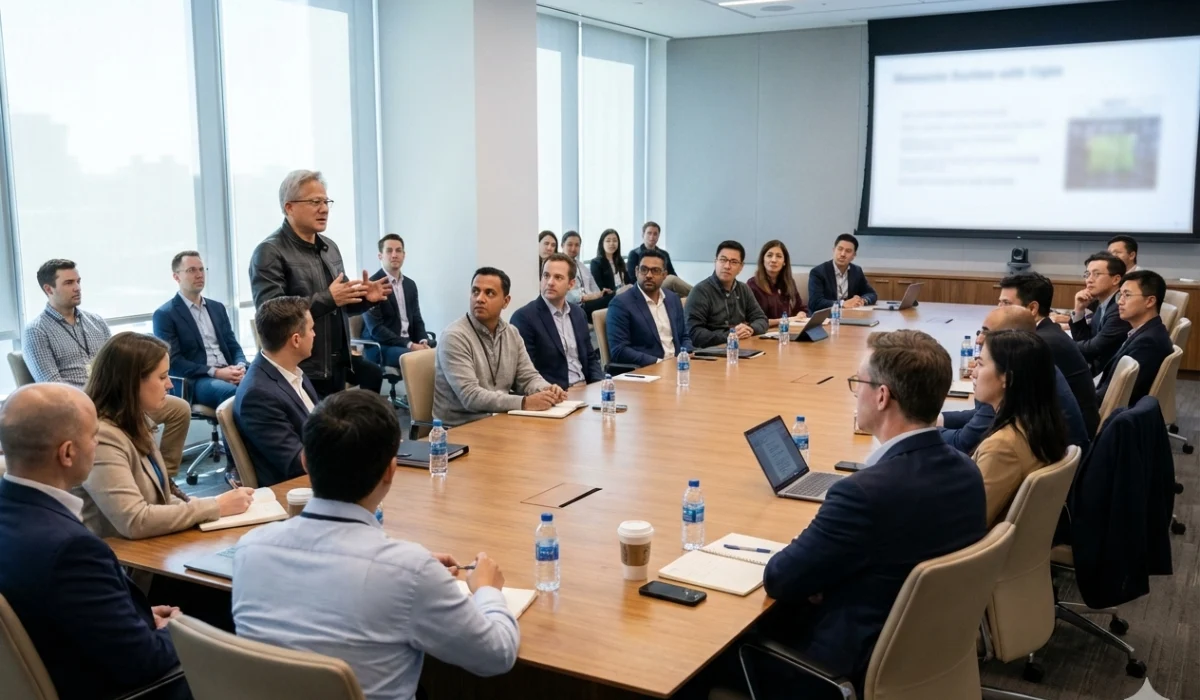
NVIDIA (NVDA) CEO Jensen Huang is planning a visit to China, including Beijing, in the coming days as the world’s most valuable semiconductor company looks to cautiously reopen a market once worth tens of billions of dollars annually. The trip, reported by Bloomberg, is expected to be in late January, ahead of the Lunar New Year, as he attends company events and employee gatherings.
Huang’s visit comes at a delicate moment. While the Trump administration, led by President Donald Trump, has recently approved export licenses for Nvidia’s H200 AI chip, the move is paired with a new and controversial requirement: a 25% “Trump surcharge” on every advanced AI chip sold into China.
“I have informed President Xi, of China, that the United States will allow NVIDIA to ship its H200 products to approved customers in China, and other Countries, under conditions that allow for continued strong National Security. President Xi responded positively! $25% will be paid to the United States of America.” Trump wrote back on December 5, 2025, on Truth Social.
The “H200 Blockade” Paradox
However, adding to the complexity is what industry executives now call the “H200 Blockade” paradox. Despite receiving U.S. approval, Nvidia’s H200 chips have reportedly been held up by Chinese Customs since Jan. 18, according to people familiar with the matter.
Chinese officials have signaled that the chips, already a generation behind Nvidia’s latest offerings, may be considered technologically outdated, raising questions about whether the products align with domestic industrial priorities. The H200 is built on Nvidia’s Hopper architecture, which was launched in 2022–2023, while the company’s latest flagship chips, including the B200 and B300, are based on the newer Blackwell architecture.
The irony is striking: Washington has cleared the exports, but Beijing is slowing its entry. For Nvidia, which once generated an estimated $30 billion to $50 billion a year from Chinese customers, the situation highlights how geopolitical friction now cuts both ways.
Strategic Customers and Rising Domestic Competition
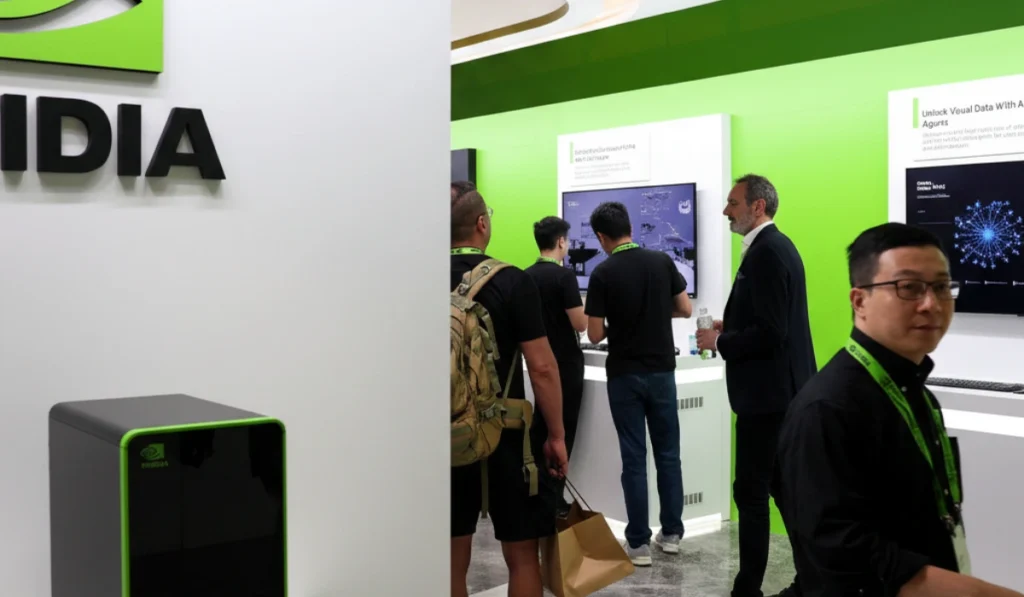
Under the current licensing framework, Nvidia is reportedly permitted to sell the H200 primarily to Chinese customers, including Alibaba and ByteDance, the owner of TikTok. These companies remain hungry for AI computing power, even as they face growing pressure to reduce reliance on U.S. technology.
That pressure has fueled the rise of Huawei, alleged by the U.S. as Chinese state-backed and Nvidia’s most formidable local rival. Huawei’s rapid progress in AI accelerators has become a central concern for U.S. policymakers, who argue that any renewed Nvidia presence in China risks strengthening Beijing’s broader tech ecosystem.
The visit follows his appearance at the World Economic Forum in Davos, Switzerland, where he is scheduled to meet BlackRock CEO Larry Fink on Jan. 21 to discuss global AI investment trends.
For Nvidia, the stakes are enormous. Reopening even a portion of the Chinese market could stabilize long-term growth as competition intensifies elsewhere. As Huang heads to Beijing, the outcome remains uncertain. What is clear is that Nvidia’s path forward in China will be shaped as much by politics and diplomacy as by silicon and software.


