

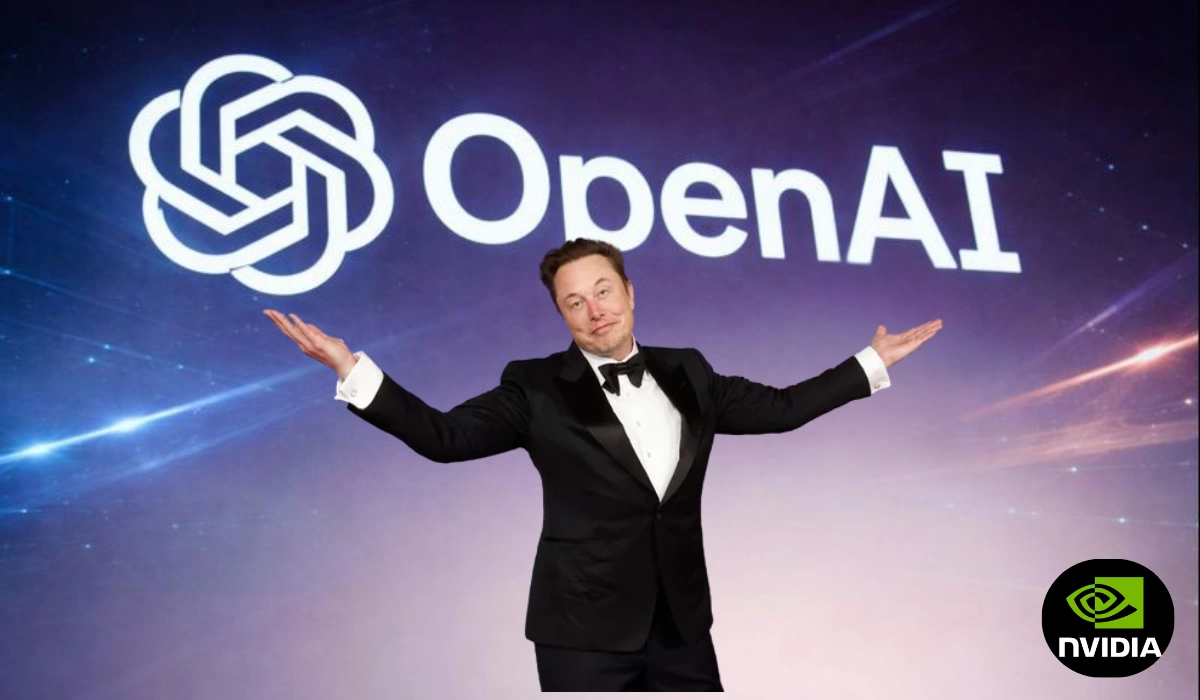
OpenAI is navigating a pivotal moment as a high-profile legal challenge from Elon Musk’s xAI loses momentum and a much-anticipated mega-infrastructure deal with Nvidia is recalibrated into a more conventional equity investment. Together, the developments signal a strategic cleanup phase for OpenAI as it pushes toward scale, stability, and a potential Initial Public Offering (IPO).
At the center of the shift is Nvidia, long viewed as OpenAI’s most critical hardware partner. Earlier speculation pointed to a sweeping, non-binding letter of intent (LOI) tied to a $100 billion, 10-gigawatt AI infrastructure buildout, an unprecedented compute-first commitment designed to power OpenAI’s next generation of models.
Jensen Huang Pushes Back on $100B Infrastructure Narrative
However, the Wall Street Journal reported that Huang had privately stressed that the widely discussed US$100 billion agreement was nonbinding. The reports claimed that he had voiced concerns internally about what he viewed as a lack of financial discipline in OpenAI’s business strategy, as well as intensifying competition across the AI sector.
Asked in Taipei about the report and suggestions that he was dissatisfied with OpenAI, Jensen dismissed the claims outright, telling reporters: “That’s nonsense.”
OpenAI, meanwhile, is seeking to raise as much as US$100 billion in its current funding round, according to a person familiar with the matter, underscoring the company’s aggressive capital needs even as key partners emphasize flexibility rather than firm infrastructure commitments. a binding infrastructure pledge.
NVIDIA’s capital and continued GPU access still provide strong validation, even without a fixed 10GW commitment tied to next-generation platforms like Vera Rubin.
Musk’s Trade-Secret Lawsuit Shows Signs of Collapse
At the same time, OpenAI has gained breathing room on the legal front. A trade-secret lawsuit brought by Elon Musk and his AI startup xAI, alleging that OpenAI misappropriated proprietary knowledge to build competing systems, appears to be faltering. U.S. District Judge Rita Lin, presiding in San Francisco, signaled skepticism toward the core claims, noting that employee poaching alone does not automatically constitute trade-secret theft.
That clarification has shifted sentiment sharply against the lawsuit. Legal analysts now increasingly categorize the case as “Negative/Failing,” a notable turn given Musk’s broader campaign accusing OpenAI of abandoning its non-profit mission.
Grok Allegations Face a Higher Legal Bar
The allegations centered in part on Grok, xAI’s chatbot, which Musk claimed was disadvantaged by OpenAI’s access to insider knowledge. Judge Lin’s comments suggest those arguments may not meet the legal threshold required to proceed, undercutting one of the central pillars of xAI’s complaint.
The weakening of the xAI suit removes a major overhang for OpenAI as Chief Executive Officer Sam Altman works to close the new funding round. NVIDIA’s participation, even at a more modest and clearly defined level, strengthens OpenAI’s position with other investors.
Microsoft and Investors Gain Indirect Relief
Microsoft, named as a secondary defendant in the broader Musk litigation, also benefits indirectly from the court’s tone, which hints at limits to how far the claims can extend. Market reaction to the dual headlines has been mixed but stabilizing.
While the dial-back of the infrastructure narrative initially rattled some observers, the repeated presence of Jensen Huang as a calming voice has acted as an anchor for tech-sector sentiment. His insistence on pragmatic deal structures reinforces confidence that Nvidia’s AI strategy remains disciplined rather than speculative.
OpenAI Positions for Funding and IPO Readiness
Strategically, OpenAI appears to be consolidating: simplifying its capital story, reducing legal uncertainty, and aligning partners around funding-round participation rather than headline-grabbing megaprojects. As IPO discussions loom in the background, that combination may prove more valuable than an outsized but ambiguous compute promise.


