

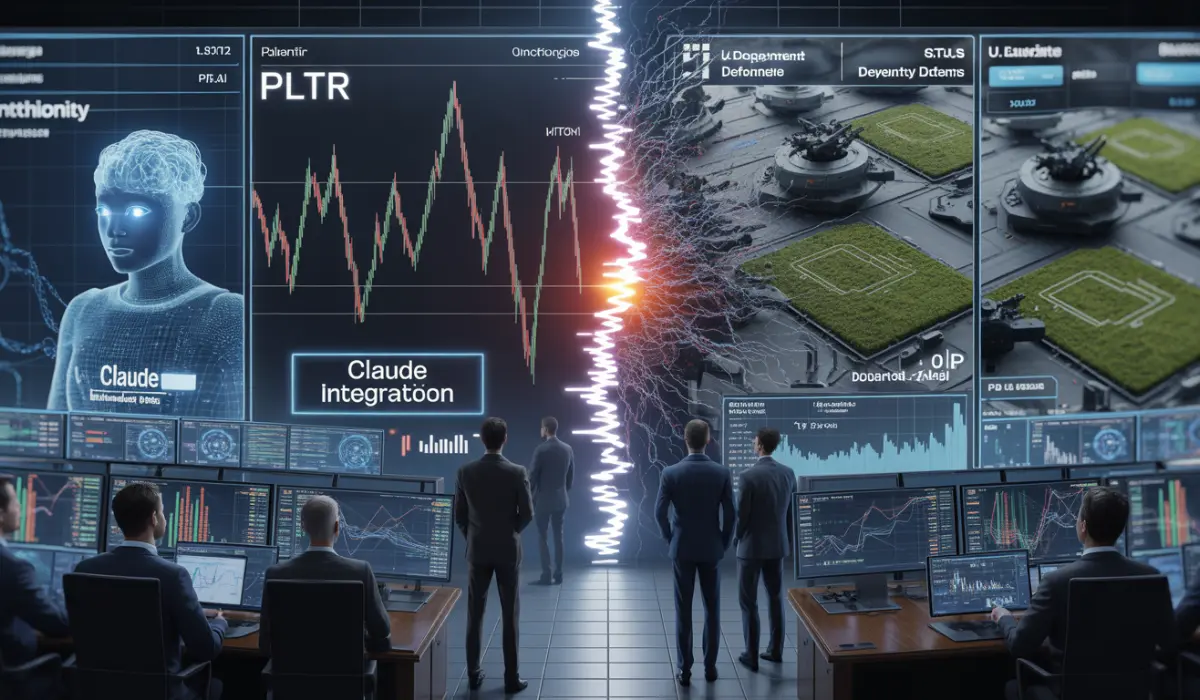
Palantir (PLTR) stock traded at $155.08 on March 17, 2026, up 1.55% for the session, amid ongoing turmoil from the U.S. Pentagon’s decision to blacklist Anthropic’s Claude AI models.
With U.S. President Donald Trump’s Truth Social post ordering the government to “IMMEDIATELY CEASE all use of Anthropic’s technology,” the use of AI in military decision-making has gained prominence. In response to the current situation, Palantir CEO Alex Karp stresses the importance of Silicon Valley working for national security and interests.
The Pentagon Bans Anthropic’s Claude
“Their relationship with the United States Armed Forces and the Federal Government has therefore been permanently altered. …This decision is final.” – Pete Hegseth, U.S. Secretary of War, on X.
Anthropic CEO Dario Amodei released a statement on Thursday, March 5, 2026, confirming that they have received a letter from the U.S. Department of War designating the company as a “supply chain risk to America’s national security.”
The move was first made by the U.S. Secretary of War, Pete Hegseth, through an X post on February 28, 2026, after U.S. President Trump’s declaration on Truth Social. Hegeseth’s post emphasized the U.S. DoW’s need for “full, unrestricted access to Anthropic’s models for every LAWFUL purpose in defense of the Republic,” which Anthropic failed to deliver. Anthropic had been working with frontline warfighters serving the Department of War primarily by providing intelligence analysis, modeling and simulation, and operational planning, through their Claude AI models.
While Anthropic has aimed to prevent its technology from being used in autonomous weapons or for mass surveillance
In retaliation for the DoW post, the CEO stands by his previously made request to be exempted from the U.S. military’s needs for Claude to be used in fully autonomous weapons and mass domestic surveillance, as they relate to high-level usage of their AI tools.
“We do not believe, and have never believed, that it is the role of Anthropic or any private company to be involved in operational decision-making—that is the role of the military,” said Anthropic CEO Dario Amodei.
Palantir Confirmed in Active Military Participation
In contrast to Anthropic’s opposing stance on AI being used as a decision-making tool in the military, Palantir CEO Alex Karp announced in a CNBC interview on Thursday that Palantir’s AI tools are actively being used in the U.S. military operations against Iran and the conflict in the Middle East.
Quoting Karp, @CNBCi posted on X: “Iran’s attack of three Amazon data centers shows how the war has moved beyond traditional military assets,” which pushes the fact that usage of AI in war is taking global wreckage and security risks to the next level.
However, Karp declines to comment on whether Palantir’s Project Maven, which provides real-time AI surveillance, was used to help the joint U.S.-Israel military operation in the assassination of Iranian Supreme Leader Ayatollah Ali Khamenei two weeks ago.
Speaking at the a16z American Dynamism Summit, Karp stated in strong terms: “If Silicon Valley believes we’re going to take everyone’s white collar jobs AND screw the military…If you don’t think that’s going to lead to the nationalization of our technology, you’re retarded.”
Why PLTR is Up Today
In a show of support, Elon Musk replied to the X post by journalist Maya Sulkin containing Karp’s statement with “Good point.” This strengthens Karp’s argument that tech leaders must align with national security interests to avoid regulatory overreach or state intervention in the industry. His comments reflect growing tension between Silicon Valley and the federal government, especially after the recent development between the Pentagon and Anthropic.
Recent events against Anthropic, which was the first frontier AI model deployed on classified Pentagon networks, provide a leveraged edge to Palantir, as stocks rise amid the company’s growing support in terms of national interest.
Bottom Line
The escalating conflict between the Pentagon and Anthropic marks a pivotal shift in the relationship between Silicon Valley and the U.S. government. By blacklisting Claude over ethical restrictions, the Department of Defense has sent a clear message: national security requirements now supersede corporate AI safety guardrails.
For investors, the 1.55% rise in PLTR stock reflects a growing market confidence that aligns with compliance with the state during times of growing economic turmoil.


