

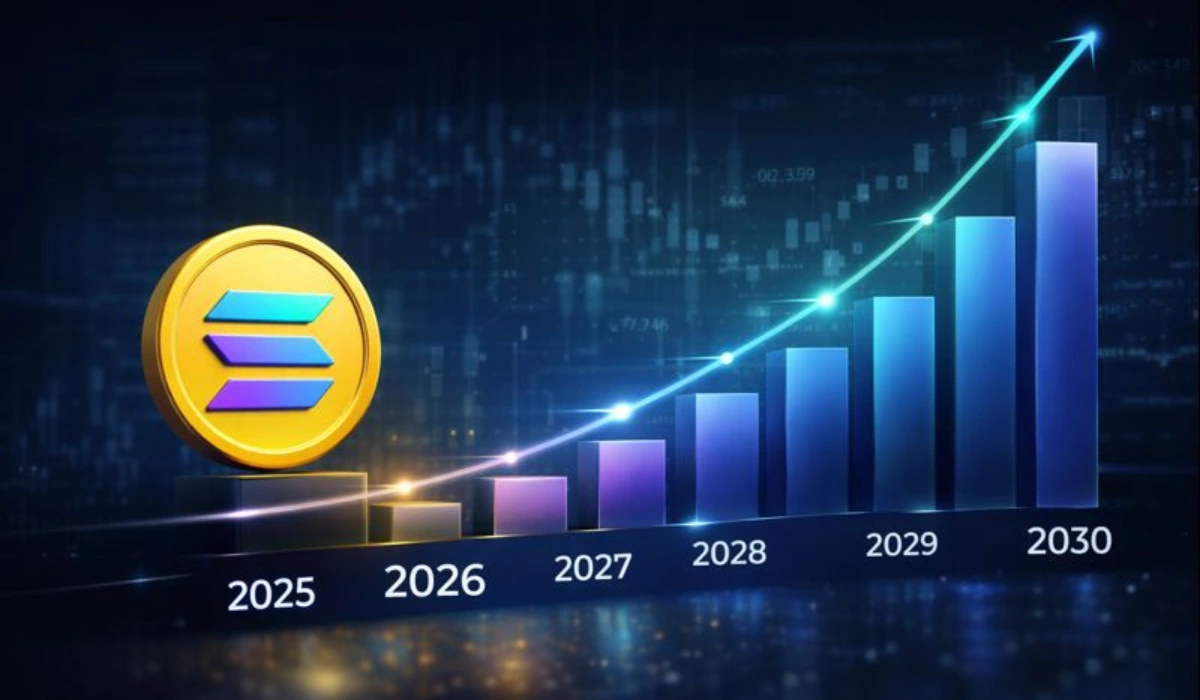
Solana is considered a good investment because of its fast, scalable blockchain and low transaction fees. It stands out for speed and efficiency, processing around 65,000 transactions per second and having a unique Proof of History (PoH) consensus mechanism. This makes Solana appealing for NFTs, DeFi, and decentralized apps.
Its ecosystem is growing, thereby attracting developers and projects across several sectors. However, it faces competition and risks like regulatory scrutiny and network outages. Since its price has been highly volatile, it is a high-risk yet potentially highly-rewarding investment. This article further discusses whether Solana is still worth holding long-term. So, keep reading to learn more.
Is Solana Still Worth Holding in the Long Term?
Solana (SOL) remains a strong long-term hold for many investors, as it is expected to see continued growth with prices ranging between $260 and $230. It is considered a good investment due to its speed, low transaction fees, and strong institutional adoption, particularly for tokenized assets. Despite recent price volatility and a 37% drop in the past 12 months, its underlying ecosystem remains robust, often outperforming Bitcoin in growth potential. While Solana appears to be a promising long-term investment, particularly due to its fast-growing ecosystem, innovative technology, and broad developer and investor support, it also carries significant risks. Some of the risks associated with it include regulatory uncertainty, network reliability, and competition.
Solana enhances user experience by focusing on providing fast transaction speeds along with low fees. This makes the platform more accessible to a broad range of users, including developers, retail investors, and businesses. This user-friendly nature is what drives mass adoption, especially in emerging markets where low transaction costs are crucial. Since traditional financial institutions are increasingly exploring blockchain technologies, Solana’s efficiency and speed make it an attractive option for large-scale institutional use cases. It is well-positioned to benefit from the growing decentralized finance (DeFi) space as it continues to expand and scale. This increases the need for fast and low-cost networks. Solana’s ability to manage high transaction volumes well gives it a competitive advantage as the DeFi market matures and more users and liquidity flow into the ecosystem.
Solana’s Proof of Stake (PoS) consensus mechanism is much more energy-saving compared to traditional Proof of Work (PoW) systems. Concerns about the environmental impact of blockchain are growing, but Solana’s eco-friendly nature appeals to investors who prioritize sustainability. It also drives institutional and retail investment in the future. Solana has managed to build an active, vibrant community that continuously advocates for the network. This strong community presence, along with effective marketing strategies, makes Solana maintain a high level of visibility and attracts new users and developers in the long run.
Who Should Consider Holding Solana and Who Shouldn’t?
Solana is a good option for you if you believe in the long-term growth of blockchain technology and decentralized applications, and are prepared for volatility. It is more suitable for investors aiming to capitalize on emerging technologies with higher growth potential, especially those who are comfortable with risk. Here is a breakdown of who should and shouldn’t hold Solana.
Who should consider holding Solana:
- Investors who believe in Solana’s high speed, growing ecosystem (dApps and NFTs), and low transaction cost.
- Active participants in the Web3 and DeFi space.
- Active stakers and yield seekers.
- Risk-tolerant investors seeking high growth.
- Investors seeking diversification.
Who should not consider holding Solana:
- Those who cannot afford to lose capital in a volatile market or are likely to panic-sell during short-term, day-to-day downturns.
- People seeking low-risk, stable, or capital-preserving investments.
- Investors concerned with technical issues.
- Those who prefer the security and institutional backing of Bitcoin (BTC) and Ethereum (ETH) over a faster, sometimes less reliable alternative.
- Investors who are over-exposed to crypto.
- Those who need to use investment funds for short-term personal expenses.
- People who are skeptical of the ‘high-growth’ narratives.
Final thoughts
Solana has shown resilience, acting as a major hub for NFTs, dApps, and emerging Real World Assets (RWA). It has faced scrutiny regarding declining stablecoin liquidity and validator participation. This is why it is widely known as a high-reward, high-risk, ‘blue-chip’ alternative layer-1 coin. As a long-term investment, Solana’s strength lies in its technical superiority, rapidly growing ecosystem, and increasing institutional adoption. While Solana has high throughput, it still faces stiff competition from Ethereum and other layer-1 blockchains.
FAQs
Holding or selling Solana can depend on your risk tolerance, but the outlook remains generally positive despite short-term volatility. Many analysts suggest holding for long-term gains.
Solana seems to have a strong, viable future in 2026, as it is driven by performance upgrades that aim to boost transaction speed and network efficiency.
Generally, holding Solana is considered a high-risk, highly-rewarding investment with growth potential. Thus, investors must be prepared for significant price swings.


