

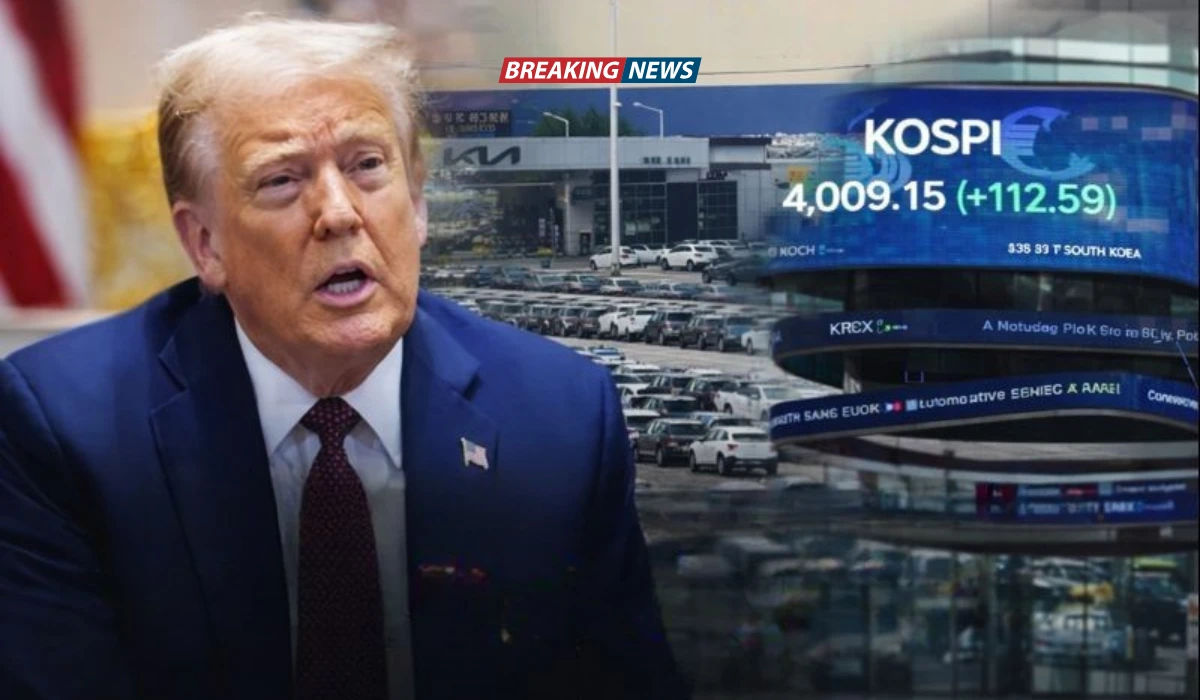
South Korean equity markets have surged high today as investors rushed in to buy dips caused by Trump’s tariff threats. The tariff threat is a reciprocal move against Seoul’s legislative delay in ratifying the $350 billion investment deal in America. The move caused a dip in the stock prices of major companies, including Hyundai Motors, Kia Corp, Samsung Electronics, and SK Hynix.
Many stocks rebounded, as traders bought the dips, pushing the KOSPI (Korean Composite Stock Price Index) 135 points higher. South Korean industry is growing at unprecedented rates (101% in 2025), driven by the AI boom and demand for semiconductors. The equities may continue their rally unless Trump’s threats are materialised.
What is Behind the Tariff Threat?
The ‘Korean Strategic Trade and Investment Deal’ is a MoU (Memorandum of Understanding) signed between Washington and Seoul in July 2025. The deal was unveiled by U.S. President Donald Trump and South Korean President Lee Jae-myung in late October and was marked as a milestone in cooperation between the two countries.
The deal included South Korea investing $350 billion in the U.S. The investment was bifurcated: $150 billion for expanding shipbuilding in America and $200 billion for sectors like semiconductors, AI, quantum computing, energy, batteries, and pharmaceuticals.
The deal also included the U.S. reducing 25% tariffs to 15% on Korean cars and other automobiles, and related products. Seoul also agreed to open its market for more U.S products by easing regulatory hurdles.
The Defense Angle in the Korean Strategic Deal
Apart from the trade and technological cooperation, the deal also strengthened security prospects between the countries. The U.S. supports South Korea in building nuclear-powered submarines for “peaceful uses”. This can also lead to a deeper nuclear consultative group between the countries, opening up more space for nuclear deterrence policies.
Tariff Shock Slams Korean Autos but Spurs Dip-Buying Rally in Seoul’s Market
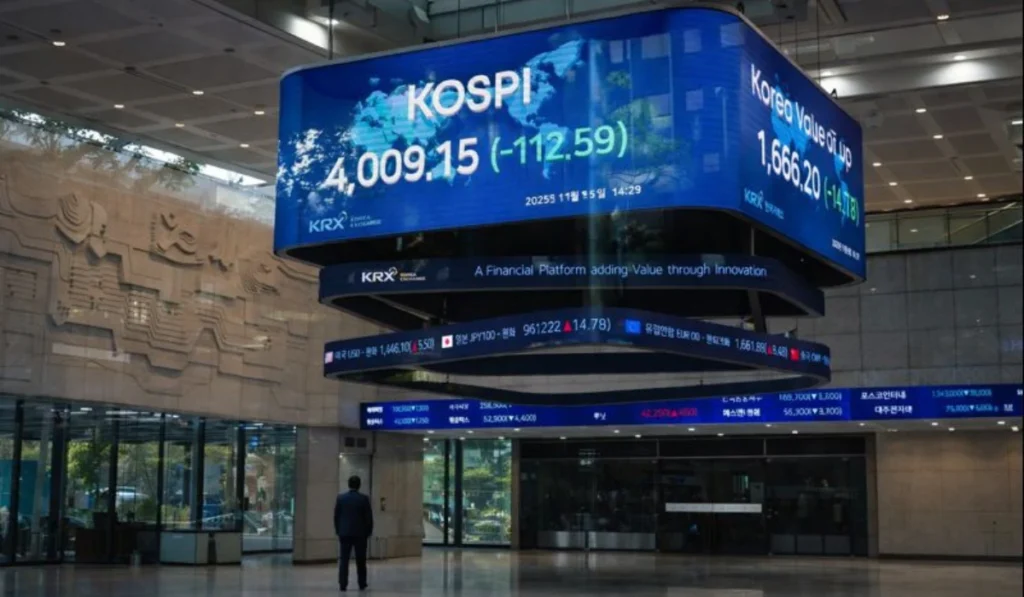
The major products that the tariff shock would affect include automobiles, auto parts, related components, timber products, and pharmaceuticals. South Korea is the world’s fifth-largest auto producer in the world and has a strong presence in the U.S. Hyundai and Kia have a combined ~11% market share in automobiles in America. Thus, a regulatory shift in the trade relationship between the countries will hurt the Korean automobile industry the most.
Hyundai Motor Company’s share price took a deep dive to KRW 474k when the market opened today and climbed back to KRW 496.5k as investors rushed in to buy the dip. The prices currently linger around KRW 488.5k, but suffer a 0.81% dip today.
Kia Corporation showed a similar trend: price crashed to KRW 147k in the early morning and climbed back to KRW 153k. The current prices linger around KRW 153.5k with a 1.10% dip today.
Samsung Electronics Co., Ltd dipped KRW 149.9k in the morning, but grew 4.87% today as the tariffs are less likely to affect electronics. Samsung Electronics’ stock is currently priced at KRW 159.5k- their all-time high in the Korean market.
What Happens Next?
Investors currently treat Trump’s tariff threat as a negotiating tactic and do not see him following through. Trump has recently made a similar tariff threat against eight European countries for not supporting his proposal to “buy Greenland”. Later, he took a U-turn and stated that he is scrapping the proposed tariffs.
The Korean legislation is likely to push the deal for a $350 billion investment in America, as the country views its relationship with the U.S. as critical for its growth, and in defense against North Korea. Hence, the KOSPI and South Korean equities will likely continue their rally in 2026.


