

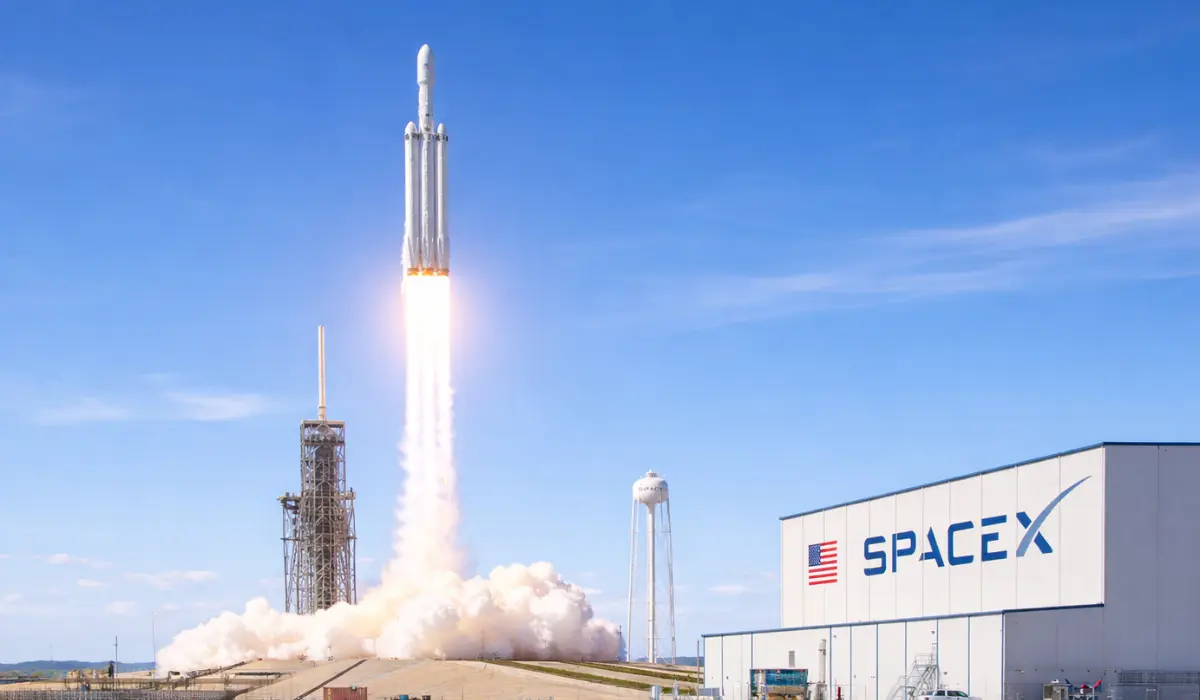
SpaceX successfully launched another batch of its Starlink satellites, designated Starlink Group 17-24, into low-Earth orbit on Monday, March 16, 2026. A Falcon 9 rocket, powered by the veteran booster B1088, lifted off from Vandenberg Space Force Base at 10:16 p.m. This launch represents a landmark achievement, as the Starlink constellation officially surpasses the milestone of 10,000 active satellites in orbit. The event was livestreamed to millions of viewers on SpaceX’s website and its X account.
A Century of Aerospace Progress
The Starlink Group 17-24 launch was more than a routine deployment. It occurred on the 100th anniversary of Robert Goddard’s first liquid-fueled rocket launch, a poetic nod to a century of American aerospace progress. While Goddard’s 1926 rocket reached an altitude of only 41 feet, the recent launch added to a constellation that now circles the entire globe, providing high-speed internet to over 9 million customers across 155 countries.
Despite its success, the sheer volume of satellites has drawn criticism regarding orbital congestion and light pollution. However, SpaceX’s ambitions remain undeterred. Earlier this year, the company submitted a regulatory filing to the U.S. Federal Communications Commission (FCC), reportedly seeking long-term permission to eventually operate a fleet of up to one million satellites, signaling an intent to dominate not just global telecommunications, but orbital data processing.
Starship: The Engine of a Multi-Planetary Economy
Looking beyond the current 10,000 satellite milestone, SpaceX’s long-term dominance is inextricably linked to the operational scaling of its Starship launch vehicle. While the Falcon 9 remains a formidable vehicle, its payload capacity is nearing its physical limits. In contrast, Starship can carry ten times the payload at a fraction of the current cost. With the upcoming Flight 12 of the Starship system slated for launch from Starbase, Texas, in the coming weeks, SpaceX is preparing to debut its “Version 3” architecture. These next-generation V3 satellites utilize advanced inter-satellite laser links designed to provide ultra-high-speed connectivity from orbit, signaling SpaceX’s intent to compete directly with land-based internet service providers in major metropolitan areas.
The Path to 2026 IPO
The timing of this milestone coincides with the highly anticipated SpaceX Initial Public Offering (IPO) rumored for June 2026. While CEO Elon Musk has always been cautious about taking his companies public, this listing is intended to generate the massive capital required for next-generation space missions, ranging from the expansion of the Starship program and Moon and Mars colonization to the development of a theoretical “Earth Dyson Swarm.”
Earlier this month, Musk confirmed the rumored IPO by responding to entrepreneur Peter Diamandis on X.
SpaceX is aiming for a $1.75 trillion valuation, reportedly seeking to raise $50 billion to fund its ambitious space programs. If SpaceX manages to achieve this target, it will become one of the most valuable publicly traded companies in the world. The continued expansion of the Starlink program and other space missions will likely bolster investor confidence in the company’s interplanetary future.


