


Stock market volatility is the rise and fall of stock prices in the stock market. This can increase or decrease the value of the assets. The volatility relies on several elements. High volatility means the rapid and unpredictable variation in prices. Low volatility is the price difference that occurs very slowly over time. Unlike the former type, the investors usually have confidence and a comparatively optimistic attitude about their return potential while investing.
Factors Causing Stock Market Volatility
Stock market volatility is caused by economic, political, social, and psychological factors. The uncertainty among investors in investing is one of the common but indirect reasons behind the stock market volatility.
Economic Factors
The rise in interest rates reduces profits and slows economic conditions. This makes the stocks less attractive to consumers. High inflation increases the costs and affects the value of invested assets. The low profit earnings in the companies lead to an increase in the unemployment rates.
Political Factors
The geopolitical events, such as wars or any tensions, may create some imbalance, which leads to price fluctuation. Any sudden change in tax laws and policies can shake the stability in the market. Another familiar factor is the election.
Social Factors
One of the relevant factors is the influence of social media. The eruptions of so many social media influencers have a significant role in spreading the information, which can make a greater impact. Any social calamities or disasters can make the economic level upside down. Pandemics and incurable epidemics are also one of the major social factors.
Psychological Factors.
High volatility can trigger the investor’s emotions. They may doubt their decisions. Some investors try to imitate the marketing tricks of established companies, instead of trying to develop their own strategy based on a proper analysis. This may later cause high movements in the market price.
How Does Stock Market Volatility Affect
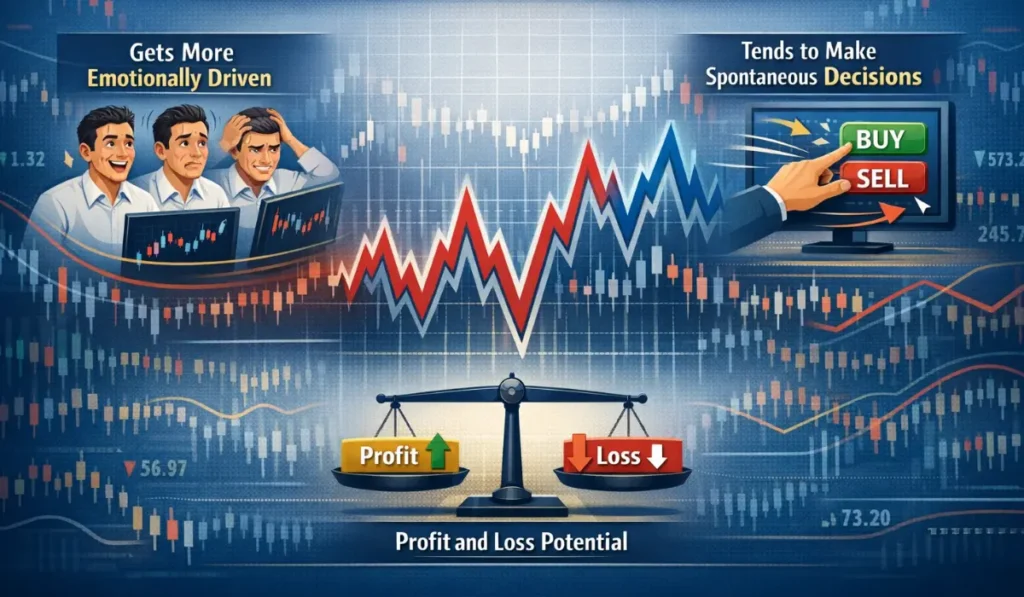
Gets more Emotionally Driven
Volatility is a state of uncertainty for investors. It creates a greater tendency to use their skill, which can be risk-taking. This might get intensified and turn into anxiety issues, and an immense fear of loss and missing out.
Tends to Make Spontaneous Decisions
Some spontaneous decisions are compelled to take by them. This is due to the fear of loss and eventually leads to panic selling. As it is unpredictable, it may finally give unfavourable results. This takes them through the ” buying high and selling low” situation.
Have Profit and Loss Potential
For active traders, the high volatility can bring gains by buying at lower prices. But the unforeseeable nature of stock market volatility increases risk. This can be confidently taken mostly by the long-term traders.
How to Deal with Stock Market Volatility
Try to Maintain a Long-Term Goal
Setting a long-term strategy or investment helps to navigate such volatility without causing severe complications. Thus, the participants won’t be affected by the temporary market price swings. And they will be able to buy or sell at their own favourable price.
Make Thoughtful and Wise Decisions
Make decisions by sticking to the strategy predetermined for one’s own company. There are chances to deviate or to see their own goals as undervalued ones and get ready to take risky steps. Rather than this, think logically and be practical, over temporary comfort.
Portfolio Diversification
This can be seen as a precautionary step. Stock market volatility does not affect every sector equally; it varies. This is why trading or investing in different fields helps to balance their own business. Even if one fails or faces any issue, picking up from the downfall will be easy.
Maintain Consistent Participation
During the price fluctuations, maintaining constant participation helps to handle these situations smoothly. The average cost per share can be less than the current market price. Thus, profits can be expected.
Rebalance Accordingly
Reviewing the portfolio and analysing it periodically helps to get a clear idea of what the next step requires. Selling the overperformed investments at a high price, with which to buy new underperformed investments, is one of the efficient steps used to firm their position in the market.
Seek proper guidance
One of the most effective and easiest ways to prevent taking impulsive, wrong decisions is to take advice from experienced personalities in the specific field. Especially for beginners, instead of making assumption-based decisions, seeking the help of financial advisors is recommended.
The Bottom Line
Different conditions matter in the stock market volatility, and it can’t be avoided. The only thing investors and traders can do is to understand the reasons behind the volatility and take appropriate steps. Most importantly, try not to deviate from the goal and, rather than reacting to it impulsively, learn to respond calmly.


