

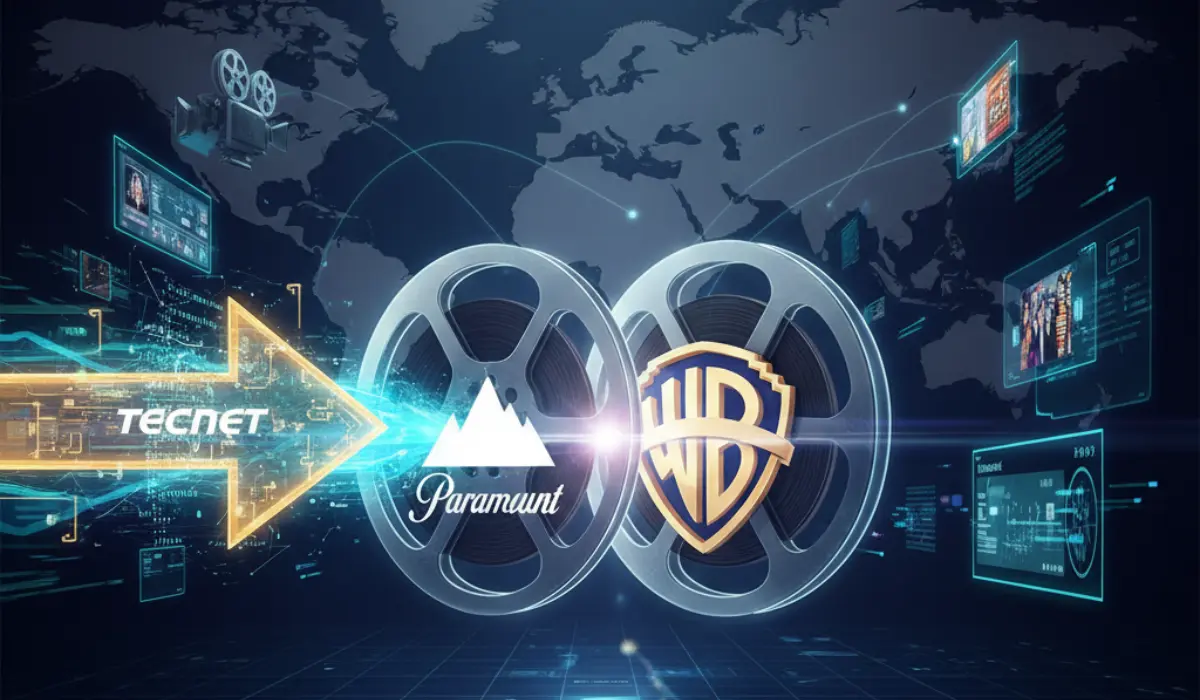
In a move that signals both the high-stakes nature of modern media consolidation and the persistent complexities of international finance, Chinese tech giant Tencent Holdings is reportedly re-entering the fold of the $110 billion merger between Paramount Skydance and Warner Bros. Discovery (WBD).
As of March 9, 2026, sources familiar with the matter indicate that Tencent is eyeing a ‘passive financial investment’ of several hundred million dollars. This strategic pivot comes after a more substantial $1 billion equity commitment was withdrawn in December last year following intense scrutiny regarding U.S. national security and regulatory hurdles.
The Architecture of a $110 Billion Media Titan
The merger, led by David Ellison, CEO of Paramount Skydance, aims to unite two of Hollywood’s most storied legacies. By acquiring WBD, Ellison is creating a powerhouse capable of challenging the market dominance of Netflix. The deal is backed by a massive $47 billion in equity, primarily from the Ellison family and RedBird Capital Partners, alongside $54 billion in debt commitments from Bank of America, Citigroup, and Apollo Global Management.
To ensure the deal’s stability, David’s father, Oracle co-founder Larry Ellison, has provided an irrevocable personal guarantee, a move designed to soothe investor jitters over the combined entity’s projected $79 billion debt load.
Navigating Regulatory Scrutiny and National Security
The return of Tencent as a minority, non-voting investor highlights the delicate balance the new company must strike. U.S. regulators, particularly the Department of Justice (DOJ), remain wary of foreign influence in American media infrastructure.
The initial $1 billion pledge from Tencent was flagged by WBD’s board as a potential poison pill that could invite a lengthy review by the Committee on Foreign Investment in the United States (CFIUS). By pivoting to a hands-off financial role, Tencent appears to be seeking a way to benefit from the deal’s upside while avoiding the regulatory red zone that recently forced a divestiture of other Chinese-owned tech assets in the U.S.
A Unified Streaming Future: Max and Paramount+
For the American consumer, the most tangible impact of this deal remains the confirmed combination of Max (formerly HBO Max) and Paramount+. David Ellison recently told analysts that the combined service will boast over 200 million subscribers, placing high-value IP like the Mission: Impossible and Harry Potter franchises under one digital roof.
However, the path to integration isn’t without opposition. California Attorney General Rob Bonta has launched a vigorous independent review of the merger’s impact on local labor markets, while the Writers Guild of America has labeled the consolidation an “antitrust disaster.”
What’s Next for the Merger?
As the deal moves toward a projected close in late 2026, all eyes are on the upcoming WBD shareholder vote scheduled for later this month. If approved, the merger will trigger a $0.25-per-share ticking fee starting in September to compensate shareholders for any regulatory delays.
While Tencent’s refined investment is a vote of confidence in Ellison’s vision, it remains to be seen if even a passive role will pass muster in a Washington environment increasingly sensitive to the intersection of big tech, media, and foreign capital.


