

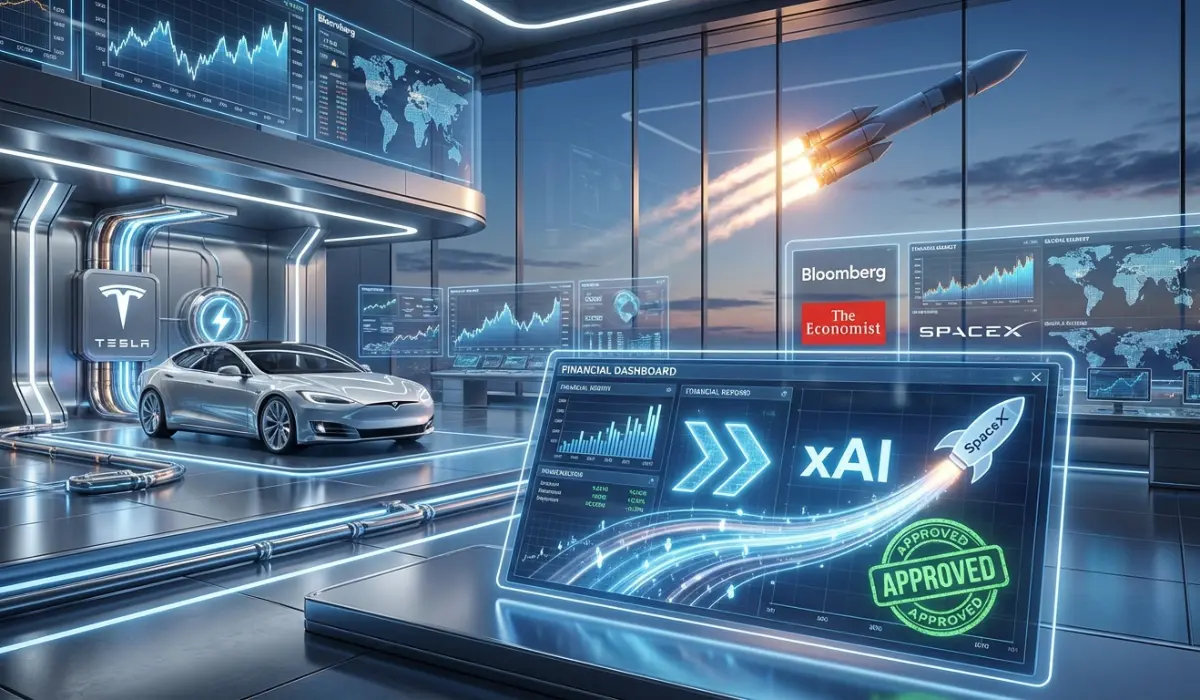
Tesla obtained regulatory clearance to convert a $2 billion investment from xAI to SpaceX, followed by the SpaceX and xAI merger. Tesla now owns a small stake, which might be less than 1% in SpaceX. This sensitive move accelerates Tesla’s exposure in the space economy, allowing Elon Musk to expand the corporate ecosystem. According to Bloomberg, this investment restructuring was disclosed in Federal Trade Commission filings dated March 11, 2026. Will the investment shift be a game-changer for investors?
Tesla, xAI, and SpaceX Acquisition, Musk Ecosystem Explained
Musk launched xAI, the direct rival to OpenAI, in the year 2023 and invested $2 billion in this artificial intelligence startup earlier in 2026 to gain direct exposure to AI developments. The business landscape changed, followed by the acquisition of xAI by SpaceX for a combined value of around $1.25 trillion. In the wake of the SpaceX-xAI merger, Tesla’s standalone exposure to xAI was rolled into a broader equity position within SpaceX.
From xAI to SpaceX—Strategy Behind the Shift Unfolded
Tesla received regulatory approval from the US Federal Trade Commission to convert its investment in AI startup, xAI, to an equity stake in SpaceX, reflecting the strength of Musk’s business ecosystem. The transition happens at a pivotal moment as SpaceX is preparing for IPO, which is expected to set a new record in financial history. Bloomberg previously suggested that the space company could aim for a $1.25 Trillion IPO, making it one of the most valuable public companies. As per the filings with the US Federal Trade Commission, Musk sells a portion of SpaceX holdings to external investors, including Valor Equity Partners and DFJ Growth, diversifying the owner base while retaining control.
Tesla’s conversion of xAI investment into SpaceX shares is not just financial; it represents a long-term vision to support space infrastructure goals. Tesla’s investment shift just before the SpaceX IPO can be interpreted as the company’s move to validate and strengthen SpaceX’s position, making it more appealing to investors. The effective integration of xAI into SpaceX strengthens SpaceX’s position as a tech-driven company ready for large-scale commercialization. The conversion of investment just before IPO boosts investor confidence, recognizing that SpaceX has a strong financial backup and support system from CEO Elon Musk. This makes the IPO more credible and attractive to investors.
Musk’s diversification of stake is driven by purpose as xAI and SpaceX complement each other to deliver sustainable energy, autonomous systems, and interplanetary capabilities. The announcement to convert investment in xAI to SpaceX received a mixed response from the investors, as transparency and corporate governance remain on the edge of skepticism. Tesla’s stake in SpaceX is viewed by many investors as a ‘hidden gem’ that could yield immense returns, particularly if SpaceX meets its ambitious trillion-dollar valuation goal later this year. Integrating with SpaceX, Tesla has evolved into a diverse business portfolio, reducing its exposure to intensifying EV price wars and margin pressure. For the Tesla owners, the shift delivers an added advantage as they own a significant piece of a pioneering rocket company.


