

The decentralization of power in the financial world came with the emergence of cryptocurrencies. In traditional finance, the decision-making power was centralized and vested in the government or other regulatory organizations. On the contrary, the power is distributed among all the stakeholders and users in decentralized finance.
So, what is decentralization in crypto? At its simplest level, decentralization in the context of cryptocurrency refers to the distribution of authority, decision-making, and control across a global network of independent nodes. A decentralized network operates based on predefined protocols and consensus mechanisms.
The architecture of decentralization is such that the larger the number of nodes, the more resilient the network. The authenticity of the decentralized network depends on the larger number of individuals or organizations that control the network, which nullifies the monopoly of one over the others. Moreover, the individual nodes must logically work together to bring the desired effect.
How Does Decentralization in Blockchains ‘Work?
Decentralization in blockchain technology distributes control and data across a network of independent nodes rather than relying on a central authority. The core mechanism behind decentralization is explained further. Nodes, which are computers running blockchain software, maintain identical copies of the ledger and collectively validate transactions through consensus algorithms like Proof of Work (PoW) or Proof of Stake (PoS). When a user initiates a transaction, nodes verify its validity, group it into a block, and add it to the chain only after network-wide agreement, preventing unauthorized changes. The communication between the nodes is peer-to-peer; that means nodes communicate directly, eliminating intermediaries and reducing single points of failure.
The Rise of Decentralization in Finance
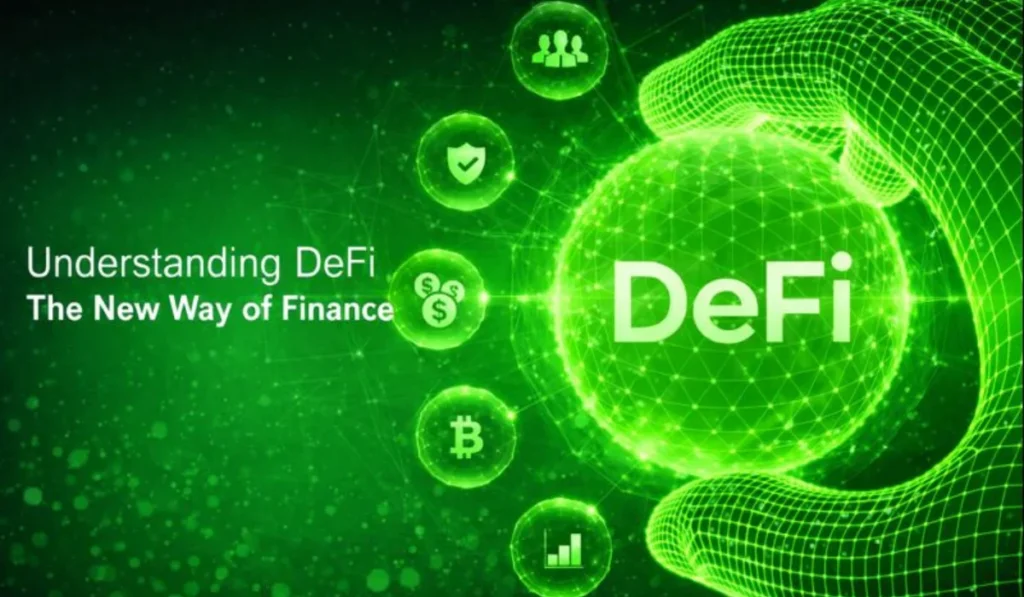
Decentralized finance (DeFi) refers to the use of blockchain technology in finance to eliminate intermediaries like banks. It enables peer-to-peer transactions through smart contracts and offers global access to lending, borrowing, and trading.
DeFi operates on public blockchains, ensuring transparency via immutable ledgers and user control through private keys. Smart contracts automate processes, reducing costs and enabling programmable financial products like yield farming. Interoperability allows seamless interactions across protocols, fostering an open ecosystem.
Decentralized finance works through Decentralized Exchanges (DEXs). DEXs, such as Uniswap, allow users to trade digital assets directly from their own crypto wallets. This “non-custodial” approach means you always retain control of your private keys and your funds.
Decentralized finance gives you greater control over your finances through increased security and lower fees. It is the best way to include the unbanked population in the global financial sector.
Centralized Finance Versus Decentralized Finance
To better understand decentralized finance, you should be familiar with how it compares and contrasts with centralized finance. The table below shows the differences between the two.
| Feature | Centralized Finance (CeFi) | Decentralized Finance (DeFi) |
|---|---|---|
| Control of Assets | Custodial (the institution holds your private keys). | Non-custodial (you hold your own private keys). |
| Accessibility | Requires KYC verification and credit checks. | Permissionless; anyone with an internet connection can join without any additional verifications. |
| Operating Hours | Subject to banking hours and holidays. | 24/7/365 global operations. |
| Trust Model | Trust is placed in humans, CEOs, and regulators. | Trust is placed in smart contracts and mathematics. |
| Transparency | Closed-source; transactions are hidden behind corporate ledgers. | Open-source; every transaction is viewable on a public blockchain. |
| Speed | Can be slow due to manual approvals and legacy systems. | Near-instant execution (depending on network congestion). |
The Benefits of Decentralization in Blockchain
The major benefits of decentralization in blockchain technology include high security, transparency, censorship resistance, and higher autonomy to the user. Data is distributed among all nodes, and decision-making takes place with collective consensus, making it impossible for attackers to tamper with the data.
All the transactions that take place on blockchains are recorded on public ledgers and are made visible for all stakeholders. This makes blockchain technology transparent and immutable. Since no centralized entity controls data transfer in blockchain technology, it is censorship-resistant. Users have direct control over their assets and data, and they can bypass traditional gatekeepers like banks. Moreover, transactions become less costly due to the lack of intermediary support.
The Challenges of Decentralization in Blockchain
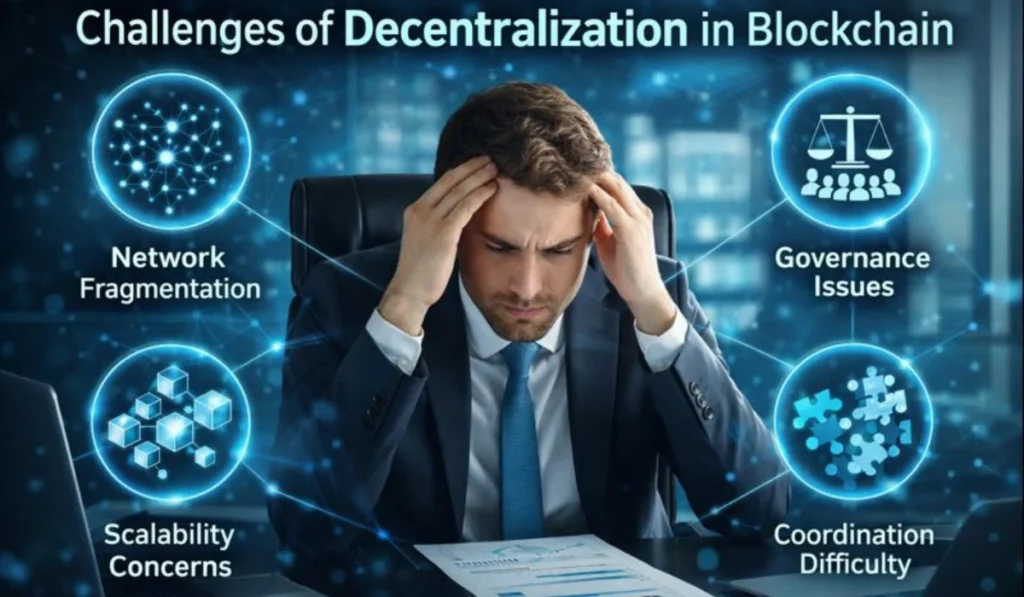
Despite the great benefits offered by decentralization, it also poses certain challenges to the users. The key challenges include high energy use, difficult governance for upgrades, regulatory uncertainty, high implementation costs, security risks, and privacy conflicts.
Scalability comes as an issue in decentralized finance, where currencies such as Bitcoin and Ethereum often slow down due to network slowdown or high fees. The high energy requirements come with consensus mechanisms like proof-of-work used by Bitcoin. Governance decision-making can be slow, as reaching a consensus among a decentralized community for network changes can be contentious.
Most national regulators are still apprehensive about DeFi and often take measures to curb their free flow. Decentralization, being technology-intensive, will require high-cost implementation. Security risks such as smart contract bugs and 51% attacks and conflicts between the privacy concerns and data recording on public ledgers are also causes of concern.
The Bottom Line: The Future of Decentralization in Blockchain Technology
Decentralization is a futuristic technology that, when combined with AI, Blockchain, and Web3, will determine the way finance, data transfer, governance, and supply chains will work. With enhanced security, transparency, and autonomy, decentralization makes technology user-friendly.
Integration with Web3 will bring in helpful changes in the finance, gaming, and healthcare sectors. In the case of integration with AI, AI will automate decentralized governance and data management, while decentralized AI platforms will offer more user-centric, less profit-driven algorithms. Apart from finance, decentralization in blockchain will bring in new forms of business contracts, supply chain transparency (e.g., tracking goods), and digital ownership. Decentralization will boost the overall trust, security, and resilience of technology and make technology user-friendly.


