


The stock market is crucial for economic growth by enabling companies to raise capital for expansion, innovation, and job creation through IPOs. It facilitates wealth creation for investors, offers high liquidity for trading, acts as an economic health indicator, and promotes efficient resource allocation to productive businesses.
This comprehensive guide for stock market beginners expands on the key concepts of the marketplace to enable easier integration into this complex yet highly rewarding platform.
Stock Market 101: What Does it Mean to “Own” a Share?
The stock market is a platform where buyers and sellers trade shares of publicly listed companies, enabling companies to raise capital and investors to gain ownership stakes.
When you buy a stock, you own a small part of a company, potentially sharing in its profits through dividends and capital gains if the stock price rises. The market operates on supply and demand, with prices fluctuating based on company performance, economic trends, and investor sentiment.
Key Functions and Opportunities
- Capital Raising: Companies issue stocks (via IPOs) to fund growth and innovation by selling equity (ownership).
- Liquidity: Investors can quickly buy or sell stocks, ensuring access to cash when needed.
- Wealth Building: Historically, the stock market has delivered average annual returns of ~10%, outpacing inflation and traditional savings.
- Diversification: Spreading investments across sectors, companies, and asset classes reduces risk.
- Economic Indicator: Market performance reflects broader economic health; rising prices often signal growth, while declines may precede downturns.
Understanding Marketplace Mechanism
Markets move in cycles, which include four stages: accumulation, markup, distribution, and markdown. Understanding cycles helps investors avoid emotional decisions and stay invested during downturns.
- Accumulation is the first phase of the market cycle, occurring after a market downturn or bottom. During this phase, smart money, like institutional investors, value investors, and experienced traders, begin quietly buying undervalued assets.
- Markup follows accumulation and is characterized by a sustained rise in prices. As more investors recognize the recovery, demand exceeds supply, leading to higher highs and higher lows. This phase reflects growing optimism and strong market sentiment, with prices often trending upward rapidly.
- Distribution marks the peak of the cycle. Institutional investors, having achieved significant gains, begin gradually selling their positions to lock in profits.
- Markdown is the final stage, where selling pressure overwhelms buying. Prices decline sharply, forming lower highs and lower lows, and panic selling can trigger rapid drops.
Bulls, Bears, and Dividends: Decoding Market Lingo
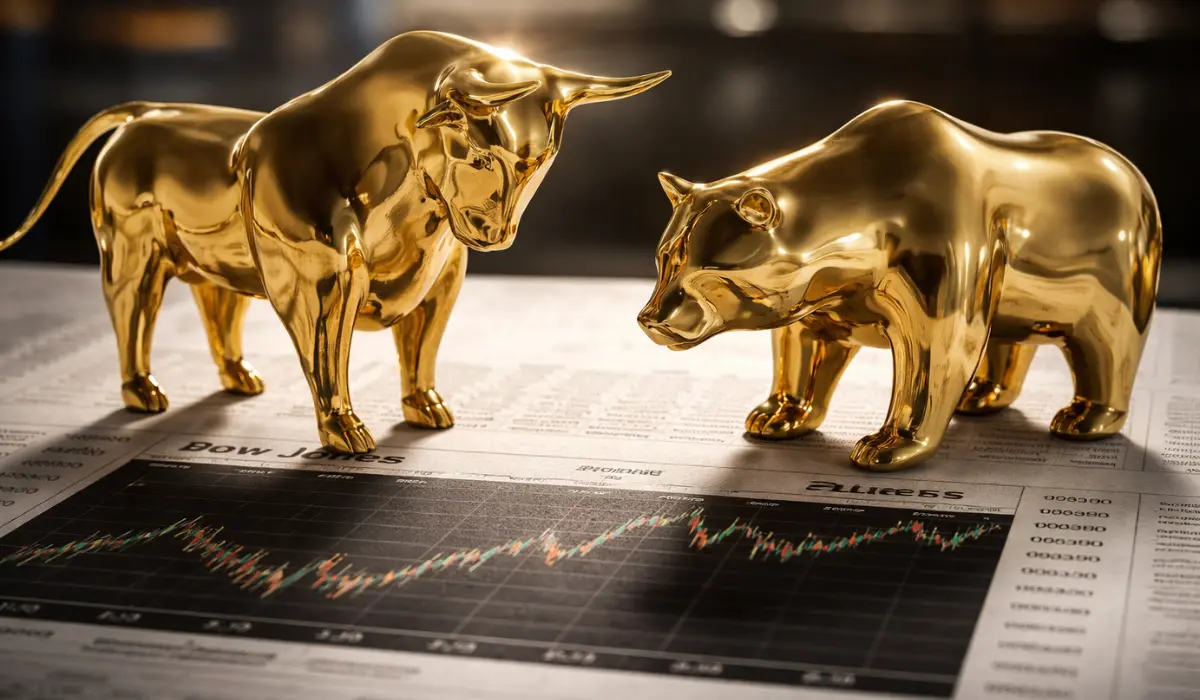
The following table contains important stock market terms, along with their definitions, to better prepare the novice trader to make informed decisions and invest successfully.
| Lingo | Definition |
| Bull Market | A period of rising prices and investor optimism. |
| Bear Market | A period of declining prices, often with a 20% or more drop from highs. |
| Bid | The highest price a buyer is willing to pay. |
| Ask | The lowest price a seller is willing to accept. |
| Volatility | The rate and severity of price fluctuations. |
| Liquidity | How easily an asset can be bought or sold without affecting its price. |
| Trend | The overall direction of the market (uptrend, downtrend, or sideways). |
| Dividend | A portion of profit that is paid to shareholders. |
| Market Cap (Market Capitalization) | Total value of a company’s outstanding shares (Price x Shares). |
| Short Selling | Selling borrowed shares, expecting the price to fall. |
Why Investing Matters
Investing matters because it allows your money to grow beyond what savings accounts can offer, helping you build wealth and potentially outpace inflation over time.
The power of compounding is a key reason. It occurs when your investment earnings, such as dividends or interest, are reinvested, generating their own earnings. Over time, this leads to exponential growth. Starting early and consistently reinvesting returns maximizes this effect.
The risk-return tradeoff is another fundamental concept: higher potential returns typically come with higher risk. Investments in stocks offer great growth potential, but are subject to volatility. Diversification and long-term investing help balance this tradeoff by smoothing returns and reducing the impact of market downturns.
Risk vs. Reward in Stock Markets
Markets can be either bullish or bearish, depending on specific catalysts. Rising prices and optimism categorize bull markets. On the other hand, bear markets involve declines of 20% or more and a pessimistic outlook.
Understanding market risks is crucial for keeping the stock market experience safe and rewarding.
- Market Risk (Systematic): Affects the entire market (e.g., recessions, pandemics, geopolitical events). Cannot be eliminated through diversification.
- Company-specific risk (Unsystematic): Risk tied to a single company (e.g., poor management, product failure). Can be reduced via diversification.
- Volatility: Short-term price swings can lead to losses if investors panic and sell during downturns.
- Inflation risk: The erosion of purchasing power, reducing real returns on investments, especially fixed-income assets.
Conclusion
The stock market is considered as one of the most effective vehicles for long-term wealth creation. While the cycle of bulls and bears cannot be prevented, the stock market has historically rewarded patience over impulse.
By understanding the mechanisms of supply and demand, diversifying your holdings, and respecting the power of compounding, you transform from a spectator into an owner of the global economy. Start small, stay consistent, and let time do the heavy lifting.
Frequently Asked Questions (FAQs)
- How does the stock market make you money?
Money is made in the stock market primarily through capital gains and dividends: buying stock at a low price and later selling it at a high price (Capital Gain), as well as by investing in a company’s stock and getting paid a share of the profit earned (Dividend).
- What causes a stock market crash?
Speculative Bubbles and Overvaluation, Excessive Leverage and Margin Trading, Economic and Geopolitical Shocks, and the consequent Herd Behavior and Panic Selling can cause a stock market crash.
- What are the four types of shares?
Ordinary Shares (Common Stock), Preference Shares (Preferred Stock), Differential Voting Rights (DVR) Shares, and Treasury Shares.
- How long do market crashes last?
Market crashes, defined as a 20% or more decline from a recent peak, generally last about 1.5 years on average from peak to trough, with recoveries taking around 2 to 3 years to return to prior highs.
- Is it smart to buy when the market crashes?
Buying when the market crashes can be smart if you have a long-term horizon, are investing in quality assets, and avoid panic-driven decisions. Downturns often present opportunities to buy at lower prices, but only if you’ve done solid research and aren’t forced to sell later.


