

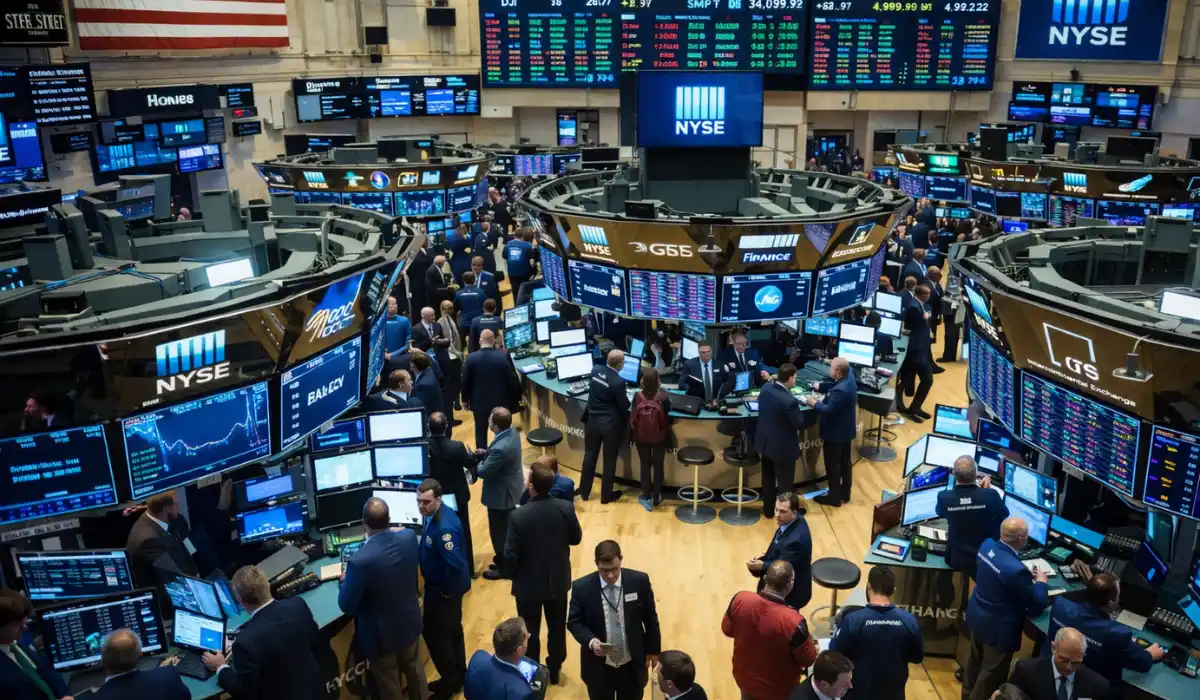
NYSE (New York Stock Exchange), Nasdaq, BSE (Bombay Stock Exchange), and NSE (National Stock Exchange) are four of the world’s leading stock exchanges. The NYSE and Nasdaq are located in the United States, while the BSE and NSE operate in India. All four exchanges permit domestic and international investors to trade in securities, subject to regulatory requirements.
| Stock Exchange | Full Name | Country & Location | Founded | Flagship Indices | Trading Hours (U.S. Eastern Time – ET) | Unique Feature | Key Relevance |
|---|---|---|---|---|---|---|---|
| NYSE | New York Stock Exchange | New York City, USA | 1792 | Dow Jones Industrial Average (DJIA), S&P 500 | 9:30 AM – 4:00 PM (ET) | The largest stock exchange in the world in terms of market capitalization | Home to major global blue-chip companies |
| Nasdaq | National Association of Securities Dealers Automated Quotations | New York City, USA | 1971 | Nasdaq Composite, Nasdaq-100 | 9:30 AM – 4:00 PM (ET) | First fully electronic stock exchange | Known for technology and growth focused companies |
| BSE | Bombay Stock Exchange | Mumbai, India | 1875 | SENSEX | 11:45 PM – 6:00 AM (ET) | The oldest stock exchange in Asia | Key indicator of India’s equity market |
| NSE | National Stock Exchange of India | Mumbai, India | 1992 | NIFTY 50, NIFTY Bank | 11:45 PM – 6:00 AM (ET) | India’s first fully automated exchange | Highest trading volume among Indian exchanges |
1.NYSE (New York Stock Exchange)
Founded in 1792, it is the largest stock exchange in the world by market capitalization. The Dow Jones Industrial Average (DJIA) and S&P 500 are the major indices of the NYSE. Dow Jones Industrial Average (DJIA) tracks the performance of 30 large, well-known U.S. companies and shows how major American businesses are performing overall. S&P 500 (Standard & Poor’s 500) tracks 500 of the largest U.S. companies.
Headquartered in New York City and operated by Intercontinental Exchange (ICE). It lists more than 2,400 companies. The exchange covers financials, industrials, energy, and consumer sectors. The major companies listed include Berkshire Hathaway, JPMorgan Chase, Exxon Mobil, Johnson & Johnson, and Walmart. The exchange operates under the oversight of the U.S. Securities and Exchange Commission (SEC).
Top 5 NYSE-Listed Companies
| Company | Ticker Symbol | Sector |
|---|---|---|
| Berkshire Hathaway | BRK.A / BRK.B | Conglomerate |
| JPMorgan Chase & Co. | JPM | Banking & Finance |
| The Coca-Cola Company | KO | Consumer Goods |
| Walmart Inc. | WMT | Retail |
| Exxon Mobil Corporation | XOM | Energy |
2. Nasdaq (National Association Of Securities Dealers Automated Quotations)
Nasdaq, or the National Association of Securities Dealers Automated Quotations, is the first fully electronic stock exchange in the world. It’s operated by Nasdaq, Inc. Nasdaq is known for technology and growth focused companies. Headquartered in New York City, the exchange serves more than 50 countries. Over 4000 companies are listed on the exchange.
Nasdaq Composite and Nasdaq-100 are the two flagship indices of Nasdaq. The Nasdaq Composite Index tracks more than 3000 stocks, while the Nasdaq-100 tracks 100 of the largest nonfinancial companies. The Technology, consumer discretionary, and communication services are the largest sectors traded on the exchange. The Nasdaq Inc. recorded a net Income of $423 million in the third quarter of 2025.
Top 5 Nasdaq-Listed Companies
| Company | Ticker | Sector |
|---|---|---|
| NVIDIA Corporation | NVDA | Semiconductors |
| Apple Inc. | AAPL | Technology Hardware |
| Microsoft Corporation | MSFT | Software |
| Amazon.com, Inc. | AMZN | E-commerce / Cloud |
| Alphabet Inc. (Google) | GOOG | Internet & Digital Advertising |
3. BSE (Bombay Stock Exchange)
Founded in 1875, BSE(Bombay Stock Exchange) is the oldest stock exchange in Asia. It’s Headquartered in Mumbai, India. The exchange is operated by BSE Ltd. The BSE lists more than 5,400 companies.
BSE Sensex is the flagship index of the exchange, and it covers 30 of India’s largest and most liquid companies, such as Reliance Industries Ltd. and Tata Consultancy Services (TCS), HDFC Bank, ICICI Bank, and Infosys.
BSE Limited (Bombay Stock Exchange) reported net income of approximately US$160 million in 2025. The exchange is under the regulatory oversight of the Securities and Exchange Board of India (SEBI).
4. NSE (National Stock Exchange)
The National Stock Exchange of India (NSE) was established in 1992. The trading started in 1994. Headquartered in Mumbai, the exchange is operated by NSE Ltd. The exchange lists more than 2000 companies.
The exchange provides trading in equities, equity derivatives, currency derivatives, and commodity derivatives, with banking, financial services, information technology, energy, and consumer-related stocks accounting for a substantial share of activity.
The exchange’s flagship index is Nifty. The index tracks 50 companies with large market capitalization and high liquidity. Stocks such as Reliance Industries, Tata Consultancy Services (TCS), HDFC Bank, ICICI Bank, Infosys, and Bharti Airtel are among the most actively traded on the NSE and together represent a large portion of total market capitalization.
NSE Ltd. has reported sustained profitability in recent years, supported by high trading volumes and increased participation from institutional and retail investors. The exchange is regulated by the Securities and Exchange Board of India (SEBI) and operates under prescribed listing, disclosure, and surveillance frameworks to maintain orderly market functioning.
| Company | BSE Ticker | Sector |
|---|---|---|
| Reliance Industries Ltd. | RELIANCE | Energy / Conglomerate |
| Tata Consultancy Services (TCS) | TCS | IT Services |
| HDFC Bank Ltd. | HDFCBANK | Banking |
| ICICI Bank Ltd. | ICICIBANK | Banking |
| Infosys Ltd. | INFY | IT Services |
| Bharti Airtel Ltd. | BHARTIARTL | Telecommunication |
Can The U.S. Investors Invest In BSE And NSE?
U.S. investors cannot invest directly in the BSE and NSE. But there are indirect ways to get access to Indian equities for U.S. citizens.
1. ADRs & GDR
Indian ADRs & GDRs are the most common indirect path.
Indian companies in the U.S. use American Depository Receipts (ADRs) or Global Depository Receipts (GDRs). These financial instruments represent underlying Indian shares that are traded on U.S. exchanges in USD.
Examples: Infosys and Wipro
2. India-Focused ETFs & Mutual Funds
U.S. investors can buy ETFs or mutual funds that track Indian indices or sectors. These funds hold stocks listed on the BSE and the NSE. Popular options track indices like Nifty 50 or Sensex. Suitable for diversified exposure without picking individual stocks.
The Bottom Line
NSE, BSE, NYSE, and Nasdaq are prominent stock exchanges in the world, benefiting companies and investors. In addition, these exchanges contribute significantly to the development of the global economy by facilitating capital formation and supporting innovation and job creation.
Frequently Asked Questions Regarding NSE, BSE, NYSE, And Nasdaq.
The four main types of trading are day trading, swing trading, position trading, and scalping.
The NYSE and Nasdaq are the two largest stock exchanges in the United States.
Both NSE and BSE have their own advantages. The NSE has high trading volume, derivatives, and liquidity.
The BSE is Asia’s oldest exchange and is best known for the Sensex index.
Google’s parent company, Alphabet Inc., is listed on the Nasdaq. Its shares trade under the tickers GOOG and GOOGL. Alphabet is not listed on the NYSE.


