

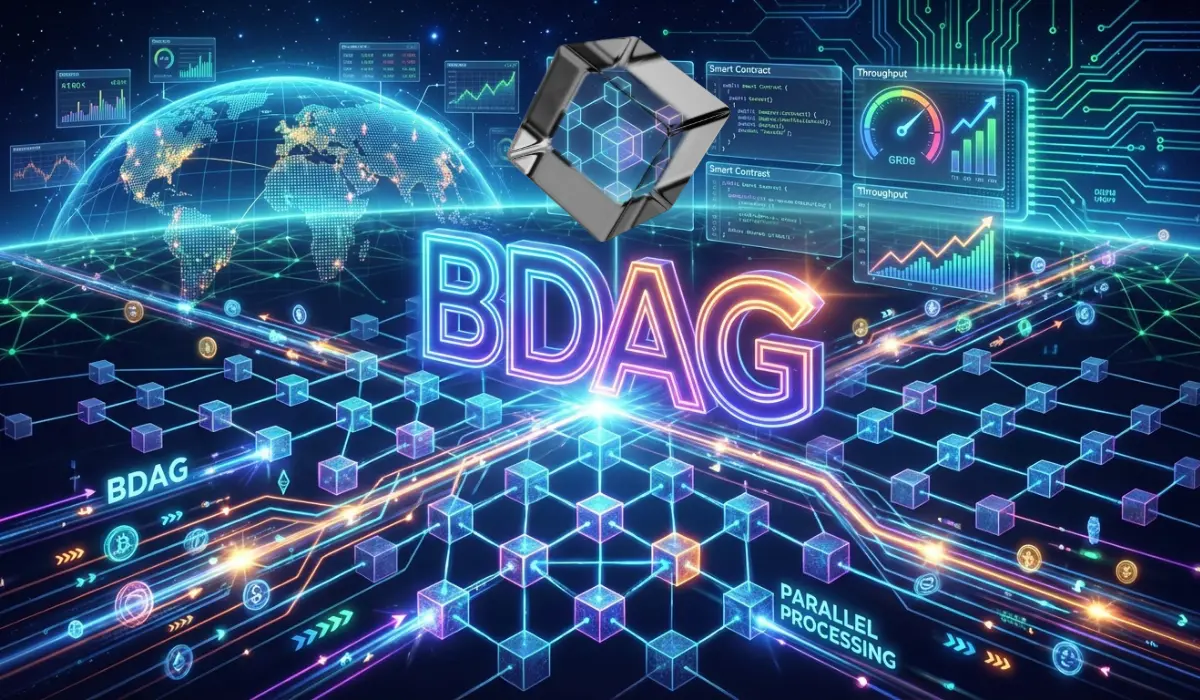
BlockDAG (BDAG) is a Layer 1 Proof-of-Work (PoW) cryptocurrency that is designed to solve the blockchain trilemma, which includes balancing security, scalability, and decentralization. It uses a Directed Acyclic Graph (DAG) structure instead of a linear chain, thereby enabling parallel transaction processing, offering high-speed, low-fee, and scalable transactions for DeFi and real-time payments. BlockDAG aims to provide a secure, fast, and decentralized alternative to traditional blockchains, with a focus on ease of mining and high transaction throughput. This article further explains BlockDAG (BDAG), its features, benefits, and why it matters. So, keep reading to learn more.
How BlockDAG Works
The BlockDAG is fueled by a Proof-of-Work consensus that perfectly balances democratic governance and transactional efficiency, thereby eliminating block wastage. BlockDAG is said to reinvent mining consistency and efficiency with its ability to process 10 blocks per second and ambitions to exceed 100+. This throughput allows miners with high hash rates to achieve consistent rewards across multiple parallel blocks. BlockDAG solves problems and challenges in decentralized networks through its consensus mechanism.
It aims to resolve the decentralization dilemma whilst maintaining high accessibility, security, and scalability. BlockDAG serves as an alternative to traditional blockchain because it is one of a kind in the market. It lets validators add multiple blocks and use parallel transaction processing, thereby improving scalability. By reducing latency, BlockDAG focuses on improving decentralization and a dynamic consensus mechanism. This helps solve common and tricky problems in the crypto domain. In addition, BlockDAG’s presale allows users to earn BDAG coins at a discounted price.
Key Features Of BlockDAG Technology
The key feature of BlockDAG is that it uses a Directed Acyclic Graph (DAG) structure to enable parallel block processing. This offers high scalability, near-instant transaction speeds, and low fees. It supports Smart Contracts and DeFi, utilizes a hybrid Proof-of-Work (PoW) consensus for security, and enables energy-efficient, mobile-friendly mining. Since BlockDAG is designed to be more environmentally sustainable, it has reduced computational waste compared to traditional, energy-intensive Proof of Work (PoW) systems. These features make BlockDAG a strong candidate for next-generation blockchain applications requiring fast, secure, scalable, decentralized, and efficient transactions.
BlockDAG Use Cases
The BlockDAG technology offers a high-throughput, low-latency alternative to traditional blockchains, which is designed for massive scalability in decentralized applications. Key use cases include rapid DeFi transactions, IoT or DePIN networks, mobile-based mining, high-frequency smart contracts, and secure, transparent supply chain management. Its scalability and speed are what make BlockDAG a superior alternative to linear blockchains for real-time, low-cost applications.
BlockDAG Price Prediction
Based on smart contract activity, adoption, and ecosystem growth, BlockDAG is likely to reach $0.30 by 2030 under bullish scenarios. After listing, prices may increase or decrease. Some of the factors that directly influence BDAG’s price include decentralized application (dApp), network adoption, exchange liquidity, partnerships, developer activity, and presale distribution.
Is BlockDAG The Future Of Blockchain?
BlockDAG is considered to be a strong opponent for the future of blockchain, as it aims to solve the scalability dilemma using a Directed Acyclic Graph (DAG) structure. It is said to offer faster, parallel transaction processing without hard forks. It also offers high-speed, scalable, and developer-friendly features, making it a promising, high-growth technology for 2025–2030, particularly for decentralized applications and enterprise use cases. As for why BlockDAG is considered a potential future, it focuses on replacing or operating alongside traditional blockchain architectures to provide a more efficient, secure, and decentralized system. Early projections suggest that it could be a major player in the crypto market in the coming years.
Is BlockDAG A Good Investment Option
Many analysts believe that BlockDAG is a good investment option because of its bullish nature, which points to its innovative technology and potential to disrupt the blockchain space. Investors predict that BlockDAG could see significant growth in the upcoming years, potentially reaching several dollars per coin. While this is the case, always do your own research before making any investment decisions, and never invest more than you can afford to lose.
Final Thoughts
BlockDAG (BDAG) is a Layer 1 blockchain alternative that uses a Directed Acyclic Graph (DAG) structure to enable parallel transaction processing, offering high scalability, speed, and security. It is specially designed for fast, decentralized, and low-latency transactions that allow users to mine BDAG on mobile devices. Unlike linear blockchain, BlockDAG supports multiple blocks simultaneously. The BlockDAG ecosystem is currently in its development or presale phase, having raised significant capital with, at times, higher investor interest.
FAQs
BlockDAG is a Layer 1 blockchain network utilizing a hybrid Directed Acyclic Graph (DAG) and Proof-of-Work (PoW) structure to enable parallel transaction processing. It increases speed and scalability by allowing multiple blocks to be confirmed simultaneously rather than in a linear chain.
BlockDAG (BDAG) is often positioned as an accessible entry point for beginners in the crypto space, particularly for those interested in early-stage project participation, mining, and high-potential, albeit high-risk, investments.
Antony Turner is the primary founder and CEO of BlockDAG, bringing over 20 years of experience in fintech and crypto to the project.


