

What It Means to (Really) Be on the Side of Civilization and Democracy
Nov 28
Member-only
Save
You can see, right about now, that so many of our societies are struggling. Mightily. FromItaly to SwedentoBritain— very few are in rude health. Beset by fascism, nationalism, xenophobia, people scraping for survival, demagogues pointing the finger at scapegoats. Even America, a bright spot in this dark picture, is scarcely out of the woods: it’s like a patient that’s been moved out of ICU, but a full recovery — it’ll take time, and care.
Beneath this picture of social decay and collapse lies a bigger question. A bigger battle, really. What principles should we build our societies around and upon? The absolutist, nonsensical definition of “freedom,” which includes hurting and harming others, championed by figures like the Cheesy Billionaire Who Drove Twitter into the Ground? A reversion to atavistic forms of supremacy and “master races,” preached in not so subtle code by neo-totally-not-fascist movements around the globe? Or…the other end of the spectrum? What is that, anyways?It seems to be lost, whatever the opposite of hate, violence, and ignorance reallyis.
Let me tell you a story that made me wonder about all this. A haunting and touching little tale, that happened to me, quite out of the blue, just the other day.
It was a rainy fall day, and little Snowy was desperate to go to the park. We’d been stuck indoors, watching the World Cup, and the little fella — well, he was like Dad, comeon, let’s go. I wanna see my buddies! And play!! So off we went.
As we arrived at the park where the dogs spin and play — and roll in the mud in these wet autumn days — I noticed a woman. She was getting out of a car. She was cajoling a big grinning Golden Retriever. I chuckled to myself. The dog was a puppy. Into the park she walked — and the puppy bounded.
Snowy, being the weird funny guy that he is, began to bark at the big puppy. Hey! This ismypark! And I haven’t seenyoubefore! I’m the boss around here, big guy. Calm it down, buddy, I said. The woman smiled at me. Dogs. But I noticed that there was a kind of deep, deep sorrow in her smile. I wondered. You know? It’s a place of a kind of privacy, the dog park. You know your neighbours — but you don’t pry.
She was an old woman, but not elderly. And as the dogs played, we began to talk. I asked her what brought her to the park — I hadn’t seen her before, after all, and everyone knows everyone at our little park. I used to live in that little house just there, she said, pointing to a quaint little villa, just beyond the playground at the edge of the park, painted white, with ivy creeping up one wall. And that’s where I raised my four children.
I was touched. What a wonderful place to raise kids, I said, a little house right at the edge of the park, next to the playground. You must have some very fond memories. She nodded, and smiled, and again, in that smile was this deep well of sorrow. I couldn’t understand why. But something in my heart went out to this gentle old lady. We got along, I realized. She was cultured, and we talked immediately like old friends. What, I wondered, was making her so…sad?
Sad, perhaps, isn’t the right word. Not even melancholy is. As she looked at me, she seemed to look through me, at the old playground, the old house, that’d been there for hundreds of years, and see something else. Was it the past? Was it nostalgia, or a kind of longing, that I could in those old eyes, looking at me, through me? Something in her hurt, I understood.
Where are your kids now, I asked gently. My oldest son is here, and he does this, she said, and my first daughter’s married, and has two kids, and my other daughter does this. You must be very proud of them, I said. She smiled again. We are.
I frowned. You only mentioned three, I said.
Ah, my second son, she replied. Her eyes went distant again. He…passed away.
I’m so sorry, I said, touched. And then we went silent. I wouldn’t normally ask, but in that silence, something seemed to beckon me. Something beyond me, telling me that this story needed to be told, on this day, in this place, for some circle to complete itself. What — if I can ask — what happened to him, I asked, quietly.
And she told me a terrible story of how he’d died. I can’t share it with you, exactly. Its details…well, I think she’d want to keep them private. But he hadn’t died a natural death. Hate had killed him.He had died at the hands of hateful violence.
And then she told me what a bright boy he’d been. How he’d been educated at the best schools, and went out there, in the big world, to do something brave, loving, noble, and just. And one day — just like that — in a terrible act of hate and violence, he’d met a brutal end. Just like that.
I reeled. I’m so sorry, I said. My heart really goes out to you. I wish there was something I could do. I felt my eyes welling up.
She looked at me — really lookedatme, for the first time, not past me, to the old house, and the playground — and said: and today would have been his birthday.
As she said, she began to cry.
Then I began to cry, too, because I understood, at that precise instant, just why she’d been looking beyond me.I imagined her seeing her beautiful little boy, playing in that playground, whooping with delight, chasing his friends, walking his dog. The way he’d been once. Walking across the street, back to the old villa, where she’d waited for him. She was seeing a lifetime in those moments. Living in those memories, on the day that would have been his birthday. Seeing him as he had been.
Holding on, with all her strength, to the loving part of what had been.
There we were, an old woman, and a man, and their two dogs, weeping in an ancient park, as the city spun around us.
I thought, in the instant, of the strength of this old lady. To come back to this park, where she’d raised her kids, on the birthday of the son she’d lost in such a terrible way.To hold on to the love. Would I be able to do that? I doubted it. I didn’t know if I could be that strong, really. To see what had been, and wonder what never could be. I sobbed, like a baby.
And then, being a cultured and civilized lady, she apologized for crying, given these old, stifling norms of privacy and adulthood that we have. The polite thing to do.
Please. Don’t apologize, I said, look, I’m crying too. Ah, Lord. How my heart goes out to you. What a terrible story. I can only imagine. I wish there was something I could do. And I did. I wished from the bottom of my powerless heart that there was something, anything, I could do. But maybe, just maybe, this was the way it was supposed to be. That someone needed to bear witness to this old lady’s pain, and her strength, and the way she held on, fiercely, to love, on this day, and that person, well, it was me.Maybe in those moments of bearing witness to each other’s trauma and truth, and the ways that we learn to transcend it, too, circles close. Circles of love.
I wept a little bit more, and so did she. She, thinking of her son, and me imagining her remembering him as he’d been when he was just a beautiful little boy, before he’d been ripped away from her.
My heart seemed to burst with sorrow. Maybe this was my job, to accept this pain, too, to help her walk through it, even as she stumbled, and that was the act that closed circles of love. I didn’t know. I couldn’t say for sure.
And just at the moment, as I was thinking all this, into the park walked…Dave, the goofy electrician. Imagine for a second that here we are, playing out a scene from the English Patient or what have you…and Newman from Seinfeld walks into the room. Hey, he hollered, with his goofy grin.
And just like that, the moment passed. We talked, with Dave, about the rain, and why he was wearing shorts, and other assorted humdrum nonsense. We didn’t mention any of it. The son, the park, the house, life, death. And then, afterwards, we went our separate ways. I said goodbye to her, and gave her my condolences, and told her I hoped I’d see her again. She smiled. And this time, I think, there was a little less sorrow in it. Or maybe not a little less sorrow — but maybe a little morepeace.
That’s my story. It stayed with me, for the next few days, this encounter.And itchangedme. Some moments are like that. Unforgettable. Strange. Tinged with a kind of deeper meaning, a glimpse into great truth, that takes time, and patience, to really grasp. This was one of them.
Let me come back to our societies. What is this battle really about? On the one hand, we have the forces of hate. And I think that we can and should begin to say all this plainly. Because the less we do, the more people end up like this poor, dear old lady’s son.
Now, you might know that, but really think about it for a moment. These forces barely even try to veil their hate anymore. And it’s not just minor league hate, it’s The Real Thing.There’s Trump, havingdinner with white supremacists and Holocaust deniers. That’s…Nazi level stuff. And it does us little to no good to pretend that itisn’t.
This battle for the soul of our societies is very, very simple. Only we — our side — isafraid to speak our truth.You see, if I tell you that the other side is about, animated by, dedicated to, driven by, wedded to hate…you’ll nod right along. But if I ask the average person on our side, well, what’s the answer to hate…
Then, I’ll geta mess. A certain kind of guy who likes math will give me equations about economics and growth. Another kind of person will tell me that it’s about activism. Still another kind who’s been to this kind of grad school will recite for me Marcuse’s principles, basically, of not being tolerant of intolerance. Still another kind of person, perhaps a more worldly kind, will speak about education and rights and so forth.
None of these people are wrong. None of their perspectives are wrong. But none of that’s the truest truth, either.
What’s the answer to hate?You know. Like so, so many of us, probably, if the average person is anything to go by, even the average one on our side, the side of democracy and civilization and so forth — you’restill afraid to say it.Because it’ll make you look naive, childish, weak, silly, impractical, maybe “effeminate,” perhaps “emotional,” soft, woo-woo, or any number of other adjectives. And perhaps you worry that it’s our side, too, that’ll label you as these things.
The answer to hate is love.
But our side isafraid to speak this truth. In the aftermath of terrible massacres, like the one in Colorado, then the critical and profound beauty of this lesson comes to the fore.Love is love, we say.Love not hate. And then we go back to forgetting. We bicker with fascists on Twitter or go back to our theories and examples and so forth. We go back to pretending that the question, the problem, is somehow “deeper” or “more complicated” than this.
It’s not. Let me say it again. The answer to hate islove. There’s nothing more complicated, of more profound depth, provoking and deserving of more thought than that.In this world, in this life — nothing. It’s for precisely that reason that from Jesus to MLK to Lennon and beyond, great minds put this question and concern first, above all things.
Our side is failing because, in my eyes, it’safraid to speak its truth. What is our truth — on the side of democracy, civilization, and all their values? Well, it’s that those are the great projects of humanity, and they have a certain set of values. Peace. Justice. Truth. Beauty. Goodness. Kindness. Mercy. Being welcoming and warm and gentle people, full of grace, brimming over with acceptance for all.All of these are just the names of love.
Our side — it’s great truth is love. Love and only love.We can distill it into its many forms, refine it into its many names. But when we are unwilling to say its greatest and truest name — what power do we have left? Let me make that concrete for you. If we are unwilling to say something like: being a civilized person is about being a loving person — then how much power do we really have to reject, fight, abjure, disempower hate?Not much at all.
Because weourselveshave set the bar far too low. Saying that being a civilized person is being a loving person is a serious thing: it means that one must practice, enact, the great virtues, the timeless values, of care, concern, gentleness, warmth, truth, peace. Unswervingly, even when it’s not easy. And if this bar isn’t lived up to, then, well, one is failing in an equally serious way. And therefore, to live the opposite of these values — to preach and practice hate, brutality, violence, repression, bigotry, and so forth — this is an even deeper failure, which is anathema to really being part of the projects of democracy and civilization.
Do you see my point a little bit? When we ourselves are afraid to say “hey, we need to be loving people — and that’s what will really set us free, all of us” — then of course it’s that much easier for the side of hate to breed, flourish, and then even win.Because in the middle ground lies a kind of haze, of muck and grime. Is that barely veiled code OK? I guess so! It’s not exactly loving, but hey, you know, at least it’s not out and outhate. This approach is wrong. We can and should be far more strongly and fiercelyon the side of love.
Because that is when we close the circles that are left open. That’s when we really bear witness to each other’s wounds and hurts and traumas, and say: “Me? I’m sorry this happened to you. I will never let it happen to anyone else, so much as I can. This is how I honor you.” This is what living with honor is. Having the decency to really speak the name of love, and enact it. But these days, the side of hate has done something immensely poisonous, even to us — it’s madeusafraid to live honorably, in ways that honor our own deepest truth, which is love, whose name we’re afraid to speak.
How sad.
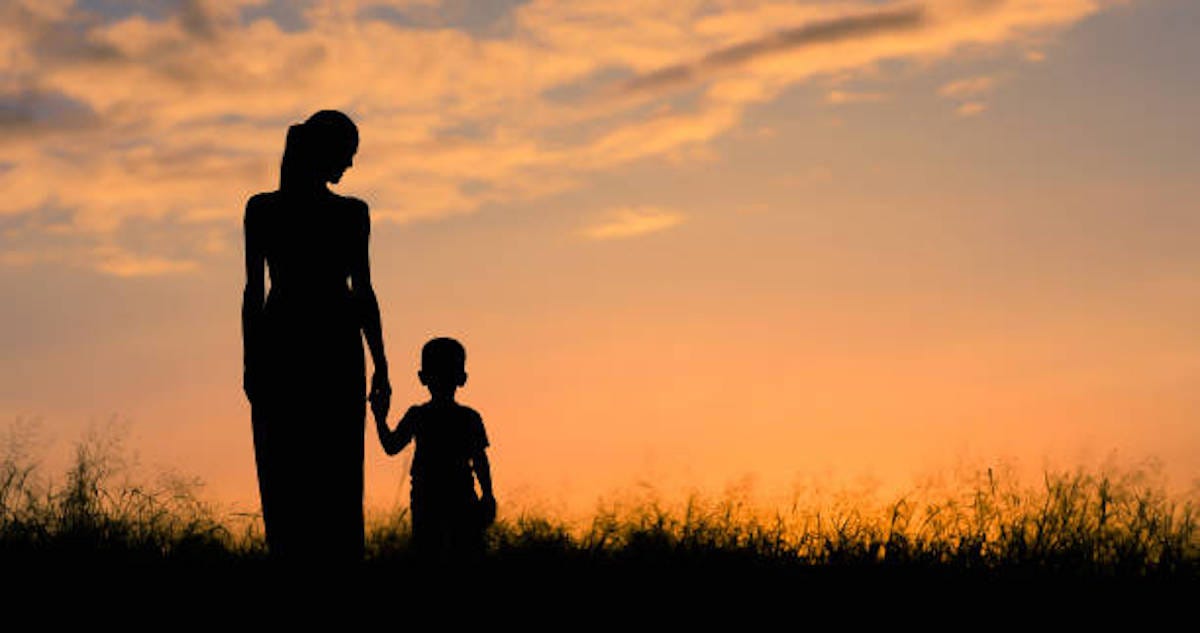
You see, in the old lady’s eyes, there was sorrow. But there was also strength. Grace. And above, beyond all,love.Strength, to enact its name, come back to the park, on her little boy’s birthday, and remember him. Grace, to thank time and fate for giving him life. And love, in the memory of the days they’d had together, in the little house, next to the playground, where he’d grown up.
Me? Maybe I provided a little strength. By bearing witness. I don’t know. What I do know is thatI had to close the circle. That was my moral duty. My obligation. Because that is how the world is made a more loving place.
She didn’t need to say it, in the end. How I still love him. My beautiful little boy. Our tears said it for her, anyways, falling to the wet autumn soil, where he’d used to play. Maybe I needed to be there, so someoneknew. That this terrible pain, this immense grief, this boundless love, of a mother for her child, still pulsed through being like a great embrace.
I’m not saying that I gave her closure. Not at all.I’m saying that perhaps in those moments we come closer to each other, even if we are perfect strangers.Because we understand the threads of life and death, sorrow and grace, time and dust, that bind us all. Not the ones of hate and violence whose only real purpose is tobreakthem.
She didn’t need to say it. But we? My friends.We do. To be a civilized person is to be a loving one. Our side, its great truth, is love. Just that. Eternal and timeless, holding us all like a mother. And until we are boldly, proudly unafraid to say it, my friends, we willmeet the cowards’ fate we currently are. Because our greatest power, in the end, is a word that was never spoken.
UmairNovember 2022


