

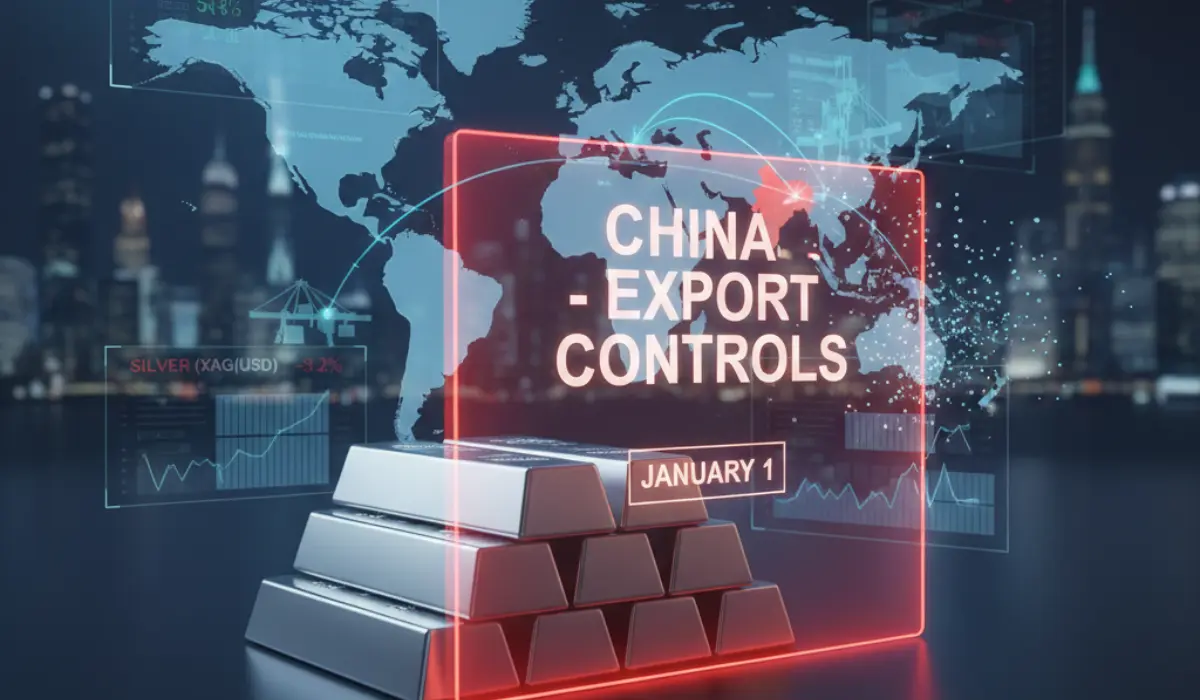
China has tightened rules on silver exports starting January 1, 2026. The metal is now treated as a strategic resource. Exporters must get government approval before shipping silver out. Only large, state-approved companies can qualify. Smaller players are mostly locked out. The goal is to keep enough silver at home. China needs it for factories, clean energy, and tech production. Prices raced fast. In Shanghai, physical silver has crossed $80 an ounce. Global markets are feeling the pressure already. The US and Europe could face shortages. Silver is widely used in electronics. Solar panels and defense equipment. Supply chains may not stay smooth for long.
China has changed how silver can be exported. Companies now need state approval to ship it overseas. Not everyone can apply. Only big firms that produce 80 tons of silver every year are allowed. Smaller producers are excluded, and there is also a financial rule. Exporters need verified credit lines worth $30 million. Without that, no license is granted, and these limits sharply narrow who can sell silver abroad.
Global Supply Risks Rise as China Tightens Control
This move fits China’s wider push to keep key resources under tight control. It follows the same playbook used with rare earth metals in the past. The focus is turning inward. Domestic factories and industries come first. Overseas buyers are no longer the priority. By limiting exports, China can manage supply at home. It also gains leverage abroad, and this policy sends a clear signal. For now, the main focus is to protect the critical national resource and not the global supply.
China already dominates refined silver, controlling roughly 60 to 70percent of global supply. That makes these limits even more serious. The market was tight before this move. Demand is already running ahead of supply. In 2025 alone, the shortail crossed 230 million ounces. These rules could widen that gap further. Less metal will reach global buyers, and pressure on prices is likely to stay, creating a harder mismatch.
Industries on Alert As Prices Surge and Inventories Shrink
The decision has raised alarms across global industries. Big companies are paying attention. Elon Musk also weighed in on the issue, and he pointed out that silver is used by many industrial processes. According to him, it plays a key role in manufacturing and energy systems. Musk called the restrictions “not good”. His comment reflects wider concern as many industry leaders fear supply issues ahead, and the impact may stretch beyond China.
Silver prices have surged through 2025, and they are now more than twice where they started the year. New records have been set, and industrial demand is the main reason for this. Electric vehicles use it heavily, and solar panels depend on it too. Chipmakers need it for key components. What makes it harder is the lack of alternatives. Silver’s conductivity cannot be easily replaced, and that keeps the demand firm and the supply under strain.
Global silver stockpiles are running thin. Inventories are now at worrying levels. Since 2020, COMEX vault holdings have dropped by around 70%. LBMA stocks are down close to 40%. The drawdown has been steady, and some regions are feeling it more than others. In a few markets, only 30 to 45 days of usable silver remain. That leaves a little room for disruption. The prices could spike even higher if demand stays strong. Manufacturers may struggle to secure enough metal. Traders are watching closely for any sudden moves in the market.


