


The Chinese stock market has been witnessing an unprecedented A-share rally these days, prompting regulators to limit leverage even as investors argue that this is just the beginning of a bull run. Daily turnover across the Shanghai, Shenzhen, and Beijing exchanges had hit record highs last week, peaking at 3.99 trillion yuan ($556 billion) on Wednesday. This has surpassed the previous high level of 3.48 trillion yuan from October 2024. The benchmark CSI 300 has also reached a four-year high earlier this year, marking its strongest annual gain since 2020.
Regulators are closely monitoring the situation, with concerns that the current rally may lead to a sudden market crash, similar to the 2015 boom-bust cycle.
Echoes of the 2015 Boom-Bust Cycle
The current rally in the Chinese stock market echoes the 2015 boom-bust cycle, say market watchdogs. China’s 2015 stock market boom-bust cycle was a dramatic speculative bubble fueled by retail frenzy, government encouragement, and high leverage, which eventually led to a huge market crash after the initial hype. The Shanghai Composite Index surged over 150% from mid-2014 to June 2015, driven by millions of new retail investors borrowing heavily via margin financing.
The bubble burst on June 12, 2015, wiping out a third of A-share value in weeks. The Shanghai Composite Index fell by 30% in early July. Aftershocks of the crash hit the market in July-August and January 2016, with over 1,400 firms halting trades amid panic selling.
Regulatory Response
The regulators are anticipating a similar pattern this time, and are staying on guard to cope with a crisis. They responded by hiking margin requirements to 100% from the current 80% on new credit purchases across the bourses. This change was effected from Monday.
The American investment bank Morgan Stanley, after analysing the situation, has called this a sign of “overheating” in A-shares, with their sentiment index hitting 91% (above 90% for the first time since September 2024), fueled by volume spikes.
What is Driving the Current A-Share Rally in China?
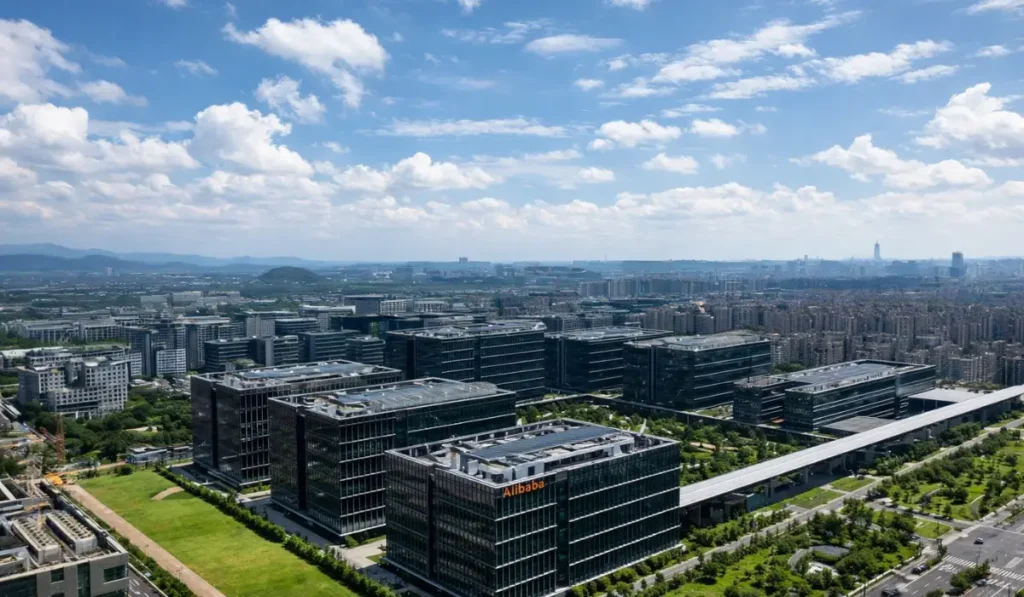
China’s current A-share rally is driven by several factors, including a mix of domestic retail fervor, policy tailwinds, foreign capital inflows, and sector-specific momentum in the technology or AI sector. As per HSBC data, domestic retail accounts for ~90% of the current turnover, fueling record volumes like 3.99 trillion yuan peaks via high-margin financing. In the case of foreign inflows, net purchases exceeded $50B recently, a sharp rise compared to previous rates.
China Stock Market Outlook: Slow Bull or 2015 Repeat?
China’s A-share rally shows sustained momentum into 2026, with analysts projecting a controlled “slow bull” rather than a speculative bust like 2015. This is due to the preemptive regulations and stronger fundamentals in the Chinese market compared to 2015. Major institutions remain optimistic amid record turnovers and the CSI 300’s four-year highs. For instance, Goldman Sachs predicts MSCI China to be up by ~20% and CSI 300 up by 12%, driven by AI profits and policy. CITIC Securities forecasts 4.8% earnings growth, with tech or semiconductors leading. China’s GDP growth of 4.5-4.8% supports this, bolstered by exports, anti-innovation policies curbing competition, and $83B ETF inflows.
Unlike 2015’s 150% bubble fueled by unchecked leverage, current regulators hiked margin rules to 100% beforehand, targeting “overheating” at 91% sentiment levels. Even though retail dominance persists at ~90%, “structural” tech or AI focus and $50B+ foreign inflows add balance to the situation. Risks like geopolitical issues linger; however, Q1 liquidity and maturing innovation favor steady gains.


