

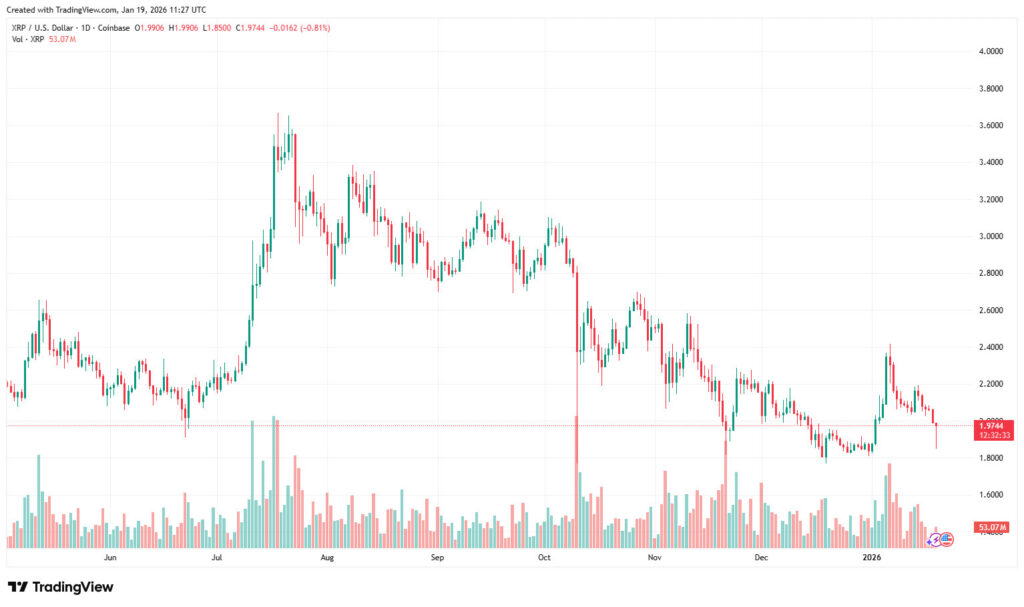
Ripple’s XRP has seen a notable decline in the broader cryptocurrency market, underperforming major assets such as BTC, ETH, and SOL. XRP has been displaying mixed to bearish momentum for a long period of time now, and the digital asset has plummeted below the $2 psychological level today. The ongoing downturn in the fifth‑largest cryptocurrency by market capitalization is largely attributed to U.S. tariffs on European countries and postponements surrounding the Market Structure Bill. Macroeconomic factors and regulatory concerns have always been a fate-determining factors for digital assets like XRP.
XRP is currently trading at $1.97, with a market capitalization of $119.04 billion and a daily trading volume of $3.35 billion. The digital asset is trading in the cryptocurrency market with a price decline of roughly 5% and volatility of 6.5% across the broader market. Beyond macroeconomic and regulatory pressures, profit‑taking after the recent ETF rally, whale sell‑offs, and a technical breakdown below key support levels are also contributing significantly to the ongoing price decline. According to the latest data, XRP spot ETFs saw $56.8M net inflows last week, but short-term traders cashed in gains, further fuelling near-term selling pressure. It contributed to a price drop near the support level of $1.93–$1.97.
XRP Slumps As Senate Pauses CLARITY Act And Tariff Concerns Hit Investor Sentiment
The latest reports confirmed that the US Senate has paused progress on a proposed crypto Market Structure bill that was scheduled to be deliberated on January 15. The U.S. Crypto Market Structure Bill, known as the CLARITY Act, is facing delays amid disagreements from key industry leaders such as Coinbase’s Brian Armstrong, legislative scheduling challenges, and broader political uncertainties.
Brian Armstrong said in an X post that after reviewing the Senate Banking draft text over the past 48 hours, Coinbase could not support the bill in its current form, citing multiple concerns, including what he described as a de facto ban on tokenized equities, prohibitions on DeFi that would grant the government broad access to users’ financial records and undermine privacy rights, the erosion of the CFTC’s authority in a way that could stifle innovation and make it subservient to the SEC, and draft amendments that could eliminate rewards on stablecoins while allowing banks to restrict competition.
He concluded his post by saying that the company would continue fighting for all Americans and for economic freedom, emphasizing that crypto should be treated on a level playing field with the rest of the financial services sector to enable the industry to be built in a safe and trusted manner in the United States.
On Saturday, the United States President Donald Trump imposed a 10% tariff on eight European countries. Donald Trump’s official commentary account said in an X post that starting Feb. 1, 2026, Denmark, Norway, Sweden, France, Germany, the United Kingdom, the Netherlands, and Finland would be subject to a 10% tariff on all goods sent to the United States, adding that the tariff would be increased to 25% beginning June 1, 2026.
Tariff announcements generally affect crypto prices indirectly. The macro sentiment, inflation expectations, and risk appetite associated with tariff decisions significantly make a difference in the crypto market and altcoins like XRP. Expert analysis suggests that due to the tariff tension, Bitcoin and altcoins can initially decline, particularly if equities sell off, which is why last-minute drops in Bitcoin often drag altcoins such as XRP lower.


