

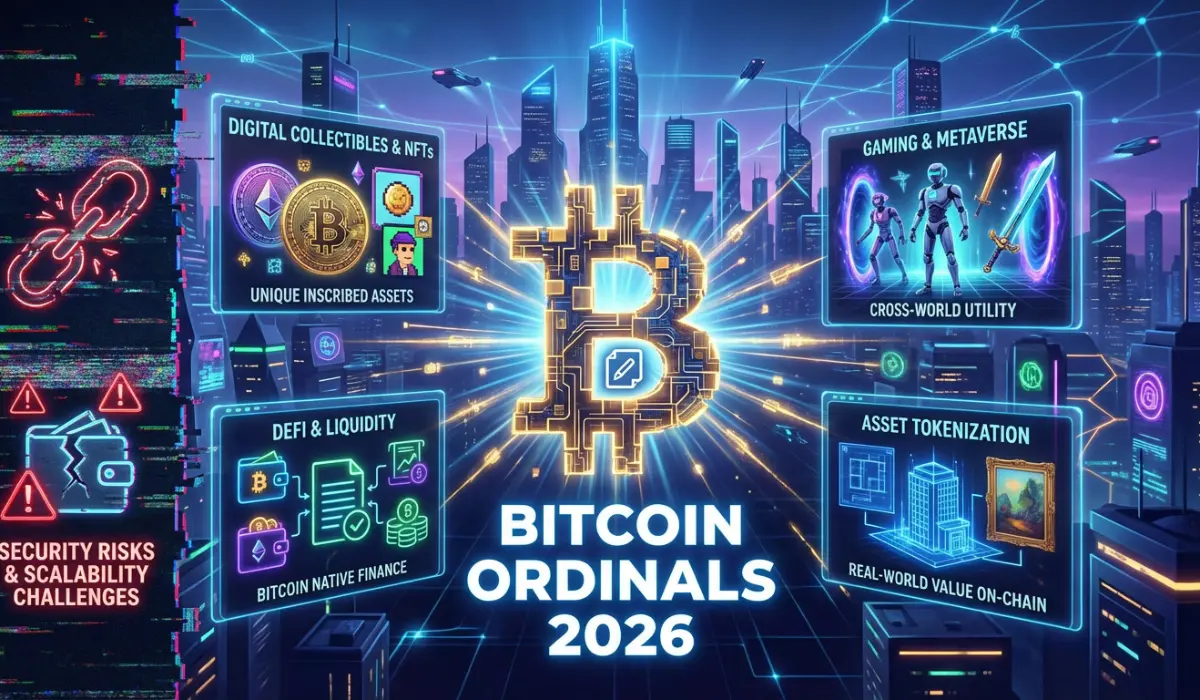
Bitcoin Ordinals refers to the method of creating unique digital assets on the Bitcoin blockchain. They are assets with data inscribed or written on individual Satoshis (the smallest unit of Bitcoin) on the blockchain. Each Satoshi would be given a serial number based on the order in which it was mined, and these numbers are known as the ordinals. They function to help blockchain keep track of who owns every Satoshi and where they are located. It is the ordinal protocol that creates unique and sacred digital assets, which are similar to non-fungible tokens (NFTs), by attaching data from an asset to a Satoshi. This article will further discuss everything you need to know about Bitcoin Ordinals and how they work. So, keep reading to learn more.
Why Bitcoin Ordinals are changing the future of Bitcoin
As said above, Bitcoin Ordinals are meme coins, NFTs, and other assets on the Bitcoin blockchain. However, they have been controversial in the Bitcoin community, as many believe their activity to be similar to spam email. Since Bitcoin Ordinals leverage Bitcoin’s established Proof of Work consensus mechanism, they benefit from advanced security features that have been properly tested. Note that once the data is inscribed onto a Satoshi, it becomes a part of the blockchain permanently. This ensures that the ownership and provenance are tamper-proof and verifiable. Billions of Satoshis are available, meaning it has the potential to create unique and rare digital collectibles.
How the Bitcoin Ordinals protocol works
The Bitcoin Ordinals protocol provides more information about the serial numbers of each Satoshi, which is the smallest Bitcoin unit. This extra data is called the inscription. The Ordinal protocol allows users to record ownership of assets by attaching information about them to Satoshis. This way, the Ordinal inherits immutability, security, and durability of Bitcoin. Note that Ordinals are minted the same way as other NFTs, because they are just special types of transactions that utilise the Bitcoin network and blockchain. You can buy, sell, and trade Bitcoin Ordinals like NFTs. There are several markets out there that allow you to trade Bitcoin Ordinals.
How Bitcoin Ordinals differ from traditional NFTs
While NFTs are added to the blockchain networks like any other transaction on the chain, Bitcoin Ordinals uses the blockchain’s existing network and contributes to the already massive Bitcoin network energy requirements. NFTs use proof-of-stake, thereby consuming less energy, and are generally faster. They are often minted on platforms, which are compatible with several blockchains, as most of these chains have evolved to be Ethereum-compatible. On the other hand, Bitcoin Ordinals can be minted on the Bitcoin blockchain only. This means you will have to find the one that is Bitcoin compatible. It has the
Popular use cases for Bitcoin Ordinals
Some of the popular Bitcoin Ordinals use cases include:
Digital art
With Bitcoin Ordinals, artists can inscribe their digital artwork to a Satoshi and create inscriptions secured by the most secure blockchain today. Unlike traditional NFTs, the contents in Ordinals inscriptions are stored on-chain, which guarantees immutability. Bitcoin Ordinals gives artists access to a market by allowing them to sell their digital artifacts on Ordinals marketplaces.
Online games
Gamers can now own fully decentralized and immutable in-game items, as Ordinal-based gaming projects are creating Bitcoin Ordinals that can be used in online games. Additionally, many games have been inscribed onto the Bitcoin blockchain, providing an accessible and immutable version of the online games.
Bitcoin collectibles
Along with providing a marketplace for digital art, meme-inspired Bitcoin NFT collections, and P2P collections, you can find Bitcoin collectibles in the form of uncommon, rare, and exotic Satoshis on the market. These unique Satoshis have a prescribed value because of the time they were mined and the transactions they were involved with.
Data storage
Understand that Bitcoin Ordinals can record diverse data types like professional certificates, scientific information, and election results. These data will be kept securely since no one can alter them once they are recorded on-chain.
Provenance tracking
Many luxury brands use Bitcoin Ordinals to record the details of their items. This can help the buyers track the provenance and the supply chain history. This transparency assures customers that they are purchasing an authentic item.
Intellectual property rights
Bitcoin Ordinals focuses on reducing disputes over the ownership of copyrights, as it is easy to track ownership history. They also ensure that those rights won’t ever be tampered with.
Conclusion
Bitcoin Ordinals provide a system for creating unique digital artifacts, such as NFTs, on the Bitcoin blockchain. They matter because they offer robust security and decentralization. It provides a high degree of permanence and immutability for digital assets, along with opening new avenues for digital collectibles, art, and tokenization on Bitcoin. Bitcoin Ordinals are an exciting development in the cryptocurrency space, and staying informed on new developments will help one make educated decisions.
FAQS
The purpose of Ordinals is to allow users to inscribe data directly onto individual Satioshis (the smallest unit of Bitcoin).
Bitcoin Ordinals significantly increases Bitcoin transaction fees by demanding more block space. This leads to network congestion, raises overall costs, and prioritizes high-paying transactions.
Ordinals are unique because they describe the position or rank of elements within an ordered sequence, rather than the quality or size of a set.
Some of the common mistakes with Ordinals include spelling errors, usage errors, and formatting errors.


