

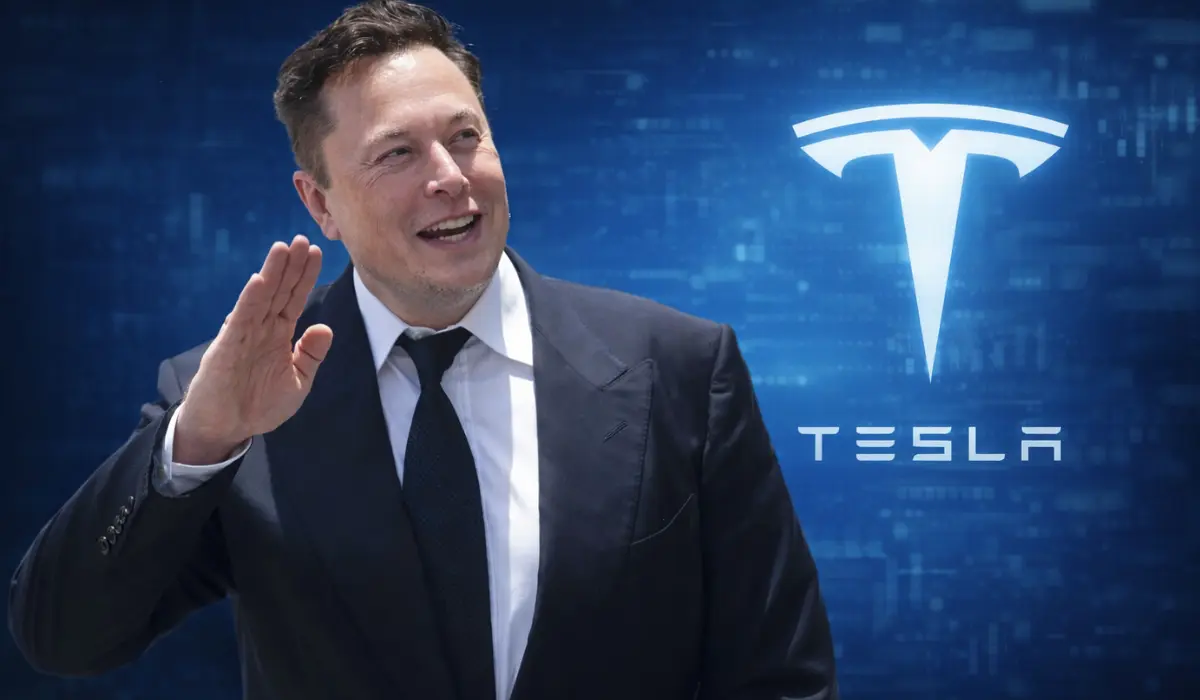
Elon Musk has sent shockwaves through the technology and automotive industries by announcing one of his boldest bets. On Saturday, the billionaire CEO of Tesla (NASDAQ: TSLA), SpaceX, xAI, and The Boring Company posted on X that the ambitious “Terafab Project” would launch in one week.
Terafab is Tesla’s plan for a massive semiconductor fabrication facility that will combine logic chip production, memory, and advanced packaging into a single, huge domestic plant to meet AI demand for its Full-Self Driving (FSD), Optimus robots, Dojo Supercomputers, and beyond. It represents the company’s most aggressive push toward total vertical integration, aimed at ending its reliance on external chip suppliers.
Elon Musk Says Tesla’s Vertically-Integrated AI Chip Factory “Terafab” to Launch Next Week
Tesla first confirmed plans to build the Terafab during its January 2026 earnings call, where Musk told investors that the company needs to build a chip fabrication facility to avoid a supply constraint that is projected to materialize within three to four years.
But he warned that even in the best-case scenario for chip production from Tesla’s suppliers, it wouldn’t be enough, as the company targets 150 billion chips per year, which can only be satisfied by a semiconductor manufacturing facility. He said at the time that the automaker could work with Intel (INTC) to design the chips, but no deal has been confirmed.
Terafab’s integrated approach is unprecedented in the industry. Currently, most companies design their own chips but outsource fabrication to foundries such as the Taiwan Semiconductor Manufacturing Corporation (TSMC) or Samsung. By building its own fab, Tesla aims to transform into an Integrated Device Manufacturer (IDM) – a move that would grant the firm unprecedented control over its hardware supply chain.
Tesla Aims to Pioneer 2nm Process Node
Tesla is reportedly targeting the cutting-edge 2-nanometer (2nm) process node for the Terafab. This is currently the most advanced semiconductor node available on the market – a technical feat that has taken established industry leaders like TSMC decades to master. If it can build a 2nm chip fab at scale, then Tesla’s competitive advantage would extend far beyond its own products, potentially positioning itself as a chip supplier or licensor to other industries.
Musk previously teased the AI5 chip, which reportedly offers 40x to 50x more compute and 9x more memory performance than its predecessor, AI4. This silicon is set to power the high-speed visual processing required for Level 4 and Level 5 autonomy in FSD, provide the inference power needed for Tesla’s Optimus robots to scale, and strengthen the clusters used to train the company’s neural networks as part of the Dojo Supercomputer program.
While there has been no official announcement on where Tesla plans to break ground on the Terafab, all signs point to the North Campus of the Giga Texas facility in Austin, Texas. There had been speculation surrounding the North Campus’s expansion, with drone footage revealing a massive construction site just north of the existing Tesla factory on a scale that rivals the original Giga Texas footprint itself.
Terafab is projected to produce between 100 and 200 billion AI and memory chips annually, targeting 100,000 wafer starts per month, at an estimated cost of $20 billion. The launch expected this week signals that Musk is serious about Tesla controlling the entire AI stack, from software to silicon.
Tesla Inc. (TSLA) closed Tuesday’s trading session at $395.56 – up 1.11% on the day.


