

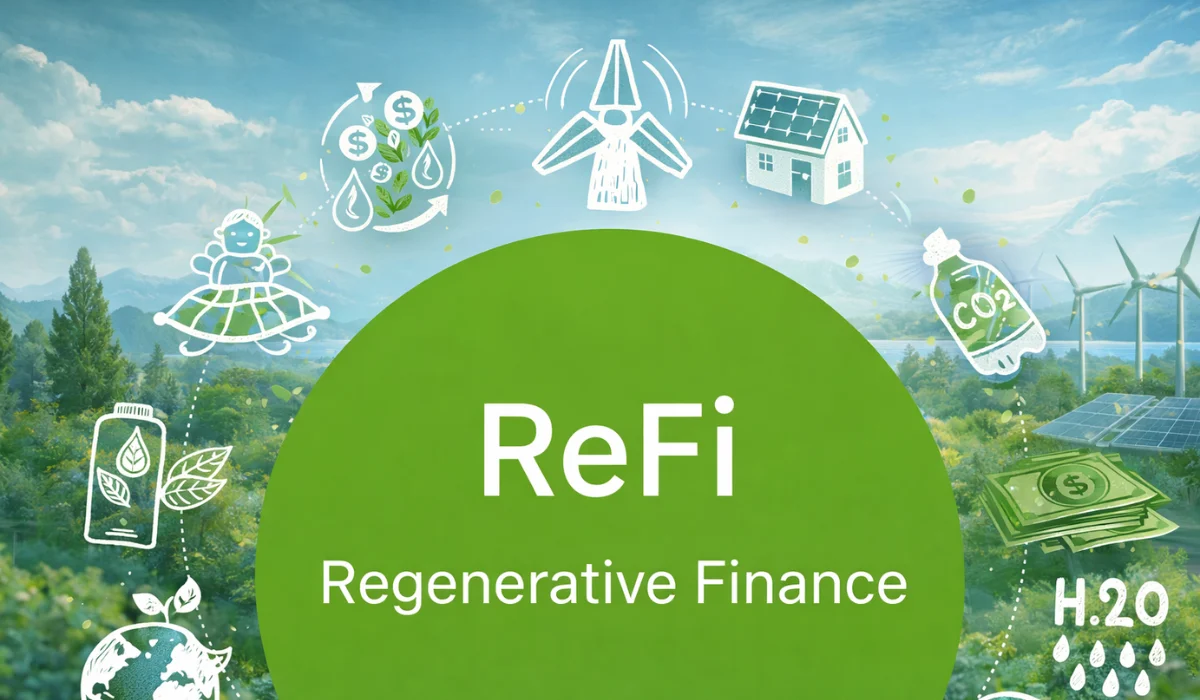
Regenerative Finance (ReFi) is a movement that utilizes Web3 technologies, such as blockchain, to develop innovative financial systems. In simpler terms, ReFi is a transparent, inclusive, and accessible alternative to conventional financial systems. In a regenerative financial system, economic activity seems to benefit all of the system’s living participants, rather than unfairly distributing profits, extracting resources, and ignoring the value of living ecosystems. Even though ReFi is in its early stages, it still has the potential to transform how one uses money and finances. Let’s take a closer look.
How ReFi uses blockchain to support sustainability
ReFi focuses on minimizing harm to society and the environment, all the while actively healing them. The ReFi movement merged blockchain technology with social sustainability, equity, and ecological restoration, making it an accessible, inclusive, and transparent alternative to conventional financial systems. It has started to reshape how people view money, sustainability, and impact. Its main purpose is to create a financial system that can help restore ecosystems, empower the economy, and promote long-term value. The ReFi projects aim to increase practices that can help the environment, which include the utilization of renewable energy, reforestation, pollution reduction, and biodiversity protection.
ReFi always prioritizes fairness, which is why it works to improve access to economic opportunities, education, and healthcare. It also leverages the power of Decentralized Finance (DeFi), because with the help of blockchain technology, it becomes easier and more affordable for individuals to invest in green projects without the presence of middlemen. Since ReFi is created for sustainable and long-lasting growth, it is ideal for ventures and businesses that value the environment, community resilience, and social responsibility. By utilizing blockchain technology, ReFi ensures that every transaction is verifiable, immutable, and visible, which helps build trust and offers a clear report, indicating the usage of funds.
ReFi vs DeFi: what’s the difference?
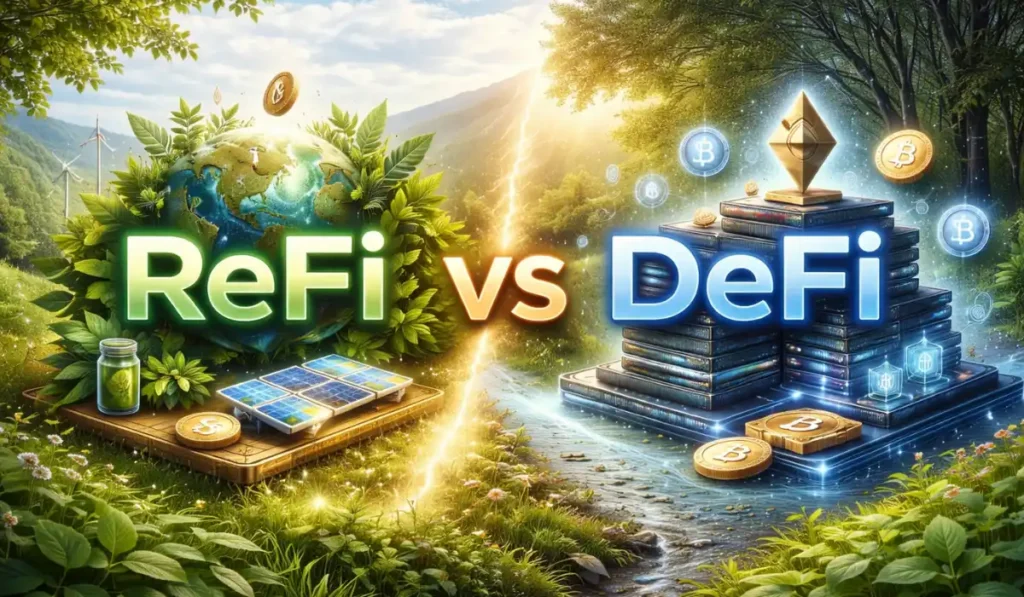
The key difference between ReFi and DeFi lies in their core objective. While DeFi focuses on creating decentralized, efficient, and permissionless financial systems, ReFi uses those same decentralized tools for creating a positive and sustainable impact on the planet and society. ReFi aims to solve real problems, such as social inequity and climate change. On the other hand, DeFi focuses on replacing traditional intermediaries.
Real-World Use Cases of Green Crypto
The green crypto revolution refers to an industry-wide shift towards sustainable digital currencies and blockchain technologies. It focuses on moving away from energy-intensive methods to eco-friendly alternatives to drastically reduce environmental impact and promote a sustainable digital finance future.
Both ReFi and the green crypto revolution are connected, as they are a mutual movement that leverages blockchain technology to shift from extractive financial models to actively restore the natural systems. Regarding its real-world use cases, green crypto focuses on sustainability by tokenizing carbon credits for transparent trading, rewarding eco-friendly actions, and funding green projects through crowdfunding. It also involves managing renewable energy grids with smart contracts and enabling green finance products, such as tokenized bonds.
The Future of Regenerative Finance and Green Crypto
ReFi is created to restore power back into the hands of communities. This is made possible by funding local projects like sustainable farming, solar energy, and decentralized infrastructure. In a nutshell, ReFi is helping communities shape their future. It is believed that ReFi would become a game-changer for the upcoming generation economy since blockchain technology and Web3 are evolving rapidly.
The future of ReFi and the Green crypto revolution involves integrating crypto with ecological regeneration. This means it has to move beyond simple carbon offsets to tokenize natural assets like biodiversity, that too, using efficient blockchains. Both ReFi and green crypto are aiming for a net-positive environmental impact along with economic growth, though challenges like regulation and adoption remain.
Conclusion
ReFi is comparatively a newer concept, and it has the potential to promote green investment. It focuses on bringing a major shift to support sustainability, societies, and the environment. ReFi utilizes the blockchain and Web3 technologies to carry out various eco-friendly projects. It thus offers transparency, scalability, and inclusivity, thereby shaping financial infrastructure for a better future.
Rather than an alternative investment strategy, ReFi is a new way to structure the financial systems. Unlike traditional financial models that often extract value, this approach aims to give back, not just to investors, but to the whole society and the planet as well.


