

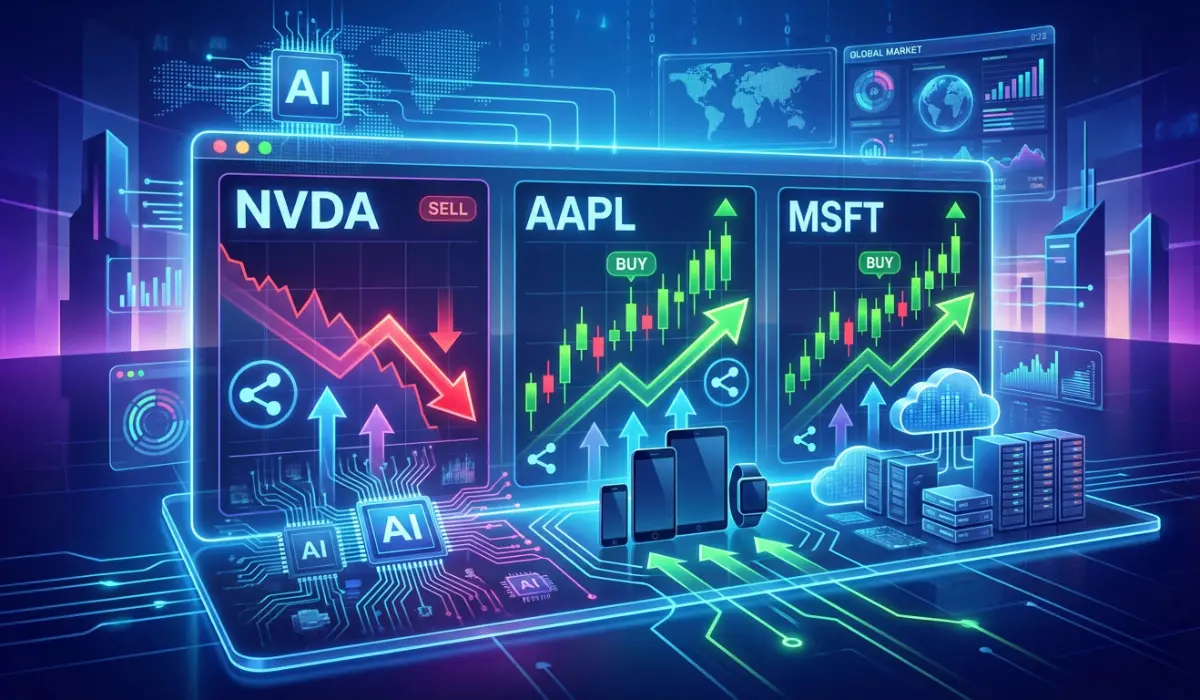
In a move that has sent ripples through Silicon Valley and Wall Street, billionaire tech visionary Peter Thiel has officially liquidated his entire stake in Nvidia, the world’s leading producer of artificial intelligence chips. According to recent regulatory filings, Thiel’s investment vehicle, Thiel Macro LLC, offloaded its remaining holdings in the semiconductor giant, signaling a strategic retreat from the primary beneficiary of the ongoing AI gold rush.
The disclosure, made through a Form 13F filing with the U.S. Securities and Exchange Commission (SEC), reveals that Thiel Macro LLC sold approximately 537,742 shares of Nvidia. At the time of the transaction, the stake was valued at roughly $100 million. While this represents a fraction of Nvidia’s multi-trillion-dollar market capitalization, the total exit by one of technology’s most influential contrarian investors is being viewed as a significant bellwether for the industry.
NVIDIA, which has dominated the global market for high-end AI processors, saw its valuation skyrocket over the past three years. However, Thiel’s decision to move to the sidelines suggests a growing skepticism regarding the sustainability of the current “AI premium” baked into the company’s stock price.
Is the AI Bubble Bursting? Market Sentiment Shifts
The timing of Thiel’s exit coincides with intensifying debates within the artificial intelligence industry regarding a potential valuation bubble. For the past year, analysts have questioned whether the massive capital expenditures by tech firms into AI hardware will yield the projected productivity gains and revenue fast enough to justify current stock prices.
Thiel is not the first high-profile investor to ring the alarm. The SoftBank Group, another major institutional player, previously reported an exit from its Nvidia holdings, citing similar concerns over peak valuations. By liquidating his position, Thiel appears to be bracing for a market correction or, at the very least, a period of stagnation for hardware-centric AI plays.
Strategic Pivot: Redirecting Capital to Apple and Microsoft
Rather than moving to cash, reports indicate that Thiel is redirecting the proceeds from the Nvidia sale into more established tech titans. Sources familiar with the fund’s strategy. Both Apple and Microsoft are heavily invested in AI; they offer more diversified revenue streams compared to Nvidia’s chip-heavy portfolio. Apple’s integration of AI into its massive consumer ecosystem and Microsoft’s dominance in cloud computing and enterprise software are seen as “safer” bets for the next phase of the digital evolution. Furthermore, Tesla remains a key component of the broader tech-centric discussions surrounding Thiel’s portfolio adjustments, as the electric vehicle maker continues its pivot toward autonomous driving and robotics.
Peter Thiel’s Strategic Shift: From AI Hardware to Software Powerhouses
Despite his exit from Nvidia, Peter Thiel remains deeply embedded in the tech landscape. As co-founder of Palantir Technologies, Thiel continues to oversee one of the most prominent data analytics firms in the world—a company that arguably benefits more from the software side of the AI revolution than the hardware side. Market observers note that Thiel’s move may reflect a shift in preference from “infrastructure” (the chips) to “application” (the software and platforms). By moving capital into companies like Microsoft and Apple, Thiel is betting on the entities that will harness AI to enhance consumer products and enterprise efficiency, rather than the firms simply supplying raw processing power.
As of March 11, 2026, the “Thiel Exit” serves as a stark reminder of the volatility inherent in high-growth tech sectors. While Nvidia remains the undisputed king of the GPU market, the departure of a seasoned investor like Thiel suggests that the era of easy gains in AI hardware may be drawing to a close. For retail and institutional investors alike, the focus now shifts to whether the rest of the market will follow Thiel’s lead into the relative safety of Big Tech’s more diversified leaders


